Accessibility links Skip to main content

Voluntary information on your food packaging

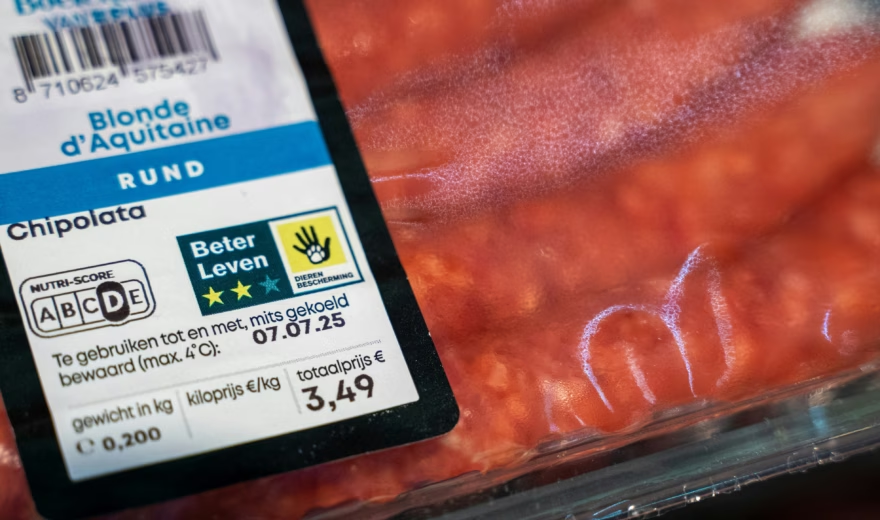
As a producer, you naturally want your product to stand out on the shelf. Voluntary information on the packaging offers an excellent opportunity to do so. Think of additional claims such as "organic", "high in fiber" or "sustainably produced". This information helps persuade consumers and distinguish your product from the competition. But it's a fine line between enticing and misleading. How do you make sure you don't cross it?

Continue reading

Why use voluntary information?

Voluntary information provides producers with a valuable tool to convey the story behind their product in a distinctive and compelling way. By communicating specific attributes, such as health benefits, special production methods or sustainability initiatives, brands can clearly position themselves in a competitive marketplace.

This additional information not only helps make consumers aware and informed, but also plays a crucial role in building a strong image in terms of sustainability and social responsibility. Moreover, it contributes to brand recognition and appeal, making consumers more likely to feel connected and increasing the likelihood of loyalty and repeat purchases. The careful use of voluntary information can thus provide a strategic advantage beyond the functional properties of the product alone.

The pitfalls: seduce versus mislead

Of course you want to present your product as attractively as possible, but be careful not to cross the line. Deception can damage your brand and lead to penalties. Pay attention to these points:

  • Be clear and transparent: Avoid vague or ambiguous claims that confuse consumers.
  • Substantiate your claims: Use only health and nutrition claims that are legally approved, for example, according to European regulations (Regulation (EC) No. 1924/2006).
  • Use recognized labels: This strengthens consumer confidence and prevents discussions about the reliability of your claims.
  • Keep it clear: Don't overload your packaging with too much information; this can actually be counterproductive.
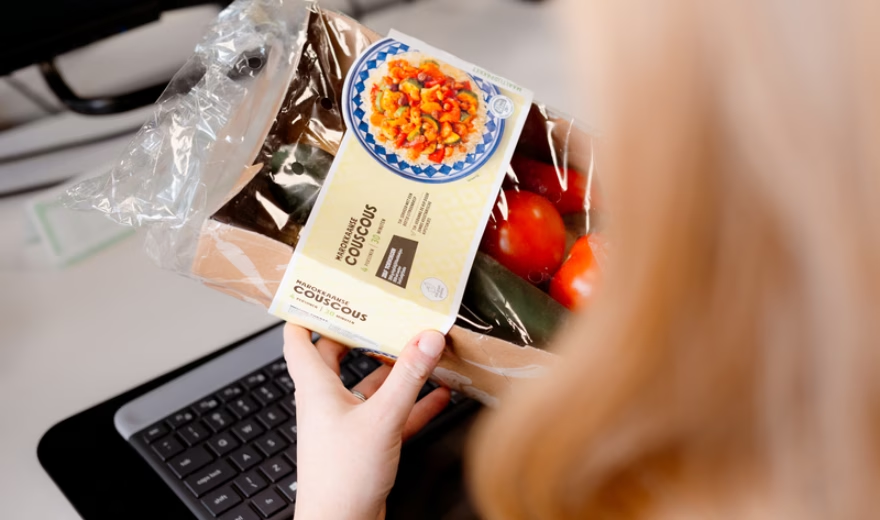
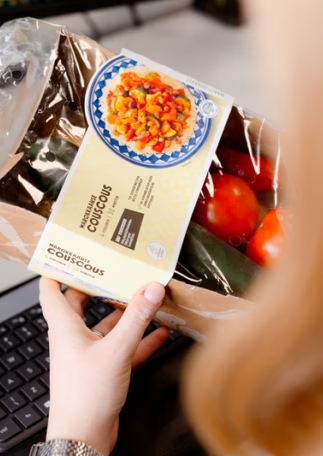
Close-up of hands typing on a laptop keyboard at a desk.

Rules you have to comply with

Although the use of voluntary information on packaging is not mandatory, there are clear and strict limits that producers must adhere to. Claims related to health and nutrition are governed by strict laws and regulations, with only scientifically substantiated health claims approved by competent authorities allowed. Unproven, misleading or exaggerated health claims are prohibited and can lead to penalties and reputational damage.

In addition, origin and sustainability claims may only be applied when specific criteria are met. This applies, for example, to protected designations of origin (PDO) and certified labels such as Fairtrade, which have clear standards and controls to ensure the authenticity and integrity of such claims. Environmental claims should also be fair, transparent and verifiable. Unfair or misleading environmental claims can seriously undermine consumer confidence and carry legal consequences. Therefore, it is essential for producers to be fully aware of applicable regulations and carefully tailor their communications to avoid both legal risks and reputational damage.

Checklist: here's how to ensure reliable and effective voluntary information

  • Check the law: Are your claims in line with applicable rules (such as EU Regulation 1924/2006)?
  • Be honest and clear: Avoid vague terms that could cause misunderstandings.
  • Substantiate claims scientifically: Make sure health and nutrition claims are approved and based on reliable data.
  • Use recognized labels: Choose certifications that match your product and target audience.
  • Avoid excess: Limit the number of claims and logos so that the label remains clear.
  • Avoid deception: Make sure the presentation of your information does not lead to false expectations.
  • Document your communications: Keep proof of substantiation and approval of claims.
  • Stay informed: Monitor changes in laws and regulations and adjust your labels accordingly.
  • Seek advice: Engage an expert to review claims.
  • Test comprehensibility: Get consumer feedback to check if your information comes across clearly. Read more about consumer research here

Voluntary information on your food packaging is a powerful marketing tool. But the key to success is honesty and transparency. That's how you build a strong brand that consumers value-and trust-without crossing the line into deception.

Need support in the food sector?

Our experts are happy to think with you and help you quickly on your way.