Why Summer Brings Extra Risks
For many food companies, summer is a challenging time. Vacations lead to staff turnover, supply chains come under pressure, and higher temperatures increase the risk of issues in production, storage, and distribution. At the same time, consumer behavior changes: products are consumed outdoors more often, remain unrefrigerated for longer periods, and are stored differently than originally intended.
That is precisely why food safety deserves extra attention during the summer months. What are the most common risks, and how can QA departments manage them?
Staff Turnover: Less Routine, More Risk
The summer period brings a different dynamic to many food companies. Vacation time must be covered, leading to the hiring of temporary staff and permanent employees regularly taking over colleagues’ tasks. Although this is often unavoidable from an operational standpoint, it poses an underestimated risk to food safety.
New employees are generally less familiar with company-specific procedures, critical control points, and the practical nuances of daily quality checks. But even experienced colleagues who temporarily fill a different role may overlook important details because they are less accustomed to these tasks. It is precisely that routine that often makes the difference between a process that runs correctly on paper and one that remains effectively under control in practice.
Many organizations only discover during audits, complaint investigations, or deviations just how much implicit knowledge exists on the shop floor. When this knowledge is not fully documented, errors can occur more easily during vacation periods. It is therefore important for QA teams to critically assess in advance which processes rely heavily on experience and where additional guidance or verification is needed.
Higher Temperatures, Less Margin
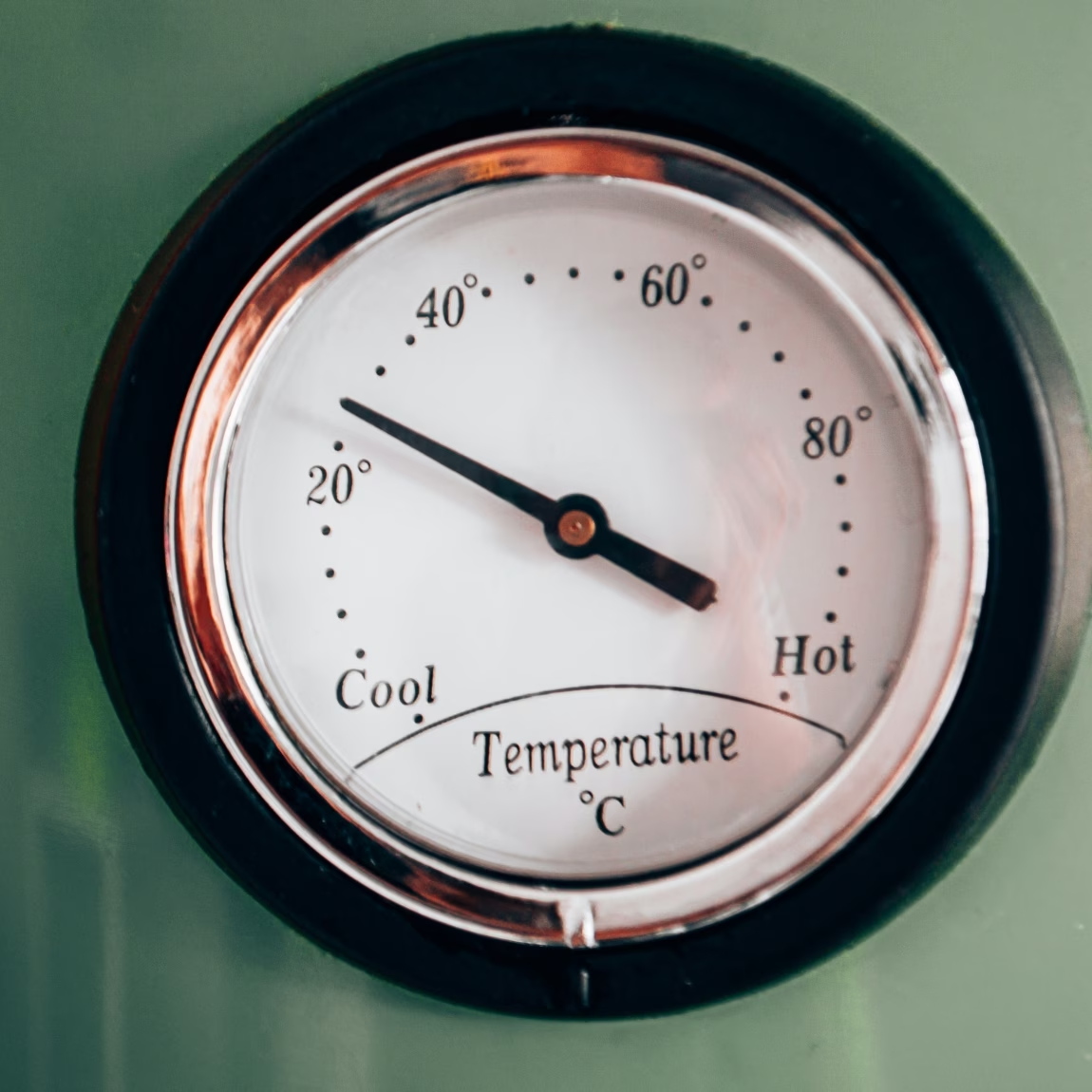
While temperature control is often taken for granted for most of the year, systems come under extra pressure during the hot summer months. Cooling systems have to work harder, temperature differences between indoor and outdoor environments increase, and logistics processes do not always operate under ideal conditions.
This can lead to situations that rarely occur during the rest of the year. Products remain outside refrigerated areas for longer periods during internal transport, temperatures rise in receiving areas, and the cold chain may be temporarily interrupted during loading and unloading. Condensation is also an often-underestimated risk. Significant temperature differences between refrigerated areas and warm outside air can cause moisture to form on equipment, packaging, or even products, with potential consequences for both product quality and microbiological safety.
It is often not major deviations that cause problems, but rather small temperature increases that go unnoticed over a longer period of time. By actively analyzing temperature data and comparing trends with previous periods, QA departments can identify potential issues before they lead to quality or food safety problems.

Seasonal Products: Familiar Products, Overlooked Considerations
Many companies produce temporary or seasonal products in the summer. Although these products have often been part of the product range for years, that does not automatically mean that production runs smoothly. On the contrary: precisely because a product is produced only once a year, risks can arise that are easily overlooked.
In practice, it turns out that some of the crucial knowledge is not always fully documented in procedures, recipes, or work instructions. Specific line settings, lessons learned from previous production runs, points to watch out for during startup, or known pitfalls regarding allergens and cleaning are often stored in the memories of experienced employees. When the previous production run took place months ago or the relevant colleagues are absent, there is a risk that this knowledge will not be available when it is needed.
In addition, suppliers, raw materials, packaging, or production conditions may have changed in the meantime. A process that went smoothly last year therefore offers no guarantee of the same outcome this season. A brief risk assessment prior to the launch of seasonal products can help identify hidden risks and re-establish valuable practical knowledge.
Supply Chain Under Pressure
The summer also brings additional challenges outside the production site. Vacation periods, limited availability of drivers, peak sales, and international demand can put pressure on the supply chain. This increases the likelihood of delays, deviations in transport conditions, and disruptions to scheduling.
Especially for refrigerated and fresh products, such disruptions can have direct consequences for product quality and food safety. Longer transit times, deviations in temperature readings, or reduced availability of raw materials can unexpectedly impact processes that normally run smoothly. At the same time, the importance of comprehensive traceability increases when multiple parties within the supply chain are operating under heightened pressure.
Especially during the summer months, it pays to monitor transport performance, temperature readings, and supplier agreements with extra care. Problems rarely arise at a single point in the supply chain but are often the result of multiple small deviations that reinforce one another.
Logistics Chain Under Pressure
Even outside the production site, summer brings additional challenges. Vacation periods, limited driver availability, peak sales, and international demand can put pressure on the logistics chain. This increases the risk of delays, deviations in transport conditions, and disruptions to the schedule.
For refrigerated and fresh products in particular, such disruptions can have direct consequences for product quality and food safety. Longer transit times, deviations in temperature readings, or reduced availability of raw materials can unexpectedly impact processes that normally run smoothly. At the same time, the importance of comprehensive traceability increases when multiple parties within the supply chain are operating under heightened pressure.
Especially during the summer months, it pays to monitor transport performance, temperature records, and supplier agreements with extra scrutiny. Problems rarely arise at a single point in the supply chain but are often the result of multiple small deviations that reinforce one another.
Is Your Shelf Life Summer-Proof?
Many shelf-life studies are conducted under controlled conditions in which temperature and storage are closely monitored. In practice, however, these conditions are not always representative of how consumers store and use products during hot periods.
As a result, a product that easily meets all microbiological criteria under laboratory conditions may, in practice, show a faster decline in quality or prove more susceptible to microbial growth. This can be a particularly important consideration for refrigerated products.
By periodically re-evaluating shelf-life studies and conducting additional research, such as challenge tests or predictive microbiology calculations, a more realistic picture of a product’s actual safety margin emerges. This not only provides consumers with greater assurance but also helps organizations better substantiate shelf-life claims and proactively manage risks.
How can QA prepare for the summer?
Proper preparation begins well before the vacation period.
Key points to consider are:
- Strengthen training and onboarding: Ensure that temporary employees and substitutes receive targeted training on critical food safety processes.
- Reassess critical control measures: Verify that CCPs, temperature monitoring, and verifications are sufficiently robust for higher ambient temperatures.
- Evaluate seasonal products: Conduct risk analyses in a timely manner for new products, raw materials, and recipe changes.
- Check the supply chain: Confirm with suppliers and carriers that temperature control and delivery reliability remain guaranteed even during holiday periods.
- Critically review shelf-life data: Assess whether existing shelf-life studies adequately account for summer usage and storage conditions.
TIP: Our laboratory experts are happy to collaborate with you to determine the most suitable approach for your product and risk profile. This not only gives you greater certainty regarding the food safety of your products but also provides you with a strong basis for communicating with customers, auditors, and regulatory authorities. By identifying risks early and evaluating control measures, QA professionals can prevent minor deviations from escalating into food safety incidents. This not only ensures product quality but also maintains the trust of customers and consumers.