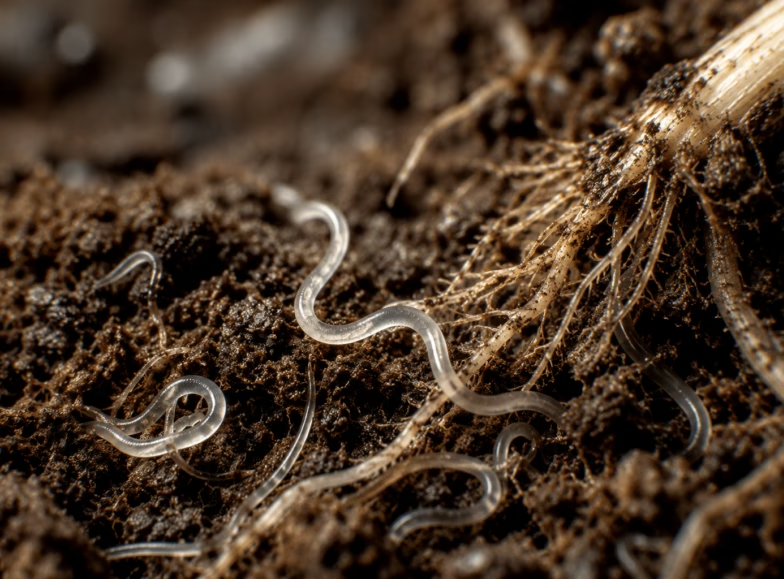
Prevent damage caused by plant-parasitic nematodes
Plant-parasitic nematodes can cause significant damage to agricultural and horticultural crops. Because these microscopic organisms are invisible to the naked eye, infestations often remain unnoticed until yield losses or quality issues become apparent.
Normec Foodcare helps growers and agricultural businesses gain early insight into harmful nematodes present in the soil. Through specialised laboratory testing, we provide reliable information that supports informed crop management decisions and helps minimise economic losses.

Why nematode testing matters
Approximately 1,200 nematode species occur in soils and water systems across Europe. While most play a beneficial role in soil health, a small number are plant parasites capable of causing severe crop damage.
Climate change is increasing nematode activity, making effective monitoring more important than ever. Harmful nematodes may lead to:
- Root deformation and gall formation
- Yield reductions of up to 30–40% in crops such as potatoes and sugar beet
- Reduced crop quality
- Economic losses and crop rejection
- Export restrictions
- Long-term soil management challenges
The financial impact can reach thousands of euros per hectare if infestations remain undetected.
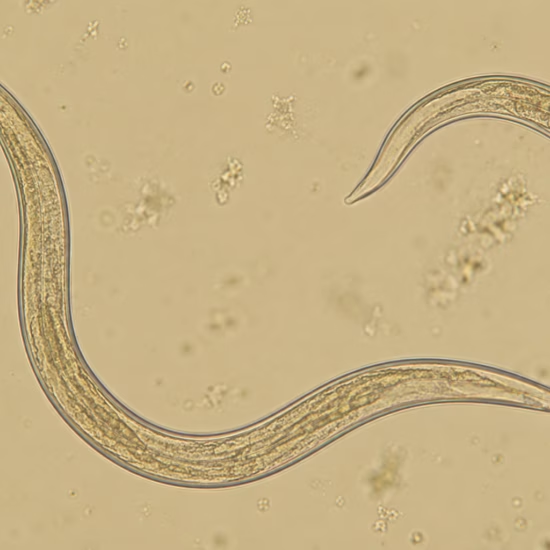
Specialist testing for harmful nematodes
Normec Foodcare analyses a wide range of plant-parasitic nematodes, including free-living species, root-knot nematodes and cyst nematodes. Our specialists identify both the species present and their population density.
Root-knot nematodes (Meloidogyne spp.)
- Meloidogyne hapla
- Meloidogyne chitwoodi
- Meloidogyne fallax
- Meloidogyne naasi
Root lesion nematodes (Pratylenchus spp.)
- Pratylenchus penetrans
- Pratylenchus crenatus
- Pratylenchus neglectus
- Pratylenchus vulnus
Other harmful nematodes
- Trichodoridae species
- Rotylenchus uniformis
- Paratylenchus species
- Ditylenchus species
- Longidorus spp.
- Xiphinema spp.
We also perform testing for:
- Potato cyst nematodes (Globodera spp.)
- Beet cyst nematodes (Heterodera spp.)

Microscopic analysis for maximum reliability
Normec Foodcare deliberately chooses microscopic identification as the primary method for nematode analysis.
Our specialists determine:
- Species
- Gender
- Population levels
Unlike standard DNA-based methods, microscopic analysis provides a comprehensive assessment of the nematode population present in a sample. This allows us to detect harmful species that may occur in low numbers and ensures a reliable representation of the actual field situation.
Accredited laboratory testing
Nematode analyses are performed by Normec Robalab, part of Normec Foodcare.
Normec Robalab operates under an ISO/IEC 17025 accredited quality system, providing confidence in the reliability, consistency and quality of every analysis.
Professional soil sampling
Accurate results begin with representative sampling.
Normec Foodcare works exclusively with trained and independent sampling specialists who follow strict procedures to ensure sample quality.
Key considerations include:
- Clean equipment to prevent cross-contamination
- Correct sampling depth
- Adequate number of sampling points
- Soil moisture conditions
- Previous crops and field history
Our standard guideline is a maximum of 2 hectares per sample and a minimum of 60 sampling points per sample bag.
Why choose Normec Foodcare?
- Prevent costly crop damage
- Reliable identification of harmful nematodes
- Accredited laboratory testing
- Microscopic identification of species and population levels
- Incubation methods available for enhanced detection
- Clear reporting with practical crop-specific advice
- Expertise in agricultural soil health and crop protection
Ready to gain insight into your nematode situation?
Protect your crops, improve soil management and reduce production risks with specialised nematode testing from Normec Foodcare.