Accessibility links Skip to main content

What food information is required on an online store?

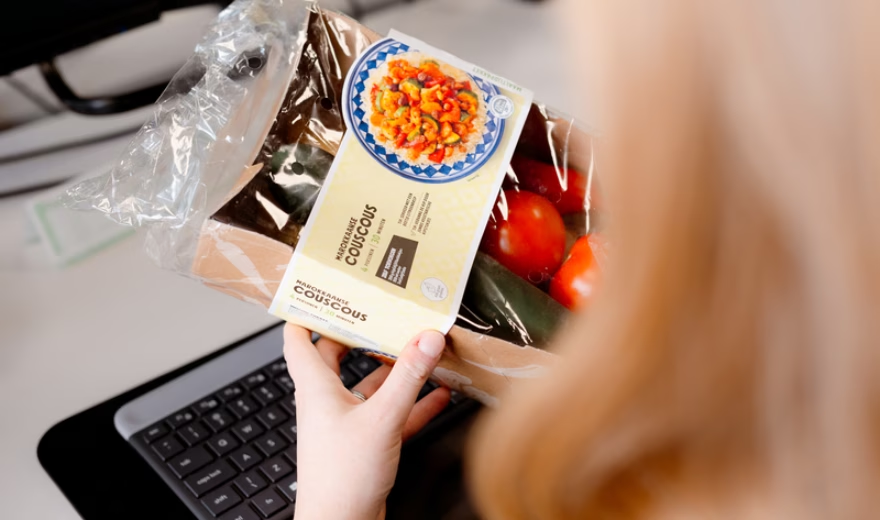
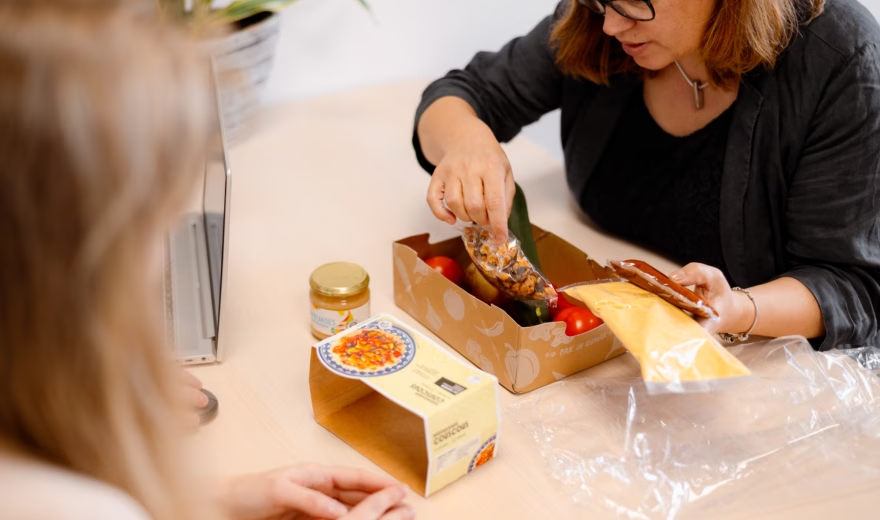
Ordering products online is very popular among consumers. Food products are also increasingly being sold online. But what information are you required to include on your online store? And what do you need to keep in mind? When selling food products online, you must comply with Regulation (EU) No. 1169/2011 on the provision of food information to consumers. Consumers who purchase the products must have access to product information before making a purchase decision. There are a number of factors you need to consider.

Contact us

Fill out the form and we will contact you shortly.

Name
In which country would you like to be assisted?
Privacy Policy 
Continue reading

Distance Selling

Article 14 of Regulation (EU) No. 1169/2011 sets out requirements for food products offered for sale using means of distance communication. A means of distance communication is defined as:“any means that, without the simultaneous physical presence of the supplier and the consumer, can be used to conclude a contract between these parties.”

An online store falls under this definition. For prepackaged foods offered for sale through an online store, the following applies:

“the mandatory food information, with the exception of the information specified in Article 9(1)(f), must be available before the purchase takes place and must appear on the material supporting the distance sale or be provided through other appropriate means clearly indicated by the food business operator. When other appropriate means are used, the mandatory food information shall be provided without the food business operator charging consumers any additional costs.”

Mandatory Food Information Easily Accessible

This means that all mandatory information, such as the name, ingredients, allergens, and nutritional values, must be listed on the website. The best-by date does not need to be available prior to purchase. Article 12, paragraph 1 states that mandatory food information must be available and easily accessible. Therefore, ensure that the information is easy for consumers to find and free of charge. In addition, all mandatory information, including the best-by date, must be available upon delivery.

Misleading Information

Regulation (EU) No. 1169/2011 stipulates that food information must not be misleading. Here, “food information” refers not only to the information on the label but also to information made available through other means, such as modern technological tools. It is therefore important that the website does not contain any misleading information.

Be Careful with Claims

Claims such as:“This product helps with…,”“is rich in…,” or“light” must comply with the provisions of Regulation (EC) No. 1924/2006 on nutrition and health claims made on foods. This regulation applies to nutrition and health claims made in commercial communications. This may include the labeling or presentation of the food product, as well as advertising created for that purpose. Ensure that only authorized claims are listed on the online store.

Ask your labeling question

Not sure if your online store complies? Do you have questions about how to apply the legislation? Our team of Labeling Specialists is ready to help you with expert advice, so you can ensure your products carry accurate and honest information.

Need support in the food sector?

Our experts are happy to work with you and help you get started quickly.

Request a quote

Fill out the form and we will contact you shortly.

Name
In which country would you like the service to be carried out?
Privacy Policy 

Related news articles

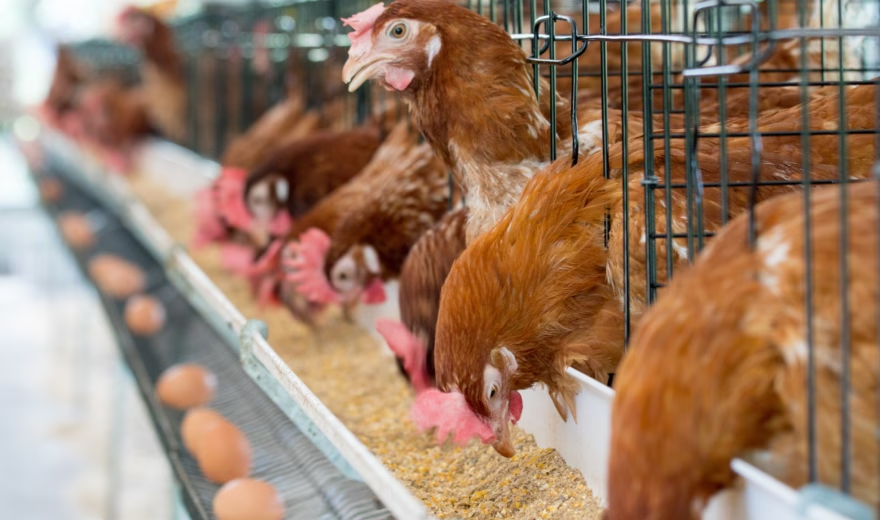
Laying hens are kept in a poultry house where eggs are produced and collected.
25 Aug 2026

Salmonella in eggs: recent outbreak highlights the importance of targeted testing

A Salmonella outbreak linked to eggs from a Belgian poultry farm has now made at least 300 people ill. The incident once again shows the importance of systematic monitoring and timely laboratory testing throughout the egg supply chain.

Various food packaging materials, suitable for quality and sustainability testing.
12 Aug 2026

The PPWR now applies: what does this mean for your packaging?

The European Packaging and Packaging Waste Regulation (PPWR) has applied since 12 August 2026. This marks the start of an important new phase for every organisation that manufactures, imports, uses or places packaging on the European market. The Regulation introduces stricter requirements covering substances of concern, recyclability, material use, reuse and the evidence needed to demonstrate compliance. For food businesses, this is no longer a distant development. The first obligations already apply, with further requirements being introduced in phases over the coming years. It is therefore essential to understand your packaging portfolio and determine in good time where changes are needed.

Employees perform visual inspections of food products in a production environment.
23 Jun 2026

Why You Can’t Blindly Trust Supplier Declarations

Supplier declarations remain indispensable, but they are essentially dependent on information provided further down the supply chain. Every link in that chain introduces variation, and changes in raw materials, processes, or suppliers can have an impact without this being immediately apparent in the documentation that is ultimately passed on.

23 Jun 2026

TFA: Why This PFAS Substance Is Showing Up More and More Often

PFAS have been a major focus of attention in the food industry for several years. Recently, however, a specific substance has been cropping up more and more frequently in discussions about food safety, the environment, and regulations: TFA, or trifluoroacetic acid.

Recording of quality data during an inspection in a production environment.
25 May 2026

Effective training in the food industry: from planning to impact

For QA managers in the European food industry, training has long since ceased to be a "nice to have," but a crucial building block for food safety, compliance and continuous improvement. Topics such as allergen management require up-to-date knowledge, but equally important is how that knowledge is transferred, secured and applied on the shop floor. A well-thought-out training strategy - cleverly combining different forms of learning - makes the difference between merely informing and actually changing behavior.

25 May 2026

New French MRL law as catalyst for stricter marketing standards

With the recent introduction of stricter national residue standards, France has reignited the debate over Maximum Residue Levels (MRLs) in the European Union. Whereas the EU has had a harmonized system for pesticide residues in food for many years, France is now opting for additional national restrictions for specific active substances. This development has direct implications for companies importing agricultural products to France or exporting from France.

04 Feb 2026

The importance of trend analysis in the food industry: from data to strategic decisions

Huge amounts of data are collected daily in the food industry: analysis results, audit findings, complaints, KPIs and more. Yet this information often persists in silos without moving forward: trend analyses. It is precisely these analyses that make the difference between reactive firefighting and proactive management of quality and food safety.

Sign up for our newsletter

Sign up

Naam

Related services

Label review

Advice in food law

Drafting label text

International label review

Regulations and translations

Zero measurement specification management