

How do you ensure that your product development leads to a successful product?
About 80% of all product introductions in the food sector fail, resulting in products disappearing from the shelf again within a period of six to 12 months. Consumers have a plethora of product types and brands to choose from in the supermarket. To be promising in this highly saturated market, it is essential to position your product well. Given consumers' high expectations, it is more important than ever for a food manufacturer to conduct thorough research into the consumer's perception of your product already during the product development process. This goes beyond simply mimicking the preparation process and testing the product in your test kitchen.
What you really want to know is how the consumer experiences your product. By researching this, you will get a picture of the actual consumer experience even before your product is available in the supermarket and you will be able to make timely adjustments. Keep the following points in mind when using consumer research:
Research the market potential
To determine the market potential, it is necessary to test your product ideas. The feedback obtained will help you set the right priorities for further product development. You get a clear understanding of the specific needs of consumers.
In addition, it is important to examine the ways in which your product adds value to the consumer. After all, successful products are based on customer benefit. Knowledge about consumer perception and use of the product is very important here. Also consider, for example, the desired portion size and the optimal place on the shelf.
Evaluate the concepts
Evaluate the developed concepts with the knowledge you have gained from the studies conducted. Work out the concepts with the greatest chance of success, paying attention to product content and packaging. Then have the desired use and taste assessed by the target group. This provides valuable insights, such as:
- What flavors appeal to consumers for the new product concept?
- What color should I use for my light product's packaging?
- Which typology gives my product an artisanal look?
Use the information resulting from this concept phase to determine the final product concepts.
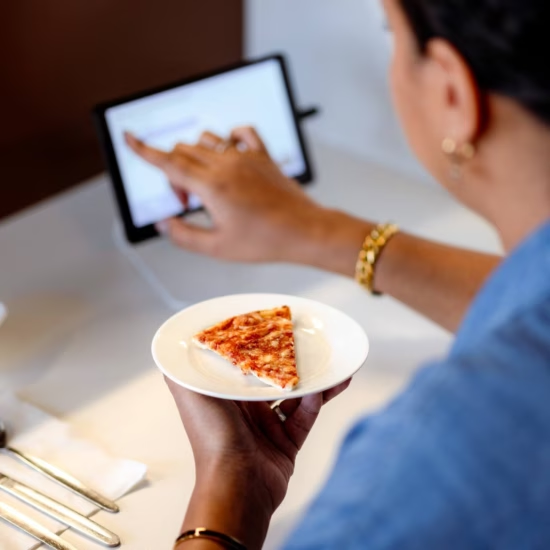
Have taste tests performed on the developed products
Once the final concepts are developed, you can start producing the first samples. To know whether you are on the right track, it is important to have them evaluated by a panel. For example, is your product crunchy enough or physically appealing? By having sensory testing done by a consumer panel, you make the end user's product requirements transparent. In addition, analyzing the samples for sensory aspects provides directions for improvement in product composition and opportunities for process optimization.
Tip: Research how a consumer experiences the product at home by conducting in-home research. In this type of research, the consumer prepares, consumes and evaluates your product in their home environment. The resulting report will give you insights into the consumer experience and areas for improvement.
Know your competitor
What advantages does your product offer over the alternatives in the supermarket? Research shows that familiar products with a high satisfaction score are valued on average three times more than new, still unknown products. So it is important to consider whether the newly developed product could possibly be better appreciated than the current standard. Research who you see as your main competitor(s) and determine in which aspects you want to do a competitive comparison. With the information obtained, you can develop your marketing strategy and shape your sales plans toward retail.
The product development process is an interesting but complex journey. We are happy to help you through the entire process so that you can successfully market your product.
Need support in the food sector?
Our experts are happy to think with you and help you quickly on your way.