MOSH and MOAH: Measurement Is Often Just the Beginning
A MOSH/MOAH analysis examines mineral oil fractions in the sample in question.
If MOSH or MOAH is detected, a follow-up question often arises immediately: where could it be coming from?
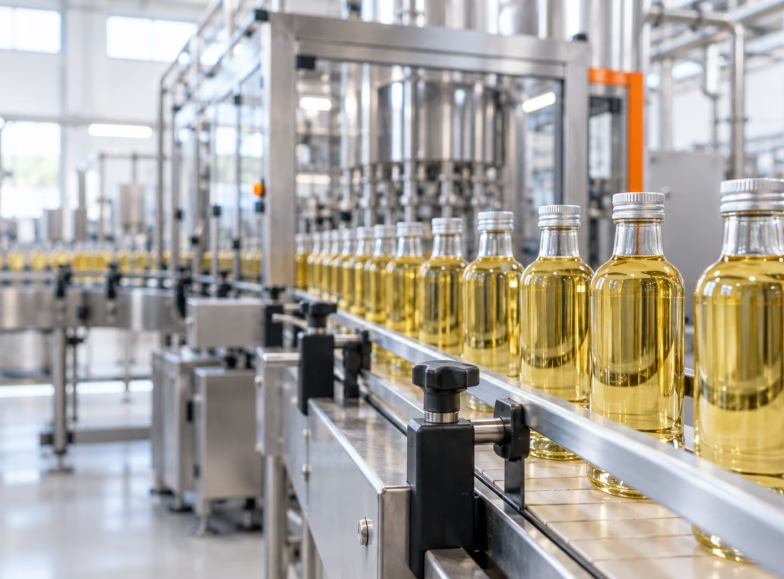
That’s why, when addressing this issue, you don’t just look at the end product. Raw materials, processing, packaging, storage, and transportation can also be part of the contamination problem.
What is the difference between MOSH and MOAH?
MOSH and MOAH are two different fractions of mineral oil.
MOSH stands for Mineral Oil Saturated Hydrocarbons. This fraction consists of saturated aliphatic and cyclic hydrocarbons.
MOAH stands for Mineral Oil Aromatic Hydrocarbons. This fraction comprises aromatic hydrocarbons.
A MOSH and MOAH analysis provides insight into these fractions in the sample being tested.
Where can contamination occur?
MOSH and MOAH can unintentionally enter food products through various routes.
Possible sources include:
- raw materials
- packaging materials
- printing inks
- lubricants
- process aids
- coatings
- manufacturing and processing
- storage and transportation
- environmental contamination
An analysis result can therefore prompt us to look beyond just the end product.
Packaging deserves special attention
For MOSH and MOAH, packaging can be a relevant potential source of contamination.
Paper and cardboard may contain mineral oil components, due in part to the use of recycled fibers and printing inks. Coatings and other materials in the packaging may also be relevant.
Under certain conditions, mineral oil components can migrate from the packaging into the food product. Long-term storage and the absence of a functional barrier are factors to consider in this regard.
Do you suspect that packaging plays a role? If so, please include the following information with your request:
- the packaging material used
- direct or indirect product contact
- storage duration
- storage conditions
- any barrier materials

Look Beyond the Final Product
The potential source does not necessarily have to be in the end product or its packaging. Production, processing, storage, and transportation can also play a role in MOSH/MOAH contamination.
When investigating the source, it may therefore be helpful to examine the various stages side by side:
raw material → production → packaging → storage → transportation → final product
Which samples are relevant depends on the product and the suspected route of contamination.
Products That May Require Extra Attention
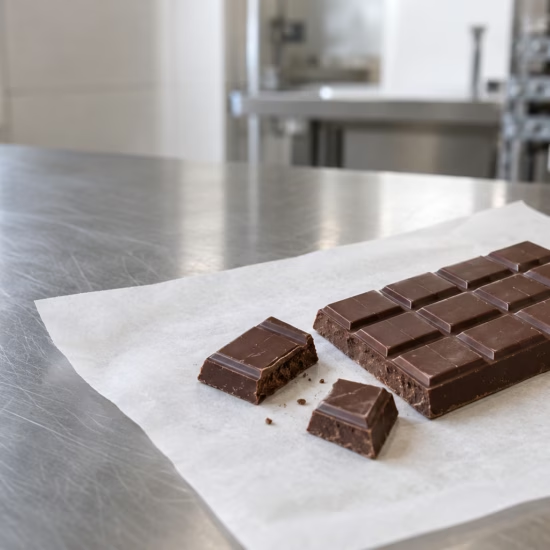
Dry and high-fat products may require extra attention, including:
- grains and rice
- cocoa and chocolate
- nuts
- vegetable oils
Whether testing is relevant ultimately depends on the product, the process, the packaging, and your research question.
Analysis of MOSH and MOAH Fractions
A commonly used technique for determining MOSH and MOAH fractions is LC-GC-FID. The analytical approach depends on the matrix and the research question.
The following factors, among others, may be relevant:
- the product matrix
- the fat content
- possible natural interferences
- the expected concentration
- the purpose of the study
For more complex matrices, additional separation or confirmation may be necessary to properly evaluate the results.
From analysis results to potential sources
The detection of a MOSH or MOAH fraction may prompt further investigation of potential sources.
Consider, for example, questions such as:
- Could the raw material be a factor?
- Are lubricants or process aids relevant?
- Could the packaging contribute to the contamination?
- Does long-term storage play a role?
- Are additional samples needed?
- Is further investigation of another link in the chain relevant?
This shifts the question from simply “What’s in my sample?” to “Where could it come from, and what is the appropriate next step?”
Learn more about MOSH and MOAH
Would you like to learn more about MOSH/MOAH, potential contamination routes, and control measures?
Want to have MOSH and MOAH analyzed?
Would you like to test for MOSH and MOAH in a food product or raw material? Or are you trying to identify a potential source of contamination? Discuss your product, packaging, and research question with our specialists.
Frequently Asked Questions: MOSH/MOAH Analysis
-
MOSH includes saturated aliphatic and cyclic hydrocarbons. MOAH includes aromatic hydrocarbons.
-
Possible sources include raw materials, packaging materials, printing inks, lubricants, processing aids, coatings, and environmental contamination.
-
Cereals, rice, cocoa, chocolate, nuts, vegetable oils, and other dry or high-fat products, among others, may be relevant for MOSH/MOAH testing.
-
Under certain conditions, mineral oil components can migrate from packaging materials into food. Paper, cardboard, printing inks, coatings, and barrier materials may therefore be relevant to the research question.
-
LC-GC-FID is a commonly used technique for analyzing MOSH and MOAH fractions. The appropriate analytical approach depends on the product matrix and the research question.