Microbiological food safety remains one of the leading causes of recalls in the European food industry. Despite stricter controls, improved process control, and comprehensive HACCP systems, recent incidents show that microbiological risks still pose a real and evolving challenge.
What stands out is that it is no longer a matter of a single dominant pathogen, such as Listeria monocytogenes alone . The spectrum of microorganisms involved is becoming broader and more diverse, with recurring reports of Salmonella, STEC, Bacillus cereus, and Cronobacter.
These trends offer valuable insights: they show where risks are concentrated in practice today and where existing controls may need to be tightened.
Recalls as an Indicator of Systemic Risks
Recalls are more than just individual incidents. In a sense, they provide a real-time snapshot of where the food chain is under pressure. When patterns are examined across multiple years and product categories, clear trends emerge that are relevant for risk assessment and prevention.
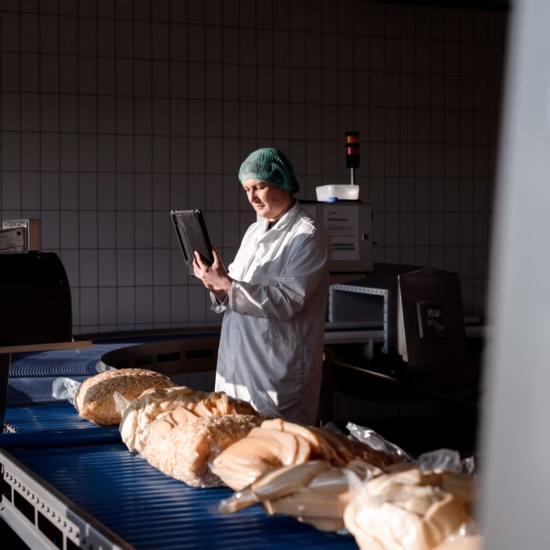
What is particularly striking in recent European data is that microbiological contamination is not limited to a single type of product or a specific sector. Ready-to-eat products, dairy, baby food, and raw materials can all be affected, often with different underlying causes such as process hygiene, raw material quality, or environmental contamination.
Listeria remains a key risk in ready-to-eat products
Listeria monocytogenes remains one of the most frequently reported causes of serious recalls, particularly in ready-to-eat products and refrigerated foods with extended shelf lives. The bacterium remains a challenge due to its ability to adapt to refrigerated conditions and form biofilms in production environments.
Nevertheless, attention is increasingly shifting toward a broader microbiological spectrum, with other pathogens having a comparable impact on recall statistics.
STEC: Low Infection Dose, High Impact
Shiga toxin-producing E. coli (STEC) accounts for a relatively small proportion of total incidents but is often highly severe. Even low levels of contamination can lead to serious health risks.
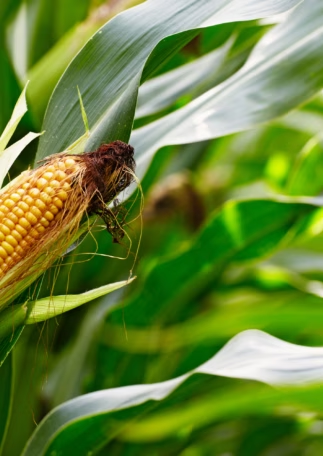
STEC is often associated with beef, raw milk, and fresh vegetables. The main challenge lies in the fact that conventional hygiene measures are not always sufficient to completely eliminate these pathogens without affecting product quality.
Bacillus cereus: An Underestimated Risk in Processed Products
Bacillus cereus is commonly found in starchy products such as rice, pasta, and dry mixes. Although it is often associated with a limited shelf life or mild symptoms, certain toxin-producing strains can cause serious food safety issues.
An important consideration is that spores are heat-resistant and can survive in processes that eliminate other bacteria. Insufficient cooling or prolonged storage at room temperature can subsequently promote growth and toxin formation.
Cronobacter: Critical for Vulnerable Populations
Cronobacter spp. remains particularly relevant in the context of infant formula and powdered products. Although incidents are relatively rare, the consequences for this population are particularly severe.
The bacterium can survive in dry environments and thus poses a specific risk in the production and handling of dry ingredients. This makes strict hygiene and process control essential, especially in segments with a high duty of care.
What These Trends Say About Risk Management
The shifts in recall data clearly demonstrate that microbiological risks are becoming less and less one-dimensional. Instead of a single dominant pathogen, there is a broader spectrum of organisms with different behavioral patterns, survival strategies, and routes of contamination. This means that traditional risk analyses must increasingly be supplemented with a dynamic approach that takes into account product type, process conditions, raw materials, and end use.
From Reaction to Prevention
The most valuable lesson from recent recall trends is not which bacterium occurs most frequently, but how risks develop within the supply chain. In many cases, problems arise not from a single major error, but from a combination of minor deviations in hygiene, temperature control, or raw material quality.
By actively using recall data as a reference point for internal risk analyses, QA systems can be better tailored to realistic threats rather than theoretical models alone.
What does this require of QA in practice?
Effective microbiological risk management increasingly requires an integrated approach in which raw materials, processes, the environment, and the final product are considered together. Monitoring, validation, and trend analysis play a central role in this, as does the regular review of existing HACCP structures based on current incident data.
From Insight to Control
A targeted microbiological approach, supported by challenge tests, shelf-life studies, and targeted analyses, can help to better understand and control risks. Combining real-world data with laboratory insights creates a more realistic picture of microbiological safety throughout the entire supply chain.
In this way, recall trends become not just a retrospective look at incidents, but a practical tool for preventing future risks.