What determines the risk of MOSH/MOAH in foods?
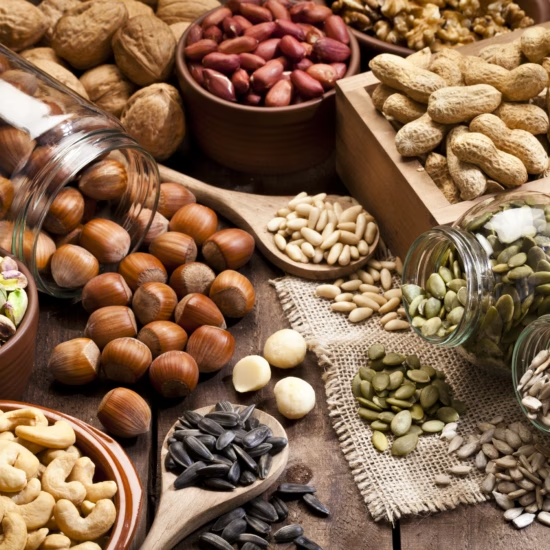
The presence of MOSH and MOAH is not an isolated problem, but the result of multiple possible contamination pathways in the chain. Products with a high absorption capacity or fat matrix are especially susceptible. Cereals, rice, cocoa, nuts, vegetable oils and chocolate are among the high-risk products, in part because these products readily absorb and retain MOSH. MOAH receives extra attention here because of possible genotoxic and carcinogenic properties.
The EU has therefore deliberately placed its focus on foods that have been shown to contribute to overall consumer exposure. Not because other products are necessarily free of MOSH/MOAH, but because monitoring data show that the risk there is significantly lower or negligible under normal use.
Risks of contamination throughout the chain.
During processing and production, contamination risks are often located at technical sources. Lubricants in production lines are a known risk factor, especially when H1-certified food-grade oils are not used. Even when used correctly, wear or aerosolization during processes such as grinding, pressing or mixing can lead to carryover to the product. In addition, incident analyses show that additives, processing aids and cleaning agents can also be a source of contamination when suppliers do not exercise sufficient control over their raw materials.
Further down the chain, packaging plays a structural role: recycled cardboard and paper often contain residues of mineral oils from printing inks, which - especially in long-term storage and in the absence of a functional barrier - can migrate into the foodstuff. This risk is greatest with dry, absorbent or high-fat products, while printing inks and coatings also remain areas of concern.
Storage, transportation and distribution should also not be underestimated as potential sources of contamination. Bulk transport in ships, silos or trucks can lead to cross-contamination when not used exclusively for food products. In addition, pallets, liners and containers treated with mineral oils pose an additional risk, especially during longer storage periods. During distribution, moreover, migration from packaging materials may further increase, so contamination levels may be higher toward the end of shelf life than at the time of filling. An integrated approach across the entire chain is therefore essential to effectively manage these risks.
Why are EU standards focused on specific food products?
The current European recommendations and (draft) standards focus mainly on fats and oils, dry staples and baby and infant food. This is the direct result of years of monitoring in which precisely these product groups repeatedly showed elevated levels. Stricter requirements apply to baby food because of the higher exposure per kilogram of body weight and the increased sensitivity of this target group. Products with a high water content or a short shelf life, on the other hand, hardly appear to contribute to the total intake, so specific standardization is lacking (for the time being).
Prevention begins with chain control and analysis
Effective control of MOSH and MOAH requires a chain-wide approach. Preventive measures such as the use of food-grade lubricants, stricter selection of packaging materials and the application of functional barriers are essential, but not sufficient without verification. Analytical testing remains the cornerstone of risk management. By periodically analyzing raw materials, finished products and packaging, the QA manager gains insight into trends, sources and effectiveness of measures taken.
Integration of MOSH/MOAH into HACCP risk analyses is increasingly seen as best practice. Governments also expect demonstrable substantiation of control measures, especially when products fall within risk categories for which European guideline values have been established.