Accessibility links Skip to main content

The quality of stone fruit

They're back again: peaches, nectarines, apricots, plums and cherries. Stone fruit is the ultimate summer fruit and guarantees a unique taste experience. But guaranteeing good quality? That's easier said than done.

Contact us

Fill out the form and we will contact you shortly.

Name
In which country would you like to be assisted?
Privacy Policy 
Continue reading
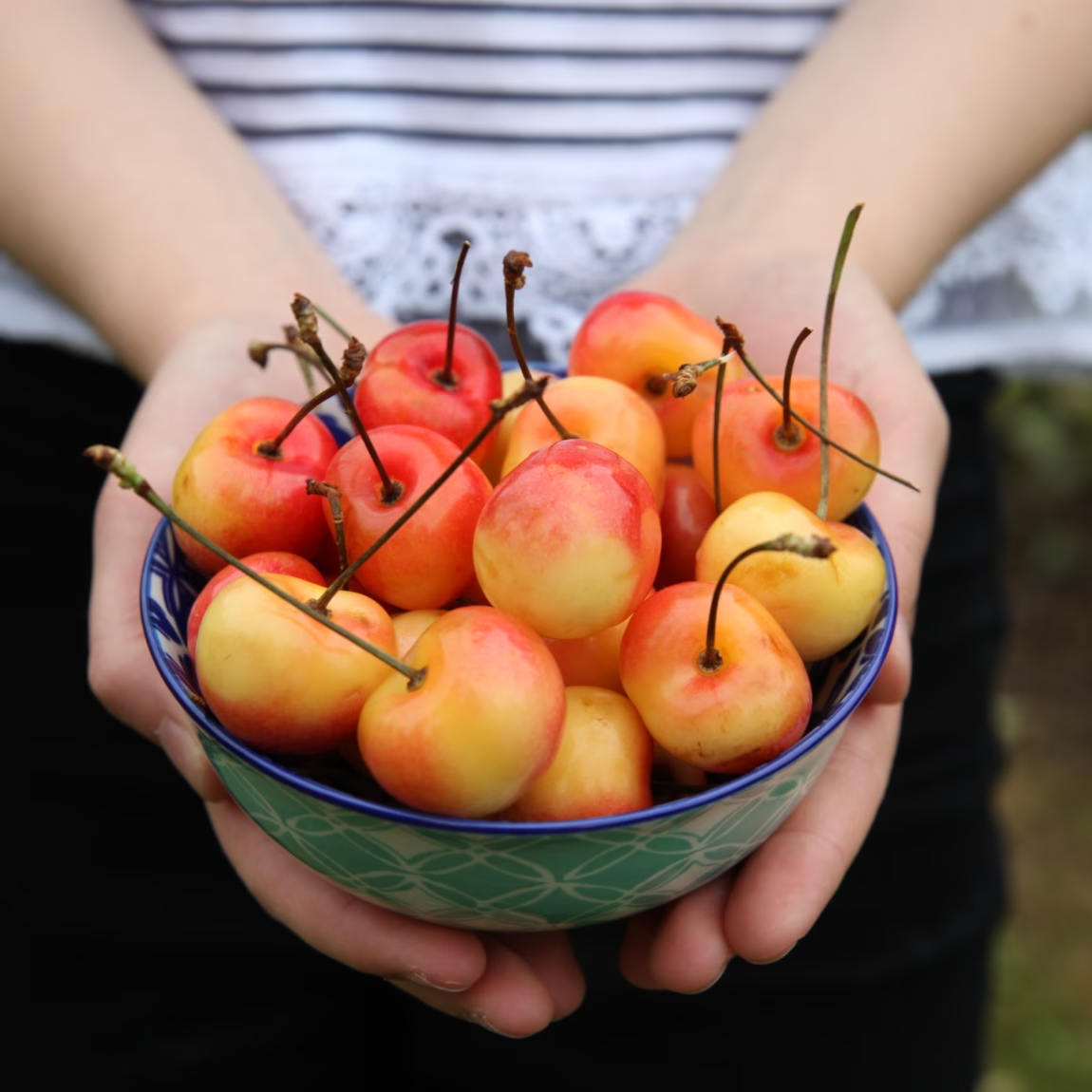
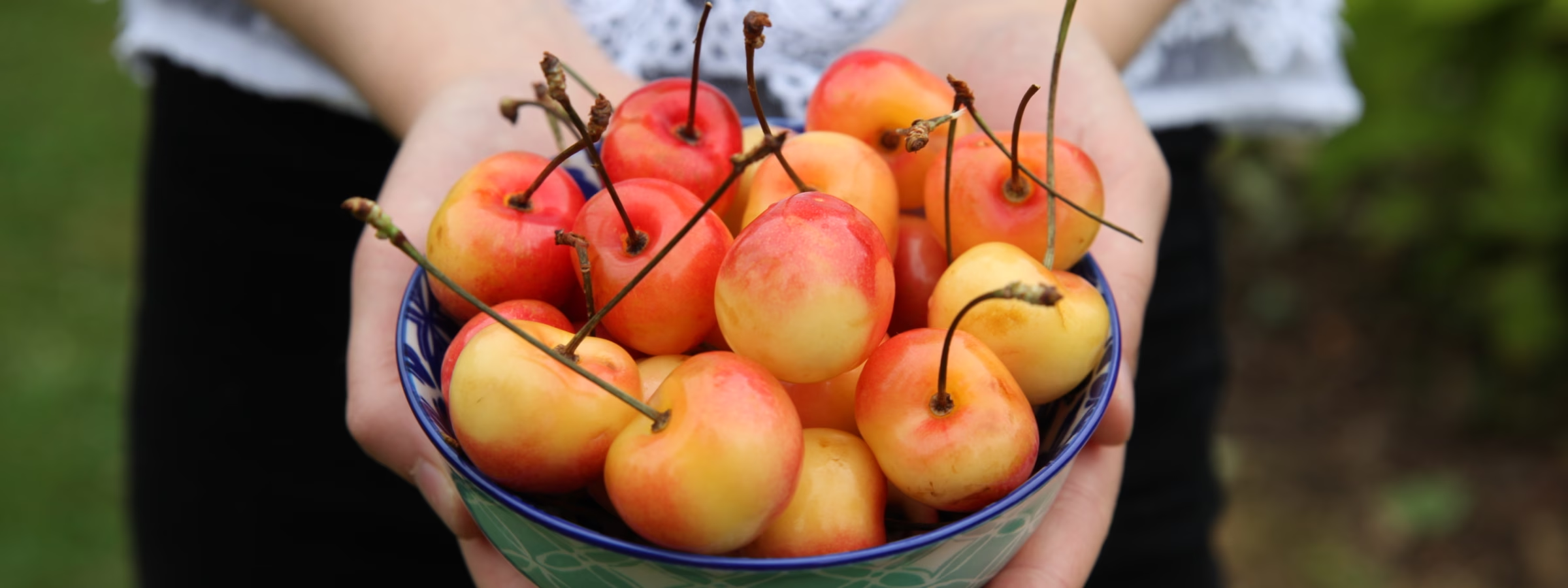
A bowl of yellow and red cherries held with both hands in an outdoor setting.

Short season, wide spread

Peaches and nectarines come in countless varieties, but the season for each variety is extremely short. Harvesting must take place within a few weeks. So to keep the shelves in Northern Europe filled throughout the spring and summer, many different varieties as well as growing locations are needed. Yet there are always times when stone fruit is simply not available. It is therefore the only fruit category that cannot be sold year-round.

Differences in taste and preference

In addition to timing, the type of stone fruit also affects sales. There are both white- and yellow-fleshed varieties. Classic peaches and nectarines are yellow-fleshed and slightly more acidic. Newer varieties are often white-fleshed, less acidic and thus sweeter in taste. In the Netherlands, consumers are less familiar with these. In Belgium, France and the United Kingdom you do see these varieties on the shelf. Unknown makes unloved - and that hinders the acceptance of these varieties.

Ripe, but not too ripe

The biggest challenge for retailers and suppliers is to offer peaches and nectarines when they are ready to eat. This is particularly difficult in the winter months and in the first weeks of the European stone fruit season, when the fruit is often still unripe. But even in mid-summer - when Spain and Italy are in full production - fruit can actually ripen too quickly.

Peaches and nectarines must be harvested at the right maturity level and then continue to ripen. This is a delicate process: if the fruit is picked too ripe, it is susceptible to damage and has a limited shelf life. If harvested too early, ripening stops and consumers are left with hard, unpalatable fruit.

In some cases, post-ripening is used to achieve proper eating ripeness, as with stone fruit from South Africa during the winter months. But this is still done on a relatively small scale.

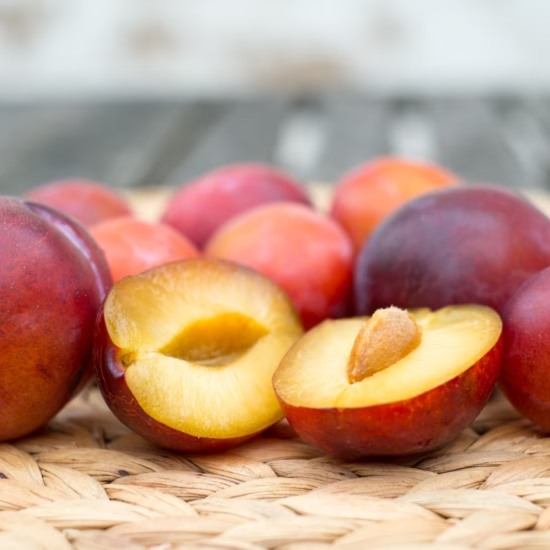
Ripe nectarines, some of which are halved, on a woven background.

Want to learn how to grade stone fruit yourself?

Want to get a better grip on the quality of peaches, nectarines and other stone fruits? In the P13 inspector module you learn how to objectively inspect these products for ripeness, taste, structure and visual characteristics. Practice-oriented, directly applicable and developed for AGF professionals who want to make a difference.

Smart management on quality

Retailers can boost sales by offering fruit that is ready to eat. But beware: fruit that is too ripe quickly leads to mealy-mouthedness and disappointment. A good rule of thumb is that the product should be edible within two days of purchase. Grip on quality is therefore important, especially with stone fruit.

Your partner in the world of fruit and vegetables

Quality and availability of fruits and vegetables fluctuate constantly. Besides daily activities such as inspecting fruit and vegetables, there are new challenges. Think of the reduction of packaging materials, the increasing focus on taste, the AGF knowledge of new staff, improving specifications, optimizing seasonal transitions and the introduction of new growing techniques.In this complex world of fruit and vegetables, Normec Foodcare is your partner. We give you a grip on the quality of AGF. We do this by:

  • Monitoring quality in the supermarket
  • Product comparisons
  • Shelf life tests
  • Taste research
  • Store inspections
  • Product specifications
  • Secondment of inspectors & quality managers
  • Training AGF quality

Our team of AGF experts and inspectors is here for you. With many years of knowledge and experience, we know better than anyone else how to make a difference in AGF as a grower, importer or supermarket chain.

Need support in the food sector?

Our experts are happy to think along with you and help you quickly on your way.

Request a quote

Fill out the form and we will contact you shortly.

Name
In which country would you like the service to be carried out?
Privacy Policy 

Related news articles

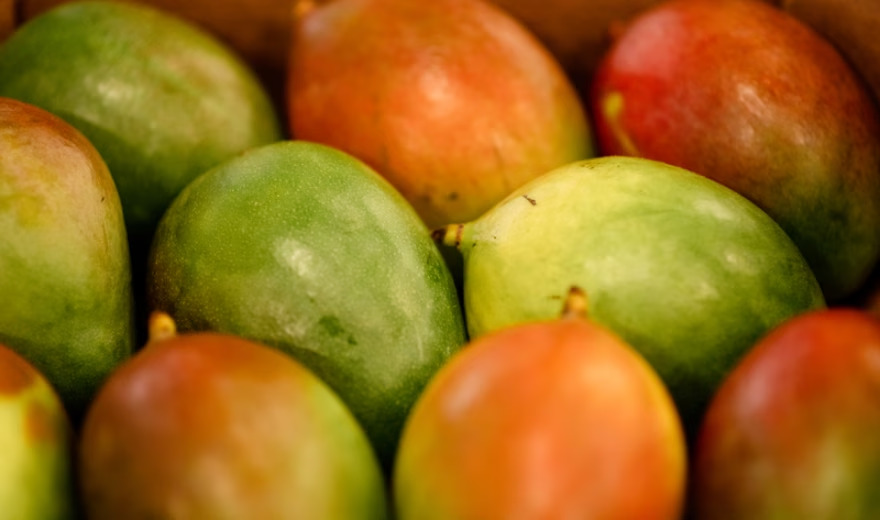
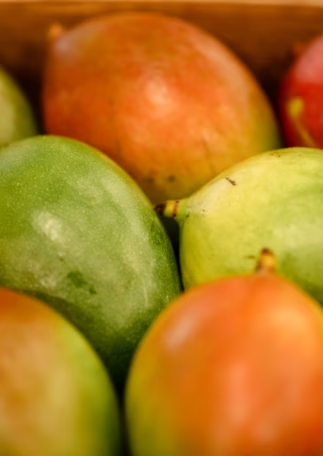
Green and red mangoes arranged closely together in a fruit bowl or display.
17 Nov 2025

AGF-Ververst: the new AGF training from Normec Foodcare

Normec Maas Goodacre, the knowledge partner in AGF world launches a new form of training in 2026 in the field of product knowledge and product quality. A training that fits in with the latest new developments in the market and treats the most important highlights per product group; a refresher course in AGF, which we are marketing under the name "AGF Refreshed".
14 Feb 2025

Keep learning as an AGF inspector: the key to top quality

The world around us is constantly changing, and that certainly applies to the potato, fruit and vegetable (AGF) sector. As an inspector, you need to stay up-to-date with the latest developments. Training and professional knowledge are indispensable in this regard. The basic training courses and certainly the recognized training for AGF inspector have been a fixture at Normec Foodcare for several years and form a solid basis for competent inspectors.

Tablets display a digital application for inspections, audits, and data recording.
13 May 2026

OneThird and Normec optimise quality control in the fresh produce sector

Together with OneThird, Normec Foodcare is working on smarter and more reliable quality control within the fresh produce sector. By combining data, AI technology and hands-on quality expertise, organisations gain greater insight into the shelf life and quality of fresh products. This helps companies throughout the supply chain make faster, data-driven decisions, reduce food waste and improve product quality assurance.

28 Apr 2025

Sweet potato added to P5 inspector module

The world of fruits and vegetables is constantly changing. Quality and availability fluctuate from day to day and from season to season. New regions of origin, the introduction of new products, and innovative cultivation techniques also contribute to this dynamic environment. Continuous learning and training are therefore essential. With Normec Foodcare’s Inspector Modules and other produce training courses, you’ll always stay ahead of the curve.

Sign up for our newsletter

Sign up

Naam

Related services

Product approval Fresh produce

Quality monitoring in the supermarket

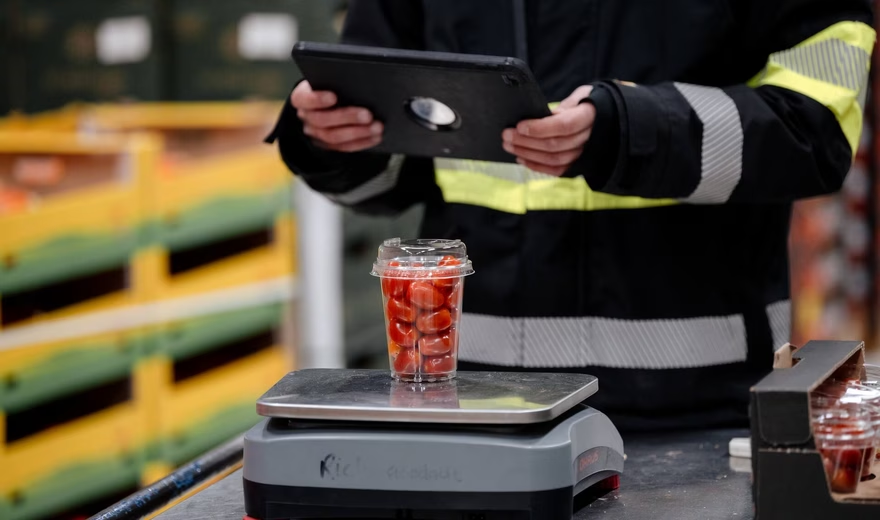
A warehouse worker uses a tablet next to an industrial scale with packaged products during a logistics inspection.

Shelf life tests fresh produce

Fresh Produce Quality Inspector Training