



Accessibility links Skip to main content

Environmental pathogens

Pathogens are a common topic in the food industry because the contamination of food with pathogens can be dangerous to consumer health. During the production process, pathogens can occur in the product but also in the environment of the production site. We then call this an environmental pathogen. Different environmental pathogens are present in different sectors of the food industry.

Contact us

Fill out the form and we will contact you shortly.

Name
In which country would you like to be assisted?
Privacy Policy 
Continue reading

What is an environmental pathogen and how can it get into the product?

Environmental pathogens are pathogens (such as bacteria, viruses, fungi or parasites) that can occur in the environment - outside the bodies of humans or animals - and can cause infection from there. They can be found in water, soil, surfaces in the production environment, air and other places within the production environment. These pathogens can survive and even grow for long periods of time in the production environment. Environmental pathogens therefore pose a great risk to consumers because they can contaminate products after a reducing treatment has taken place. We call this post-contamination. Therefore, it is important to identify them and set up a good monitoring plan to exclude the growth of environmental pathogens.

The most common environmental pathogens in the food industry are Listeria Monocytogenes and Salmonella spp. These two pathogens are also the main focus of legislation. In addition, there are several environmental pathogens that are especially relevant in specific industries. Examples include.

  • Bacillus cereus
  • E. coli (STEC)
  • Campylobacter spp.
  • Enterobacteriaceae
  • Staphylococcus aureus
  • Clostridium perfringens

Passives and persistent strains

It is good to know that there may be passives or persistent strains (house strains) in the production environment. Passants are found once during environmental monitoring and can be removed by cleaning and decontamination procedures, while persistent strains are found over a longer period of time. For example, they may settle in niches and become a repeated problem because they may not be completely inactivated by standard cleaning and disinfection procedures.

The growth of pathogens depends greatly on the conditions in which the pathogen resides. Factors such as temperature, presence of nutrition, pH, aw value (water activity), salinity and oxygen presence can cause a pathogen to grow rapidly or diminish. So it is important to know what these parameters are within your farm to better understand which pathogens may pose a risk. The following will further describe which environmental pathogens may pose a risk and for which sectors specifically.

Listeria monocytogenes

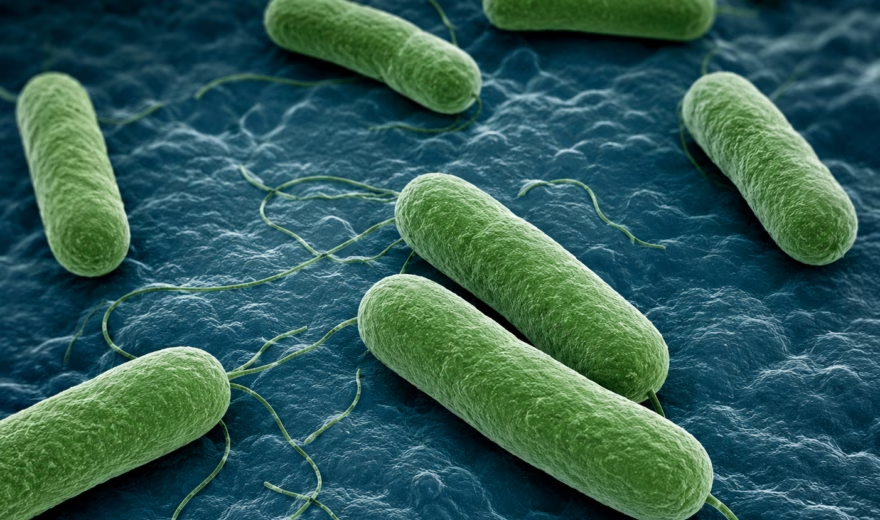
Listeria monocytogenes is a bacterium belonging to the Listeriaceae family and is known as a dangerous environmental pathogen, especially within the food industry. The bacteria can cause the disease listeriosis, a serious infection that mainly affects high-risk groups, such as pregnant women, the elderly and people with weakened immune systems. Listeria can also form so-called biofilms in which the bacteria are more robust and can adhere to surfaces.

Listeria monocytogenes is special because of its ability to grow in conditions where many other bacteria cannot:

  • Temperature range à grows between -0.4°C and 45°C with an optimum between 30-37°C. This means the bacteria can grow in refrigerated products.
  • pH range à has a pH tolerance between 3.3-9.6 with an optimum of 7. Below a pH of 4.4, no growth is possible.
  • Aw value e à grows above an Aw value of 0.92 with an optimum of 0.97. Therefore, does not grow below an Aw value of 0.92.
  • Salt tolerance à Can grow at salinities up to 10%. Survives in salinities of 20%.
  • Oxygen presence à Listeria is facultatively anaerobic, meaning it can grow with or without oxygen.

Because we consider it an environmental pathogen, in addition to possibly being present on the product, it has other possible habitats:

  • Humid and cool production environments.
  • Drains, floor drains, seams and cracks of machinery
  • Places where condensation is possible
  • Biofilms (listeria can adhere to biofilms making it more resistant to standard cleaning and disinfection)

In addition, the bacteria also occurs in the natural environment such as in soil, water, plants and animal feces. Listeria is not demanding when it comes to nutrients. It grows well in high-protein and high-carbohydrate environments such as:

  • Meat products (cooked/cooked).
  • Soft cheeses and dairy products (brie, camembert, raw milk cheeses)
  • Fish (smoked)
  • Ready-to-eat products
  • Pre-packaged raw vegetables and/or salads

Listeria monitoring is especially important in sectors where refrigerated, Ready-to-eat products are produced. This is because these products have often already had a reducing treatment, so post-contamination can cause consumers to consume the pathogen directly without a heating step.

Therefore, relevant sectors for Listeria Monocytogenes are:

  • Meat and poultry processing plants (especially cooked and cooked products such as deli meats)
  • Dairy industry (especially soft cheeses and raw milk products)
  • Fish processing plants (especially smoked, raw salmon or other types of fish)
  • Vegetable processing plants (especially raw salads and sliced vegetables)
  • Ready-to-eat products (ready-to-eat meals).

In addition to being at increased risk in these sectors, the risk of Listeria monocytogenes is a relevant hazard for almost any sector. Be sure to identify the factors that may promote or inhibit the growth of listeria so that a proper assessment can be made regarding the risk of listeria infections.

Salmonella spp.

Salmonella spp. are a group of bacteria within the family Enterobacteriaceae known worldwide to cause foodborne infections. Salmonella is commonly found in farm animals and their products and is therefore a frequent cause of gastrointestinal infections. It causes the disease salmonellosis.

Salmonella has relatively mild requirements for growth and survival:

  • Temperature range: grows between 8°C and 47°C, with an optimum around 37°C.
  • pH range: tolerance from about pH 4.4 to 9, with optimum growth between pH 6.5-7.5.
  • Aw value: grows from a minimum aw of 0.95, but can survive in lower values.
  • Oxygen requirement: facultative anaerobic - grows both with and without oxygen. .
  • Dry conditions: Salmonella can survive in dry conditions.

Salmonella occurs naturally in the intestines of animals and can enter the environment through feces. At production sites, it can enter through contaminated raw materials such as raw meat, eggs, spices or nuts. The bacteria can survive on dry surfaces, in dust and in hard-to-clean areas such as seams, cracks and machinery. Salmonella can also accumulate in moist areas such as drains, wet floors and condensation points. It can spread via personnel, air currents or cross-contamination between "dirty" and "clean" areas.

Salmonella is a bacterium with relatively low dietary requirements and uses a wide range of nutrients often present in animal products. Think especially of proteins and fats, but also sugars and minerals are used as nutrients for Salmonella spp. If you then translate that to products you have to think of products like:

  • Meat, eggs and dairy (proteins)
  • Dough, dairy and vegetables (carbohydrates)
  • Meat preparations and sauces (fats)

This nutrient preference is also reflected in the sectors where salmonella is especially common. These include:

  • Meat and poultry industry
  • Egg processing
  • Dairy industry
  • Animal feed industry

In addition, salmonella can also occur in other product groups because it can survive in dry conditions and therefore still get into a product. Being aware of this is crucial because dry products are often not immediately seen as risky for salmonella. Examples include:

  • Herbs and spices
  • Nuts and peanuts
  • Chocolate
  • Flour and meal

Bacillus cereus

Bacillus cereus is a spore-forming bacterium commonly found in nature and food production environments. The bacterium is particularly notorious for its ability to produce heat-stable toxins that can cause food poisoning. These spores are difficult to remove so it can remain present in the product even after reducing steps such as pasteurization and cooking.

The growth factors of bacillus cereus:

  • Temperature range: grows between 5°C and 50°C, with an optimum around 30-37°C.
  • Some strains can grow even at refrigerated temperatures, making them dangerous in refrigerated products.
  • pH range: about 4.3 to 9.3, with an optimum around 6-7.
  • Aw value: grows from a minimum aw of 0.91, but survival in dry products via spores is excellent.
  • Salinity: grows to a salinity of up to 10%.
  • Oxygen content: B. cereus is facultatively anaerobic - grows both with and without oxygen.

As mentioned earlier, B. cereus forms spores that are highly resistant to heat, dehydration and chemical cleaning - these can survive pasteurization and drying.

Bacillus cereus occurs naturally in soil, dust, plant material and water, making it widespread in the environment. The bacteria can enter production sites through raw materials such as grains, rice, milk and vegetables.

Because B. cereus forms spores, it can survive on surfaces, in dust particles and in dry products such as powders or spices. Poor hygiene, inadequate cleaning of equipment or the use of contaminated raw materials increases the risk of spread. B.cereus gets its nutrients from proteins and sugars, but mainly from starch. This is because the bacterium can efficiently convert starch into nutrients to then produce toxins. Therefore, B. cereus can be found many times in products such as:

  • Potatoes, rice, pasta and cereals
  • Milk and cream products (both raw and powdered)
  • Desserts/ Pastries
  • Herbs and spices
  • Prepared meals and meal salads with herbs and starch component

This means that there are a number of industries that are more likely to encounter B. cereus during their production process:

  • Dairy industry (milk and desserts)
  • Grain processing industry (source of starch)
  • Herbs and spices industry
  • Prepared meals

In addition to various sectors in the production process, there is also a high probability of encountering B. cereus in mass kitchens or catering establishments. Think of restaurants, canteens, and other businesses where food is prepared. Because products here are stored (not always properly refrigerated), precooked, and reheated, there is a chance that toxin formation has occurred.

E. Coli (STEC).

Escherichia coli (STEC), or Shiga-toxin-producing Escherichia coli, is a bacterium that lives in the intestinal tract of humans and animals, but can also survive in the environment. It is best known for causing severe food poisoning, with symptoms ranging from diarrhea to kidney failure (HUS - hemolytic-uremic syndrome). The danger lies mainly in the production of Shiga toxins, which are harmful to the intestines and kidneys.

The growth conditions for STEC are as follows:

  • Temperature range: grows between 2.5 °C and 50 °C with an optimum of 37 °C
  • pH range: grows between a pH of 4.2 and 9.5 with an optimum of 6.8
  • Aw value: grows from a minimum Aw value of 0.935.
  • Oxygen content: STEC is facultatively anaerobic - grows both with and without oxygen presence.

Shiga-toxin-producing Escherichia coli (STEC) lives naturally in the intestines of animals, especially cattle, where it enters the environment via feces. It enters production sites through raw meat, vegetables (via contaminated water or manure), and inadequately processed dairy products. The bacteria can survive on surfaces of machinery, floors and packaging materials, especially if they are not properly cleaned.

STEC can persist in both refrigerated and warm environments, increasing the risk. Poor hygiene practices, such as cross-contamination between raw and prepared foods, allow STEC to continue to spread within the production site.

The main food sources of STEC are products rich in proteins, fats and sugars. Examples include:

  • Raw meat (primarily beef)
  • Dairy products (primarily raw milk products)
  • Vegetables (also mainly raw products)
  • Fruit juices (unpasteurized)

Therefore, relevant sectors in which STEC has an increased chance of occurrence are also those in which these products are produced. Examples include:

  • Meat processors who make raw beef products
  • Dairy processors making raw milk products
  • Vegetable processors who produce unprocessed products where the vegetables can be contaminated with contaminated water, for example.
  • Fruit juice producers where the product is not pasteurized.

Campylobacter spp.

Campylobacter spp.(especially Campylobacter jejuni and Campylobacter coli) are bacteria responsible for one of the most common foodborne infections in humans worldwide: campylobacteriosis. A small amount of bacteria is enough to make someone sick. These bacteria can cause serious gastrointestinal symptoms such as diarrhea, abdominal pain, fever and in some cases serious complications such as Guillain-Barré syndrome.

The growth conditions for campylobacter are as follows:

  • Temperature range: grows between 32°C and 45°C, with an optimum around 41-42°C. Campylobacter is a thermophilic bacterium and grows best around the body temperature of poultry. Also, the bacteria cannot grow outside the body of animals.
  • pH range: approximately 4.9 to 9.0
  • Aw value: grows from a minimum Aw of 0.99 and is susceptible to dehydration.
  • Salinity: grows from a salinity of 2-4.5%
  • Oxygen content: Campylobacter is micro-aerophilic, meaning it grows at low oxygen levels. The optimum is between 6-10% O2 with 2-10% CO2

Campylobacter occurs in the gastrointestinal tract of warm-blooded animals mainly in poultry, but others can also be carriers. On production sites, the bacteria are common in poultry slaughterhouses on the cutting machines, floor surfaces, workbenches and pipes. The bacteria can also move easily through cross-contamination, both at the production site and ultimately in the consumer's kitchen.

Compared to other environmental pathogens, campylobacter has a more specific preference for nutrients. Namely, it prefers amino acids as a source of energy and specifically the amino acids asparagine, serine and glutamine. Compared to other pathogens, Campylobacter does not use sugars as a food source so it grows well on protein-rich products such as meat and milk.

Campylobacter is an environmental pathogen which can occur in animal products. Therefore, the most relevant sectors to consider for the environmental pathogen are as follows:

  • Poultry processing
  • This is by far the most important sector. Poultry is the natural carrier of campylobacter and in these conditions the pathogen grows best
  • Meat processing of other animal species
  • Milk and dairy processors

Staphylococcus aureus

Staphylococcus aureus (S. aureus) is a common bacterium that lives on the skin and mucous membranes of humans and animals. This bacterium can cause foodborne infections through toxin formation, and is considered a typical environmental pathogen due to its ability to survive for long periods of time on surfaces and spread through personnel or airborne particles.

The growth conditions of S. aureus are as follows:

  • Temperature range: grows between 7°C and 48°C, with an optimum around 35°C. Toxins can be produced between 10°C and 48°C.
  • pH range: approximately 4.5 to 9.3 with optimum growth at 6.8
  • Aw value: grows from a minimum Aw of 0.83-0.86 and therefore thrives in dry environments.
  • Salinity: S. aureus is halotolerant so it grows in environments up to 15% salinity.
  • Oxygen content: S. aureus is a facultatively anaerobic bacterium - grows both with and without oxygen.

S. aureus is an environmental pathogen that is not commonly found in products themselves but occurs primarily naturally on the skin, nose and throat of humans and animals.

Within production sites, it can occur through personnel themselves (especially with poor hygiene), contact surfaces such as cutting boards and workbenches, and can adhere to rough surfaces via biofilm formation. The nutrients that S. aureus uses to grow are mainly in protein- and carbohydrate-rich products such as:

  • Meat products
  • Dairy products
  • Egg products
  • Pastry products
  • Fish products

S.aureus is primarily contagious through poor preparation techniques in kitchens and soup kitchens, with post-contamination being the greatest risk. S. aureus also becomes a problem primarily when products are not kept properly refrigerated. In these cases, the following industries are particularly susceptible to S. aureus:

  • Dairy industry
  • Meat and meat products industry
  • Pastry and bakery industry
  • Catering and industrial kitchens
  • Fish processing industry

Need support in the food sector?

Our experts are happy to think with you and help you quickly on your way.

Request a quote

Fill out the form and we will contact you shortly.

Name
In which country would you like the service to be carried out?
Privacy Policy 

Related news articles

24 Jun 2025

Challenge testing in the food industry: more than just Listeria

Challenge tests are laboratory tests in which a known number of microorganisms (such as Listeria monocytogenes, Salmonella, Bacillus cereus, yeasts or fungi) are deliberately added to a food product. The product is then stored under realistic storage conditions (such as temperature, packaging and time) to observe whether and how quickly the microorganism grows, survives or dies. They aim to assess the microbiological safety or shelf life of a specific product in its real matrix and packaging. Challenge tests are best known in the context of Listeria control but have numerous other applications and assets.


18 Aug 2025

Why Listeria Control Isn’t Just a “Nice-to-Have”

During the week of August 12–14, 2025, French authorities recalled dozens of soft cheeses (including Camembert, Brie, and goat cheese) following an outbreak of listeriosis that included at least 21 cases and two deaths. The products—sold under various brand names in major retail chains—were distributed in France and internationally through August 9. Warnings followed shortly thereafter in Spain, Luxembourg, and other countries, and Belgium also reported its first linked case.

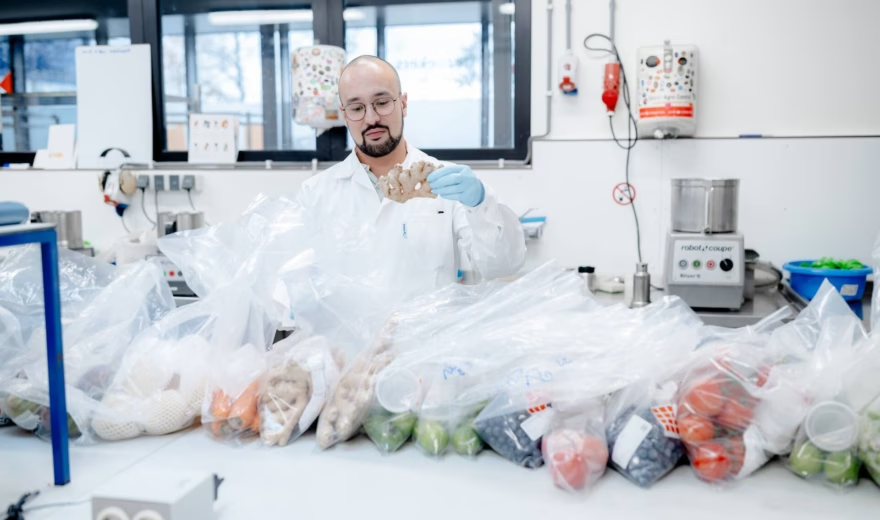
A laboratory technician examines raw material samples for quality control and analysis.
13 May 2026

Listeria under control: why challenge testing is a priority now

First, it is good to set the background. Regulation 2073/2005 establishes two key criteria for Listeria in ready-to-eat foods: first, the criterion that L. monocytogenes should not be detectable in 25 g for products in which growth may occur, before the product leaves the operator; second, the limit of 100 cfu/g over the entire shelf life if growth of Listeria is shown not to occur.

28 Jul 2025

Salmonella and its hidden serotypes

Salmonella: for many, a name associated with raw chicken and food poisoning. But did you know that this bacterium comes in more than 2,500 variants? Behind the well-known culprits such as Salmonella Typhimurium and Salmonella Enteritidis is a world of lesser-known serotypes that are appearing with increasing frequency. What does this mean for our health and what can we do about it? Salmonella remains a global health risk. In recent years, the number of reports has increased significantly. In Poland alone, there were 1005 reports of infections. According to the Rapid Alert System for Food and Feed (RASFF), about 650 additional reports have been recorded over the past five years. The increase in serotypes such as S. Enteritidis (+250 reports), S. Infantis (+200 reports) and S. Newport (+50 reports) are particularly noteworthy. While S. Typhimurium actually showed a decrease of 80 notifications, other serotypes are thus receiving increasing attention.

Sign up for our newsletter

Sign up

Naam

Related services

Microbiological research

Shelf life testing

Illustration of Listeria monocytogenes, a bacterium relevant to food safety research.

Listeria research and studies