

Accessibility links Skip to main content

Why Listeria Control Isn’t Just a “Nice-to-Have”

During the week of August 12–14, 2025, French authorities recalled dozens of soft cheeses (including Camembert, Brie, and goat cheese) following an outbreak of listeriosis that resulted in at least 21 cases and two deaths. The products—sold under various brand names in major retail chains—were distributed in France and internationally through August 9. Warnings followed shortly thereafter in Spain, Luxembourg, and other countries, and Belgium also reported its first linked case.

Contact us

Fill out the form and we will contact you shortly.

Name
In which country would you like to be assisted?
Privacy Policy 
Continue reading

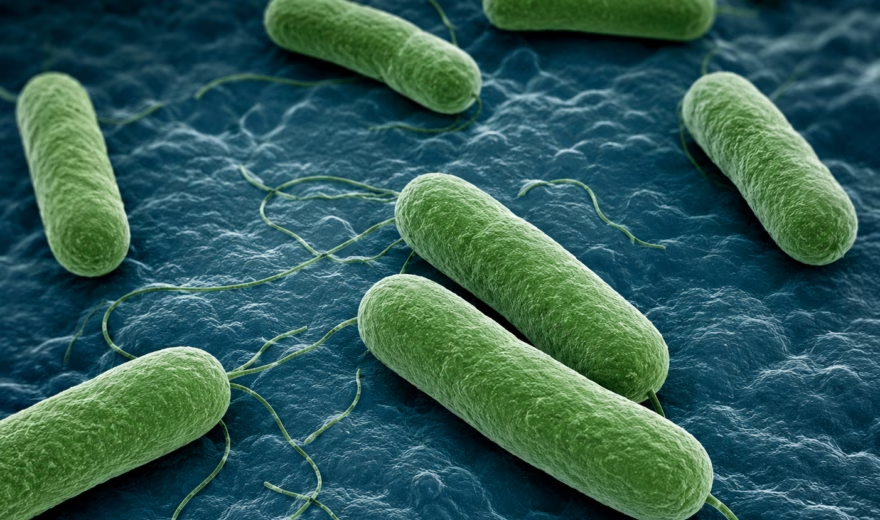
Why Listeria Is So Insidious

  • Grows in the refrigerator: Unlike many other pathogens, Listeria monocytogenes can multiply when refrigerated (≤4 °C). As a result, ready-to-eat (RTE) products with a long shelf life—such as soft cheeses—constitute a high-risk category.
  • Long incubation period: Symptoms can appear up to 8 weeks after consumption. As a result, outbreaks are often detected late.
  • Severe illness in vulnerable populations: Pregnant women, the elderly, and people with weakened immune systems are at the highest risk of sepsis, meningitis, and death. In 2023, the EU recorded its highest annual number of listeriosis cases to date (2,993 cases, including 340 deaths).
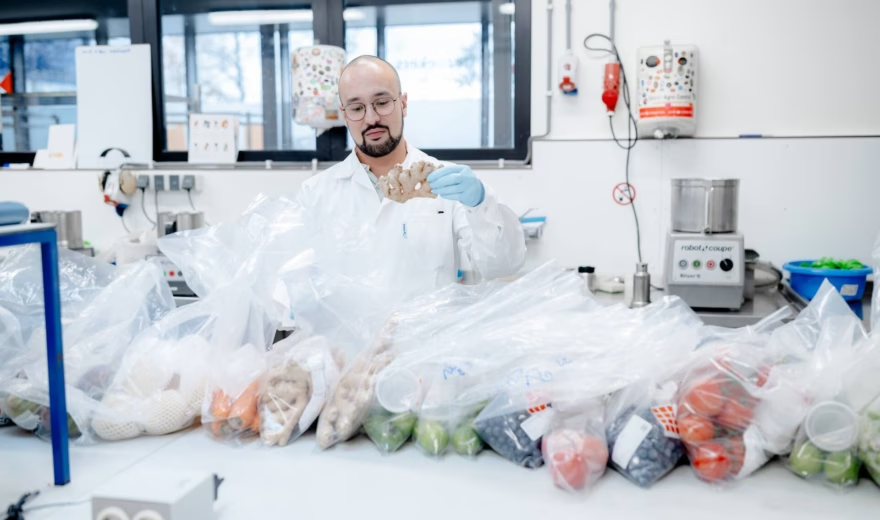
A woman is looking through a microscope at samples in a laboratory.

Lessons for food producers and retailers

For producers, effective Listeria control begins with product and process design. By adjusting parameters such as pH, water activity, and salt content to prevent Listeria growth, the foundation for food safety is laid. This also includes limiting shelf life and ensuring a strict cold chain throughout the entire logistics process. Formulas and packaging types—such as modified-atmosphere packaging—must be validated using challenge tests or predictive microbiology to ensure that the pathogen cannot multiply during the shelf life.

Environmental monitoring is then the first line of defense against contamination. Listeria often thrives in damp areas such as drains, floor cracks, and cold storage rooms. A zoning plan that clearly separates different hygiene zones helps limit contamination. Swabs must be taken both before production (pre-operational) and during production. Positive findings should not be dismissed as isolated incidents but must lead to a thorough root-cause analysis, intensive cleaning, and re-inspection, followed by trend analysis to prevent recurrence.

The cleaning and disinfection program must also be practical and effective. Alternate between different types of cleaning and disinfecting agents, such as oxidative agents and quaternary ammonium compounds, to break down biofilm formation. Where possible, dry cleaning is preferred. If wet cleaning is necessary, work must proceed from clean to dirty areas, and the equipment must be left completely dry. Maintenance work involving the opening of equipment requires specific procedures, including pre-startup checks.

For products such as soft cheeses, which often undergo further processing after pasteurization, it is crucial to minimize recontamination. This requires a clear physical separation from zones containing raw products, controlled airflow, and strict one-way traffic for personnel and materials. Packaging lines serve as critical control points within the HACCP plan and must be treated with the same care as high-care/risk zones.

Finally, a robust traceability system is essential. Producers must be able to trace and recall batches within minutes. Regular recall drills (for example, every quarter) keep the system sharp. Clear, multilingual communication with consumers and close cooperation with national recall portals such as RappelConso in France or AESAN in Spain ensure that an actual recall proceeds quickly and effectively.

Conclusion

The French cheese outbreak demonstrates how quickly Listeria can travel throughout the entire supply chain, with serious consequences. Those who take environmental monitoring, product design, hygienic design, and rapid recalls seriously dramatically reduce the risk and comply with EU criteria. Now is the time to test your Listeria program (and scale it up where necessary).

Discover the 9 control measures for Listeria monocytogenes

In the food sector, controlling Listeria monocytogenes in ready-to-eat foods remains a key issue. In addition to the HACCP analysis and the necessary hygiene measures to control (post-)contamination, the focus is on studies of potential contamination and the possibility of bacterial growth under “worst-case” conditions.

Discover in 9 steps what control measures you can take and read our white paper on Listeria monocytogenes.

Need support in the food industry?

Our experts are happy to work with you and get you started quickly.

Request a quote

Fill out the form and we will contact you shortly.

Name
In which country would you like the service to be carried out?
Privacy Policy 

Related news articles

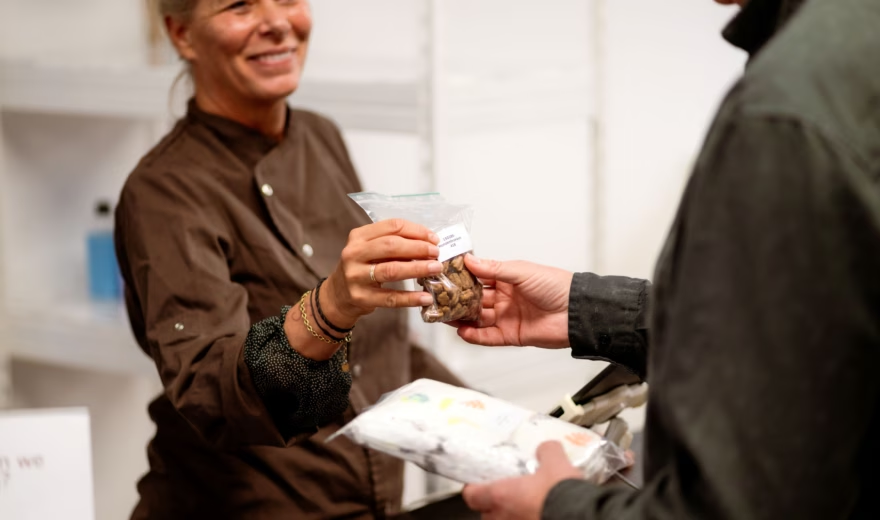
Een persoon overhandigt verpakte monsters aan een andere persoon voor verwerking of beoordeling.
14 Aug 2026

Normec Sensory Opens New Sensory Testing Center in Liège

LIÈGE – Normec Sensory is further expanding its presence in Belgium with the opening of a new sensory testing center in Liège. With this expansion, Normec Sensory now has its own testing infrastructure in both Flanders and Wallonia. This enables organizations to rely on in-depth consumer insights from across Belgium, supported by local expertise and a broad network of respondents.
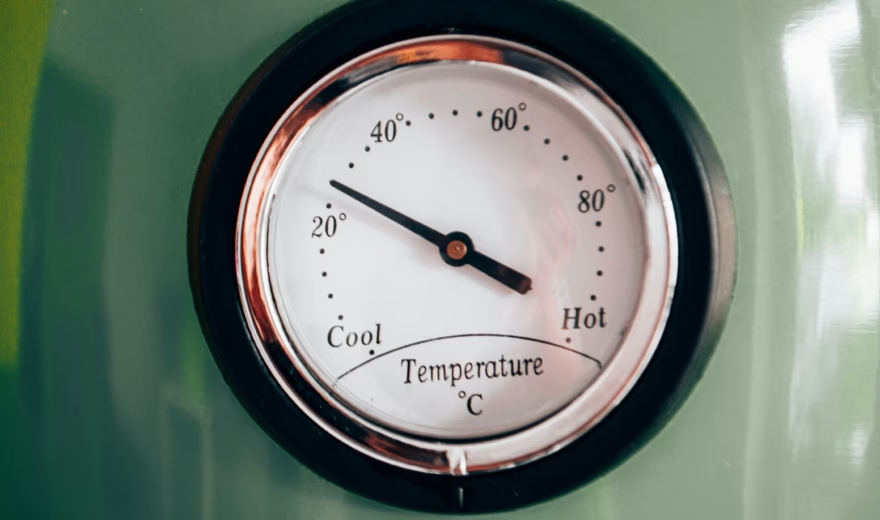
An analog temperature gauge displays the temperature of a system or process environment.
23 Jun 2026

Summer Stress in the Agri-Food Industry: What Are the Main Risks to Food Safety?

For many companies in the food industry, summer is a challenging time. Vacation periods lead to staff turnover, supply chains are put to the test, and rising temperatures increase the risk of deviations in production, storage, and distribution. At the same time, consumer behavior is changing: products are consumed out of the home more often, remain out of refrigeration for longer periods, and are stored differently than originally planned.

23 Jun 2026

TFA: Why This PFAS Substance Is Showing Up More and More Often

PFAS have been a major focus of attention in the food industry for several years. Recently, however, a specific substance has been cropping up more and more frequently in discussions about food safety, the environment, and regulations: TFA, or trifluoroacetic acid.

Inspection and examination of plants in a controlled growing environment for quality and cultivation management.
25 May 2026

Normec Groen Agro Control at GreenTech 2026

From 9 to 11 June, Normec Groen Agro Control will be present at the GreenTech exhibition at RAI Amsterdam. During this international trade fair for horticulture technology, we will engage with professionals from the agri, horticulture, and food supply chain on current challenges related to quality and food safety.

A laboratory technician examines raw material samples for quality control and analysis.
13 May 2026

Listeria under control: why challenge testing is a priority now

First, it is good to set the background. Regulation 2073/2005 establishes two key criteria for Listeria in ready-to-eat foods: first, the criterion that L. monocytogenes should not be detectable in 25 g for products in which growth may occur, before the product leaves the operator; second, the limit of 100 cfu/g over the entire shelf life if growth of Listeria is shown not to occur.

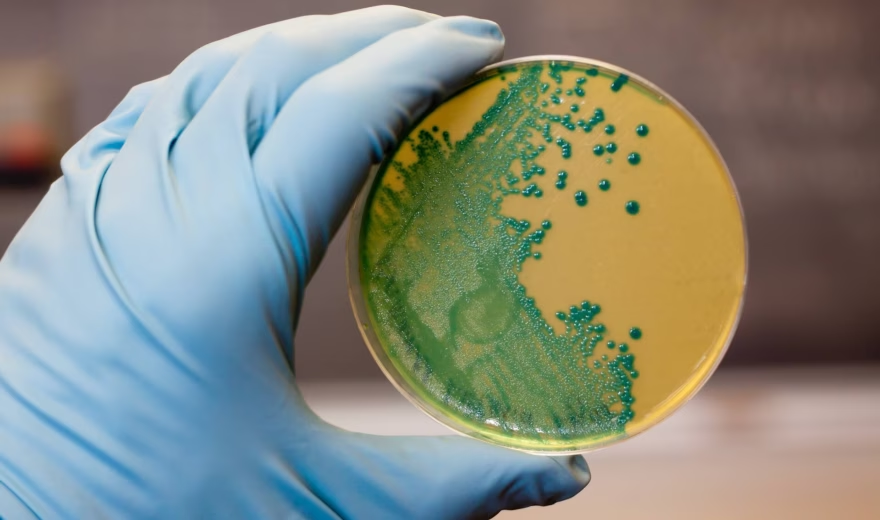
Petri dish with blue-green bacterial colonies on nutrient agar, held with a laboratory glove.
16 Sep 2025

In conversation with Aldo Evers on Listeria and challenge testing

Listeria has been in the news regularly lately. The coverage shows how big the consequences can be for public health, how important it is to have a good control of Listeria monocytogenes and the essential role that challenge tests play in this. In this article we talk to Aldo Evers - Technical Director Microbiology - about Listeria and challenge testing.

28 Jul 2025

Salmonella and its hidden serotypes

Salmonella: for many, a name associated with raw chicken and food poisoning. But did you know that this bacterium comes in more than 2,500 variants? Behind the well-known culprits such as Salmonella Typhimurium and Salmonella Enteritidis is a world of lesser-known serotypes that are appearing with increasing frequency. What does this mean for our health and what can we do about it? Salmonella remains a global health risk. In recent years, the number of reports has increased significantly. In Poland alone, there were 1005 reports of infections. According to the Rapid Alert System for Food and Feed (RASFF), about 650 additional reports have been recorded over the past five years. The increase in serotypes such as S. Enteritidis (+250 reports), S. Infantis (+200 reports) and S. Newport (+50 reports) are particularly noteworthy. While S. Typhimurium actually showed a decrease of 80 notifications, other serotypes are thus receiving increasing attention.

Sign up for our newsletter

Sign up

Naam

Related services

Illustration of Listeria monocytogenes, a bacterium relevant to food safety research.

Listeria research and studies

Microbiological research

Shelf life testing

Food safety risk scan