

Accessibility links Skip to main content

Salmonella in eggs: recent outbreak highlights the importance of targeted testing

A Salmonella outbreak linked to eggs from a Belgian poultry farm has now made at least 300 people sick. The situation once again highlights the importance of systematic monitoring and timely laboratory testing within the egg supply chain.

Contact us

Fill out the form and we will contact you shortly.

Naam
In which country would you like to be assisted?
Privacy Policy 
Continue reading

On 10 August 2026, the Belgian food safety authority FASFC announced a recall of barn eggs bearing the stamp codes 2-BE-1073-01, 2-BE-1073-02, 2-BE-1073-03 and 2-BE-1073-04. The recall was initiated because of the possible presence of Salmonella. Reports based on the European Rapid Alert System for Food and Feed (RASFF) indicate that the eggs were distributed to several European countries, including the Netherlands.

Salmonella Enteritidis remains an important risk

Salmonella Enteritidis is one of the major causes of foodborne infection. Infection can lead to symptoms such as diarrhoea, abdominal pain, fever, nausea and vomiting. Young children, older people and people with weakened immune systems are particularly at risk of more severe illness.

Salmonella also requires continued attention in the Netherlands. According to the Dutch National Institute for Public Health and the Environment (RIVM), infections with Salmonella Enteritidis have shown a sustained increase since mid-2023. Eggs are an important potential source of infection. The bacterium may be present both on the eggshell and inside the egg. Contamination cannot be detected by sight, smell or taste.

What does this mean for businesses in the egg supply chain?

For poultry farmers, packing centres, egg-product manufacturers and food businesses that process eggs, controlling Salmonella is an essential part of food safety.

  • monitoring raw materials, eggs and egg products;
  • checking production areas and the farm environment;
  • assessing suppliers and product origin;
  • maintaining hygienic practices and preventing cross-contamination;
  • controlling temperatures and any heat-treatment processes;
  • ensuring rapid batch traceability;
  • conducting additional testing following deviations, complaints or suspected contamination.

Laboratory testing is not a stand-alone measure. It is an important tool for verifying the effectiveness of a food safety system. By analysing representative samples, businesses can identify possible contamination at an early stage and take targeted action.

Salmonella testing in eggs and egg products

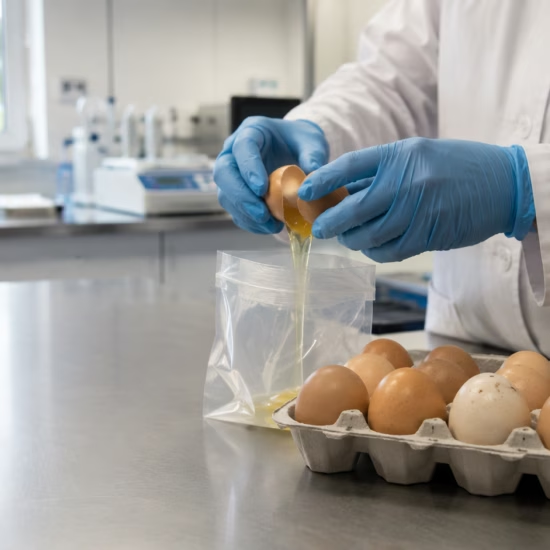
Normec Foodcare laboratories perform microbiological testing for pathogens, including Salmonella. Depending on the product, process and purpose of the investigation, we determine the appropriate sampling and analytical method together with you.

  • routine monitoring of eggs and egg products;
  • verification of a food safety or monitoring plan;
  • investigation following a deviation or suspected contamination;
  • testing raw materials and finished products;
  • support during incidents and potential contamination events.

This provides reliable insight into the microbiological safety of your products and supports well-founded decisions on release, processing and any necessary follow-up measures.

Need greater assurance about the microbiological safety of your eggs or egg products?

Have your products tested for Salmonella by a specialist Normec Foodcare laboratory. Our experts advise you on the appropriate analysis and help you interpret the results.