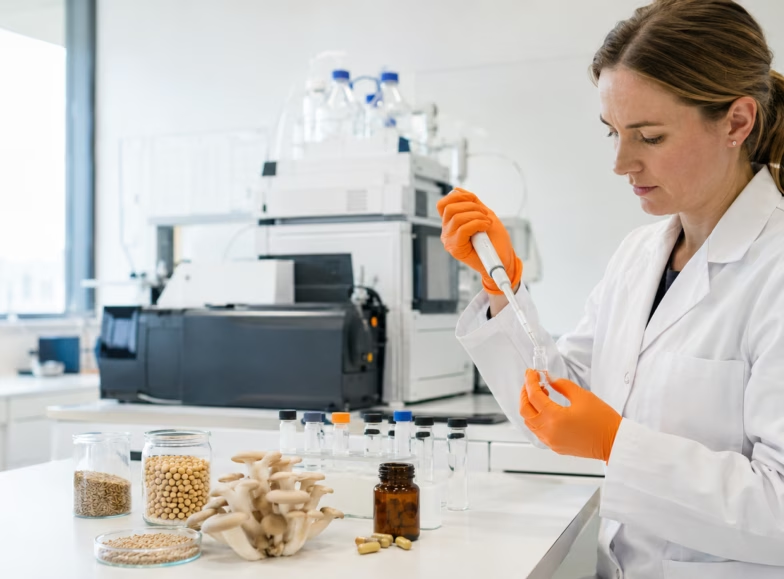
Reliable determination of spermidine content
Spermidine is a naturally occurring biogenic polyamine found in humans, animals, plants and microorganisms. Plant-based foods can contain varying levels of spermidine, with wheat germ, cereal germ, soy and edible algae among the most relevant sources.
Spermidine is increasingly used as an ingredient or selling point in food products and dietary supplements. When a product is labelled or marketed with a statement such as “contains spermidine”, the declared content must be accurate and supported by reliable analytical data.
Our laboratory analysis helps you determine the actual spermidine content of your product and provides a reliable basis for product specifications, labelling and quality assurance.

Why analyze spermidine?
A professional spermidine analysis helps you:
- Determine the actual spermidine content of your product
- Support product information and label statements with analytical data
- Monitor raw materials and finished products
- Compare batches and maintain consistent product quality
- Provide traceable documentation to customers, auditors and business partners
- Identify deviations at an early stage

Which products can we analyze?
Spermidine analysis is particularly relevant for products containing naturally spermidine-rich ingredients, including:
- Wheat germ
- Cereal germ and cereal extracts
- Legumes
- Soy and soy-based products
- Soy-based meat alternatives
- Edible algae and algae extracts
- Mycoprotein
- Powders, capsules and other dietary supplements
The composition of a product can influence the analytical approach. Our specialists therefore assess the individual sample matrix and advise you on the appropriate analytical scope.
Spermidine analysis using LC-MS/MS
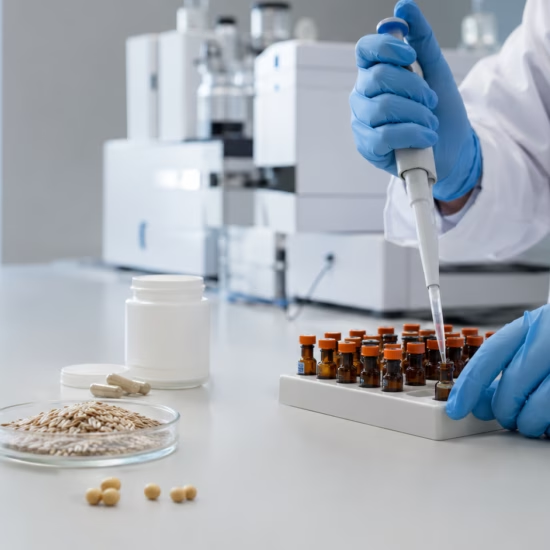
Spermidine is quantitatively determined using high-performance liquid chromatography coupled with tandem mass spectrometry, commonly known as LC-MS/MS.
This sensitive analytical technique enables the reliable identification and quantification of spermidine, even at low concentrations and in complex food and supplement matrices.
Method overview
| Analytical method | LC-MS/MS |
|---|---|
| Parameter | Spermidine |
| Result | Quantitative determination |
| Suitable matrices | Food, raw materials and dietary supplements |
| Laboratory | GALAB Laboratories, part of Normec Foodcare |
Specialist laboratory expertise within Normec Foodcare
The spermidine analysis is performed by GALAB Laboratories in Hamburg, a specialized laboratory within Normec Foodcare.
GALAB has been conducting high-quality chemical and microbiological analyses since 1992. The laboratory combines extensive experience in food and raw-material testing with modern analytical technology and accredited procedures.
This gives you access to:
- Sensitive and reproducible analytical methods
- Expertise in complex food and supplement matrices
- Clear and traceable laboratory reports
- Personal advice about your product and analytical requirements
The broader expertise and international laboratory network of Normec Foodcare
A tailored analytical approach
The appropriate analytical scope depends on your product, its composition and the intended use of the results. When requesting an analysis, please provide information about:
- The product and sample matrix
- The expected spermidine concentration, if known
- The number of samples
- The purpose of the analysis
- Your preferred timing
Our specialists will review your request and advise you on the most suitable approach.
Want to know more about spermidine analysis?
Would you like to verify the spermidine content of a food, raw material or dietary supplement?
Request a quote or contact us to discuss your product. Our specialists will help you determine the appropriate analytical scope.
Frequently asked questions about spermidine analysis
-
Spermidine is a naturally occurring biogenic polyamine found in humans, animals, plants and microorganisms. Plant-based sources include wheat germ, soy, legumes and edible algae.
-
We can analyze food, raw materials and dietary supplements. Relevant matrices include wheat germ, cereal extracts, soy products, algae extracts, powders and capsules.
-
Yes. We analyze dietary supplements based on cereal ingredients, plant extracts and other relevant raw materials. The suitability of the method is assessed according to the individual product matrix.
-
Spermidine is quantitatively determined using sensitive LC-MS/MS technology.
-
The analysis provides reliable data on the actual spermidine content of the tested sample. This can support product information and label statements. The regulatory permissibility and exact wording of a claim should be assessed separately.
-
There are currently no generally established official dosage recommendations or specific legal limits for spermidine. However, declared product contents and advertising statements must be accurate and verifiable.