
Allergen Analysis for Reliable Detection of Allergens
Do you want to know if an allergen is present in a raw material, finished product, or production environment? With an allergen analysis from Normec Foodcare, you’ll receive reliable data that allows you to assess the presence of relevant allergens. The analysis results can be used to investigate risks of cross-contamination, support allergen labeling, and verify cleaning and control measures. This provides you with concrete information to support food safety and make informed decisions regarding your allergen management.
Understanding Allergen Risks Within Your Organization
Allergens are among the leading causes of food safety incidents and product recalls. For manufacturers, retailers, and the foodservice industry, it is therefore essential to understand the presence of allergens in raw materials, finished products, and production processes.
Targeted allergen analyses provide insight into potential risks and allow you to demonstrate that your allergen management system is effective. These analyses help organizations control cross-contamination, substantiate labeling claims, and comply with laws and regulations.
Our specialists assist with both the performance of allergen analyses and the interpretation of the results. This way, you not only receive reliable data but also practical tools to manage risks and remain compliant.
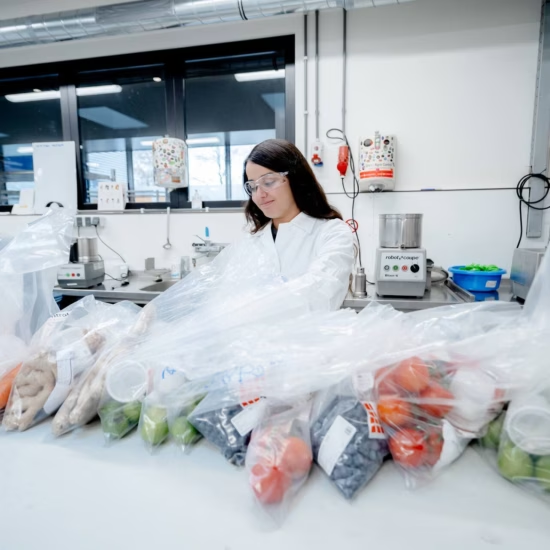
Allergen Analysis at a Glance
- Determining whether allergens are present in raw materials and finished products
- Investigating potential cross-contamination within production processes
- Supporting allergen labeling and product claims
- Verifying cleaning procedures and allergen management
- Support for audits and certification according to food safety standards such as BRCGS, IFS, and FSSC 22000
Which allergens can be analyzed?
Allergen analyses can be performed both qualitatively and quantitatively for various foods and raw materials. Common allergens that can be tested for include:
- Gluten*
- Soy*
- Sulfites*
- Lactose*
- Casein*
- β-lactoglobulin*
- Celery*
- Mustard*
- Egg*
- Peanut*
- Hazelnut
- Almond
- Cashew
- Macadamia
- Brazil nut
- Pecan
- Walnut
- Sesame
- Lupine
- Fish
- Shellfish
- Mollusks
- Lysozyme
* Frequently asked
Supporting Allergen Labeling
Accurate allergen labeling is essential for both consumer safety and compliance with regulations. Allergen analyses help organizations substantiate allergen declarations on labels and identify risks of cross-contamination.
Laboratory analyses can be used to:
- Confirm the presence of allergens
- Verify claims and labeling
- Conduct cleaning validations
- Monitor risks within production environments
This not only supports compliance but also enhances the reliability of your allergen policy toward customers, retailers, and regulatory authorities.

Justification of Cross-Contamination Risks
In many production environments, cross-contamination with allergens cannot be completely ruled out. Therefore, it is important to systematically assess risks and provide scientific substantiation.
Allergen analyses can be used as part of a risk assessment for cross-contamination. In combination with reference doses (RfDs) and exposure calculations, it is possible to determine whether a warning regarding the potential presence of allergens is necessary.
This helps organizations substantiate decisions regarding precautionary allergen labeling (PAL) and demonstrate that allergen risks are assessed in a structured manner.
By combining allergen analyses with reference doses and exposure calculations, companies can better determine:
- Whether a cross-contamination risk is relevant to the consumer
- Whether a warning about the possible presence of allergens is necessary
- How precautionary allergen labeling (PAL) can be substantiated
International organizations such as the FAO and WHO have developed scientific guidelines on which reference doses for allergens are based. Regulatory agencies and food authorities in various European countries, including the Netherlands, Belgium, Germany, and France, use these doses when assessing allergen risks and labeling, although interpretation and application may vary by country.
Need help with your product in the food industry?
With Normec Foodcare, you’re choosing a partner that combines laboratory testing with practical advice. Our specialists provide support with allergen analysis, interpretation of results, and issues related to cross-contamination, labeling, and allergen management.
Thanks to our expertise in legislation, food safety standards, and retail requirements, we help organizations manage risks and substantiate their analyses in preparation for audits and certification.
Frequently Asked Questions About Allergen Analysis
-
An allergen analysis is used to determine whether certain allergens are present in, for example, raw materials, finished products, or the production environment. The results provide insight into potential allergen risks.
-
Normec Foodcare can test for various allergens, including gluten, soy, sulfites, lactose, casein, egg, peanuts, tree nuts, sesame, lupine, fish, shellfish, and mollusks.
-
Yes. Allergen analyses can be used to investigate potential cross-contamination within production processes and as part of a risk assessment.
-
Yes. The analysis results can be used to assess the presence of allergens and to support decisions regarding allergen labeling and precautionary allergen labeling (PAL).
-
Yes. Allergen testing can be used to verify cleaning procedures and control measures and to monitor allergen risks within the production environment.
-
Yes. Allergen analyses can be performed both qualitatively and quantitatively for various foods and raw materials.