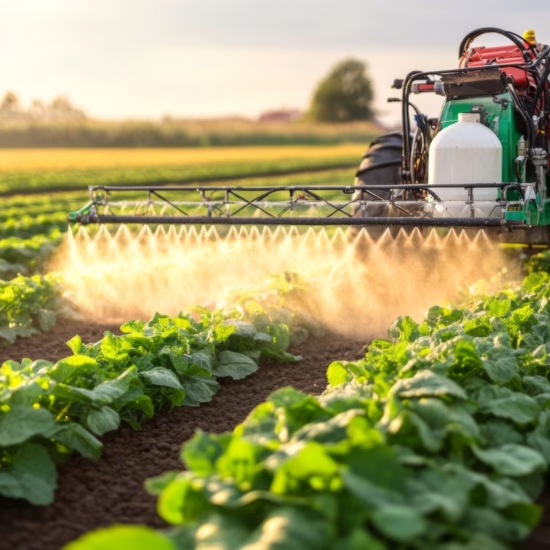
How important is sampling for the reliability of pesticide analysis?
Sampling is one of the most critical—and at the same time most frequently underestimated—steps in pesticide analysis. Even the most advanced analytical methods are only as good as the sample that arrives at the laboratory. Pesticide residues are often distributed unevenly in food—depending on the surface, peel, degree of ripeness, or state of processing. A non-representative sample can therefore either lead to an underestimation of actual residue levels or to apparent exceedances.
It is crucial that sampling be standardized, traceable, and conducted in accordance with recognized guidelines. This includes not only the correct sample size and number of subsamples but also aspects such as transport conditions, homogenization, and storage. Errors made at this early stage cannot be corrected later in the analytical process.
From a laboratory perspective, close coordination with QA and procurement is particularly important. Only when it is known where, when, and how a sample was taken can analytical results be interpreted correctly from a technical standpoint. Sampling thus forms the foundation of any reliable assessment and is an essential component of risk-based and legally compliant supply chain monitoring.