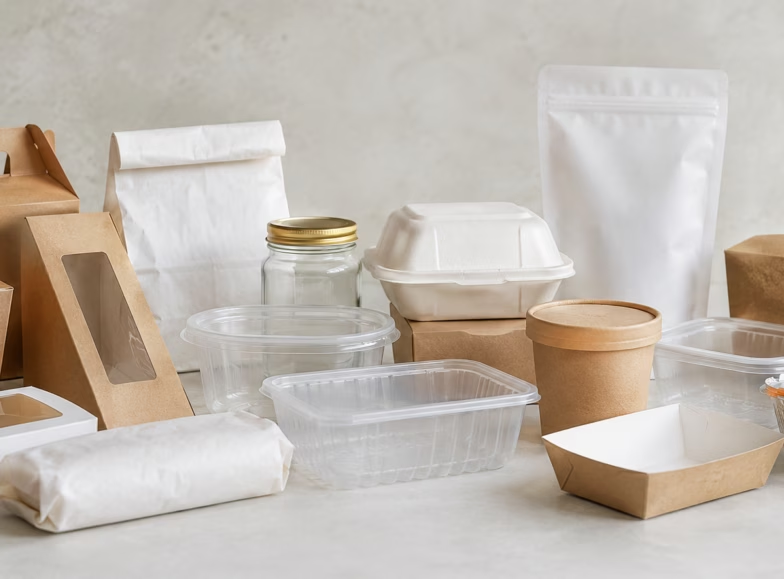
Assess the Presence of PFAS in Your Packaging Materials
PFAS have been used in various types of packaging intended to come into contact with food due to their water-repellent, oil-repellent, and stain-resistant properties. Their high durability makes them highly functional, but they are also subject to increasing regulatory scrutiny due to their potential effects on the environment and human health.
Through a combined testing strategy that integrates targeted PFAS analysis with fluoride screening, you can obtain reliable information about your packaging materials. Normec Foodcare supports you in selecting the appropriate tests, evaluating the results, and preparing your compliance documentation.
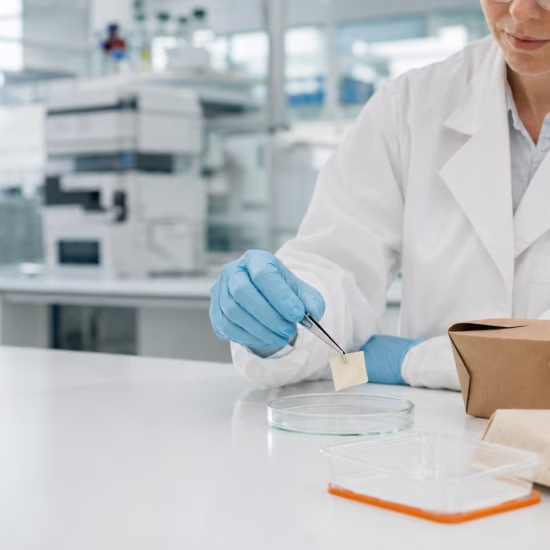
New Limits for PFAS in Packaging Intended to Come into Contact with Food
European Regulation 2025/40 on packaging and packaging waste (PPWR) establishes, effective August 12, 2026, specific limits for PFAS in packaging intended to come into contact with food. The following three limit values must be complied with:
- Individual PFAS: 25 µg/kg (ppb). Targeted analysis of PFAS; polymeric PFAS are excluded
- Sum of PFAS analyzed via targeted analysis: 250 µg/kg (ppb). Sum of individual PFAS; polymeric PFAS are excluded
- PFAS, including polymeric PFAS: 50 mg/kg (ppm). Screening for total fluorine and organic fluorine supports the assessment
An analysis is an important part of the evidence of compliance, but does not automatically replace the comprehensive documentation provided by the supplier regarding the materials. The appropriate testing strategy depends on the material, its composition, and the specific issue at hand.

Why combine targeted PFAS analysis with fluorine screening?
No single method can detect all PFAS. That is why a stepwise or combined approach may be advisable:
- Targeted PFAS analysis by LC-MS/MS: quantifies 36 defined PFAS compounds with high sensitivity.
- Total fluorine (TF) by post-combustion ion chromatography: provides a quick overview of the material’s total fluorine content.
- Fluorine bound to organic compounds (TOF): When total fluorine (TF) levels exceed 50 mg/kg (ppm), analytical evidence must be provided that clearly distinguishes the measured fluorine content between PFAS and non-PFAS fractions.
- Evaluation of results: correlates the measured values with the type of material, the supplier’s documentation, and regulatory requirements.
Our analytical capabilities
36 PFAS compounds
Method: LC-MS/MS
Limit of quantification: 1.0 µg/kg
Standard turnaround time: approximately 5 business days
Total Fluorine (TF), duplicate determination
Method: Combustion Ion Chromatography (CIC)
Limit of quantification: 5.0 mg/kg
Standard turnaround time: approximately 5 business days
Fluorine bound to organic compounds (TOF), duplicate determination
Method: ICP-EC after appropriate sample preparation
Limit of quantification: 5.0 mg/kg
Standard turnaround time: approximately 5 business days
Sample preparation
To ensure representative and reliable analytical results, samples are prepared using a grinding technique appropriate for the packaging material in question. This step is necessary to transform the various materials in food contact materials into a homogeneous sample matrix suitable for analysis.
To which packaging materials does this analysis apply?
- Paper and cardboard packaging, particularly those with barriers against grease or moisture
- Plastic packaging and plastic components
- Coated or multilayer composite materials
- Cups, trays, films, wrapping paper, pouches, and takeout packaging
- Packaging for fast food, baked goods, prepared meals, and fatty foods
When is PFAS analysis particularly useful?
- When launching a new packaging material or product
- in the event of a change in supplier, formulation, coating, or material
- when compliance declarations are incomplete, too general, or no longer up to date
- to prepare for customer requests, audits, or regulatory inspections
- to set priorities based on risk within a broader packaging portfolio
Here is our approach
-
1.
Clarifying the issue
We discuss the materials, the application, the supply chain, and the available documentation.
-
2.
Defining the analysis strategy
We select a targeted analysis of PFAS, TF, TOF, or an appropriate combination.
-
3.
Analyze the sample
The material is prepared according to its characteristics and analyzed using the agreed-upon methods.
-
4.
Interpretation of results
You will receive a clear report and, if desired, assistance with interpreting the results and determining appropriate follow-up actions.

What This Means for You
- A testing strategy tailored to your material and your risk level
- A precise analysis of 36 specific PFAS compounds
- Additional insight through TF and TOF screening
- Clear results for discussions with suppliers, customer inquiries, and audits
- A stronger foundation for your PPWR compliance documentation
Does your food-contact packaging comply with PFAS requirements?
Let’s work together to determine the relevant analyses for your packaging material and compliance documentation.