
Accessibility links Skip to main content

Q&A with the Expert: Everything You Need to Know About the PPWR

The Packaging and Packaging Waste Regulation (PPWR) brings about a significant change in European packaging legislation. The new rules affect not only packaging manufacturers but also the entire supply chain, including food companies and QA teams. What exactly does the PPWR entail? What specific changes will it bring for food contact materials? And how can your organization prepare for this? We asked an expert in food contact materials and packaging compliance.

Contact us

Fill out the form and we will contact you shortly.

Name
In which country would you like to be assisted?
Privacy Policy 
Continue reading
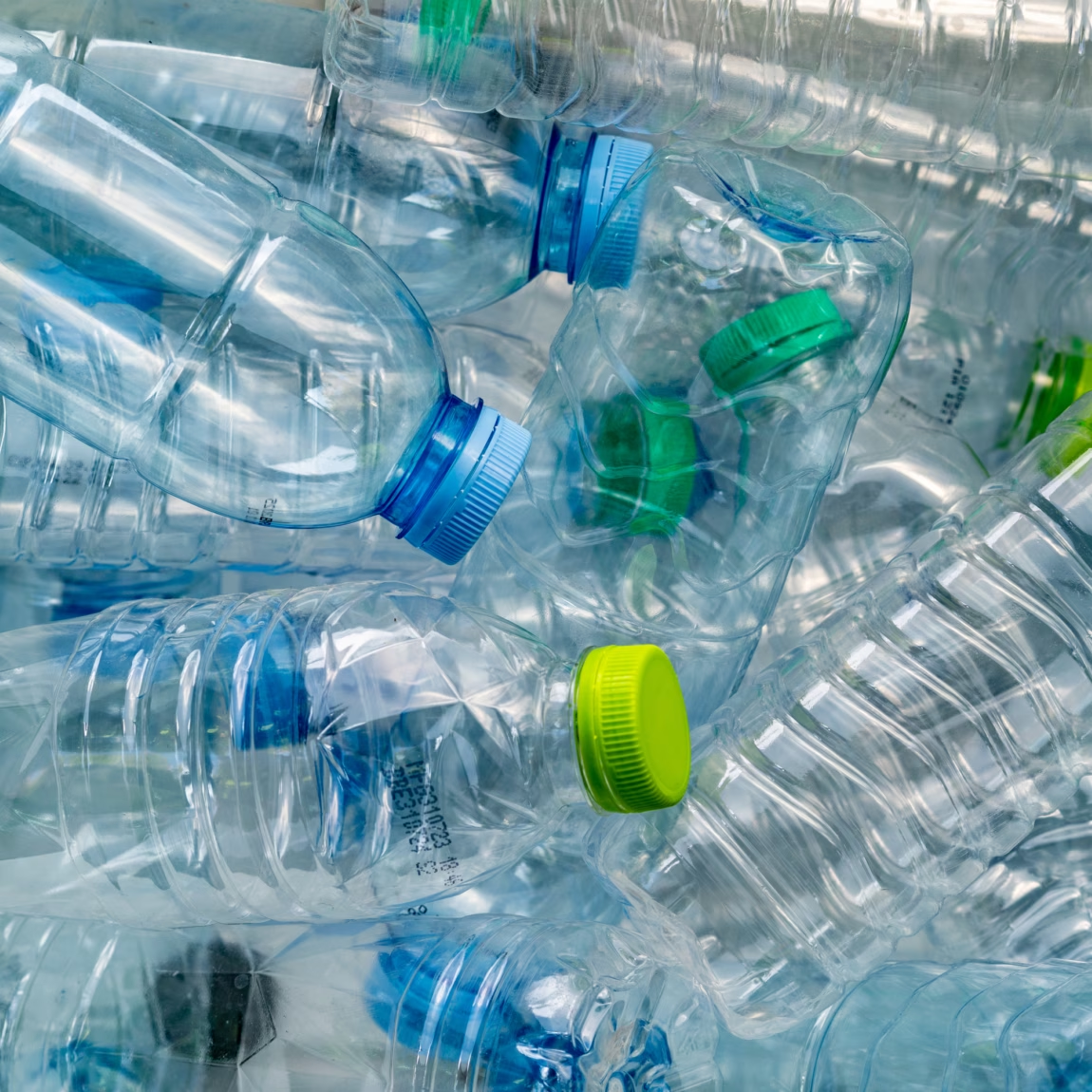
Compressed plastic bottles represent a stream of recyclable packaging material.

Expert in Food Contact Materials & Packaging Compliance – Normec Foodcare

Livi Peeters: Knowledge & Projects Experts Training Manager – Quality Assurance Belgium


What exactly is the PPWR?

The Packaging and Packaging Waste Regulation (PPWR) is the new European regulation that redefines the entire framework for packaging and packaging waste. It entered into force in February 2025 and will largely apply starting August 12, 2026.

The regulation aims to make packaging more sustainable, design it to be more recyclable, and limit the use of harmful materials. In addition, the European Union also seeks to reduce the total amount of packaging waste.

Why is this regulation so important for food companies?

The impact of the PPWR is not limited to packaging manufacturers. Food companies that use packaging must also be able to demonstrate that it complies with the new requirements.

This means that departments such as QA, regulatory affairs, and procurement must collaborate more closely. Packaging choices are becoming less of an operational decision and more of a compliance issue, in which documentation, specifications, and supplier evaluations are essential.

What’s changing for food-contact packaging?

A key change under the PPWR is the restriction on PFAS in food contact materials. As of August 12, 2026, packaging with PFAS concentrations exceeding the established limits may no longer be placed on the European market.

In addition, the regulations impose stricter requirements on the composition of packaging, recyclability, and minimizing material use. Avoiding substances of concern will also play a greater role.

Black-and-white portrait of an employee against a neutral background.

Why is there such a strong focus on PFAS right now?

PFAS have been used for many years because of their grease-, water-, and dirt-repellent properties. As a result, they are commonly found in paper and cardboard packaging, such as fast-food containers and takeout packaging.

The problem is that PFAS hardly break down in the environment and can accumulate in ecosystems and organisms. That is why they are also called “forever chemicals,” and why European lawmakers have imposed strict restrictions.

How do companies know if their packaging complies?

In practice, this has proven to be one of the biggest challenges. Many organizations still rely on supplier declarations, but these are often insufficient to demonstrate full compliance.

There is an increasing need for a well-documented technical dossier that clearly states which materials were used and confirms that no prohibited substances are present. Analytical verification is playing an increasingly important role in this regard.

What role do analyses play in this?

Analyses provide independent confirmation of what is stated on paper. They help identify risks early on and validate supplier information.

Examples include PFAS screenings, migration tests, and analyses for NIAS (unintentionally added substances). These analyses are particularly crucial for a robust compliance dossier when dealing with new suppliers or changes in materials.

Do companies need to take action now?

Yes, definitely. Although the main requirements do not take effect until August 2026, the preparation process is often complex and time-consuming.

Companies would be wise to map out their packaging supply chain now and request additional information from suppliers. This prevents necessary adjustments from being implemented too late.

What is your most important advice for QA professionals?

Don’t approach the PPWR as purely a packaging issue, but as a broader compliance project. Start by taking stock of all packaging, available documentation, and potential risks.

By gaining an overview of their packaging portfolio and supply chain now, organizations will be better prepared for audits, inspections, and customer inquiries in the future.

How can Normec Foodcare provide support?

Normec Foodcare supports companies throughout the entire supply chain with issues related to food contact materials and packaging compliance. This includes interpreting legislation such as the PPWR and evaluating packaging materials.

In addition, experts help build a well-documented compliance dossier with targeted analyses, such as PFAS screenings, migration studies, and other relevant tests. This gives companies greater control over their packaging supply chain and future regulations.

Do you need support in the food sector?

Our experts are happy to work with you and get you started quickly.

Request a quote

Fill out the form and we will contact you shortly.

Name
In which country would you like the service to be carried out?
Privacy Policy 

Related news articles

Close-up of oil droplets in a liquid for analysis of composition and quality.
25 May 2026

MOSH and MOAH in food: causes and prevention

The presence of MOSH and MOAH is not an isolated problem, but the result of multiple possible contamination pathways in the chain. Products with a high absorption capacity or fat matrix are especially susceptible. Cereals, rice, cocoa, nuts, vegetable oils and chocolate are among the high-risk products, in part because these products readily absorb and retain MOSH. MOAH receives extra attention here because of possible genotoxic and carcinogenic properties.

26 Mar 2024

Q&A with the expert: everything you need to know about MOSH & MOAH

Mineral oils in food remain a major concern for the food industry. MOSH and MOAH in particular are receiving increasing attention from authorities, auditors and QA teams. But what exactly do these terms mean, how are they analyzed and where are the biggest risks? We asked an expert from the laboratory.

16 Dec 2025

Between Enticement and Deception: The Importance of Consumer Trust

In the food industry, it’s all about appeal. From colorful packaging to clever claims about health, sustainability, or origin, manufacturers want to entice consumers to buy. But where does enticement end and deception begin? In Europe, this line is not only ethically relevant but also clearly defined by law. Consumers are increasingly aware of what they eat and are paying more attention than ever to labels and claims. This makes transparency and honesty on packaging essential for long-term success.

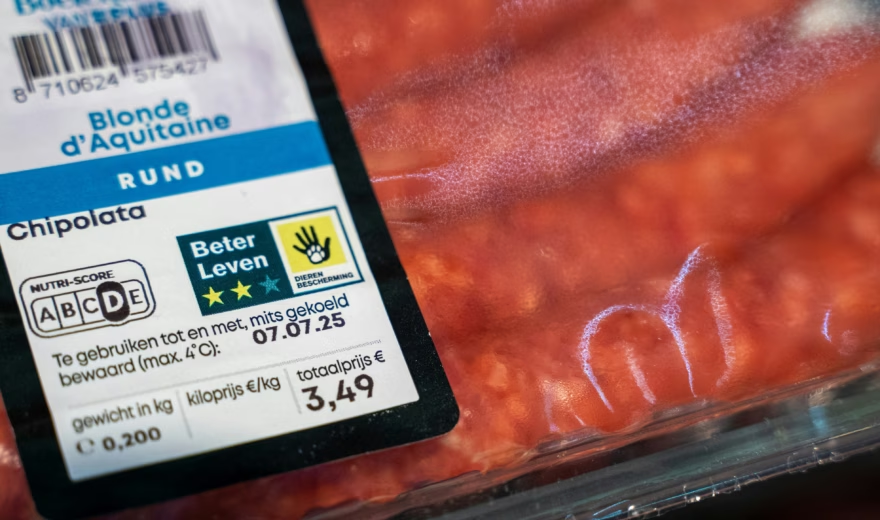
Close-up photo of packaged beef chipolata with product information and nutrition label.
23 Jun 2026

Errors in Label Verification: Where the Risk Lies

In the food industry, label verification is much more than a final administrative step in the quality process. It is a critical control measure within food safety and QA, with a direct impact on consumer safety, compliance, and the risk of recalls. Yet in practice, it turns out that label checking and verification remain a structural weak point within many organizations.

Sign up for our newsletter

Sign up

Naam

Related services

Food safety advice

Incident Management