Accessibility links Skip to main content

Between Enticement and Deception: The Importance of Consumer Trust

In the food industry, it’s all about appeal. From colorful packaging to clever claims about health, sustainability, or origin, manufacturers want to entice consumers to buy. But where does enticement end and deception begin? In Europe, this line is not only ethically relevant but also clearly defined by law. Consumers are increasingly aware of what they eat and are paying more attention than ever to labels and claims. This makes transparency and honesty on packaging essential for long-term success.

Contact us

Fill out the form and we will contact you shortly.

Name
In which country would you like to be assisted?
Privacy Policy 
Continue reading

Temptation versus Deception

Enticement on food packaging can take many forms: attractive colors, illustrations of juicy fruit, a “fresh” or “natural” image, or health claims. This is permitted and even desirable in itself; it helps products stand out in a crowded market and supports consumers in their choices.

Misleading claims, however, arise when the packaging gives a false impression of the product’s contents or characteristics. Examples include exaggerating health benefits, suggesting that a product is organic or sustainable when it is not, or using images of ingredients that are barely present. More subtle forms of deception also occur, such as downplaying allergen information, using suggestive colors or shapes that imply higher quality or health benefits, or emphasizing certain claims while other important information is overlooked.

Both the Netherlands Food and Consumer Product Safety Authority (NVWA) and the Belgian Federal Public Service for Public Health oversee proper labeling. Misleading packaging can result in warnings, fines, product recalls, and lasting damage to a brand’s reputation.

The Importance of Trust

Consumer trust is the foundation of brand loyalty. A customer who feels misled is unlikely to buy a product again and may share negative experiences on social media, causing lasting damage to the brand’s reputation. In an age when information is shared worldwide in a matter of seconds, earning and maintaining trust is essential.

Transparent communication about ingredients, origin, production methods, nutritional value, and allergens not only helps brands comply with regulations but also strengthens the bond with consumers. Voluntary information—such as details on origin, sustainability certifications, or preparation recommendations—can provide consumers with additional guidance in making their choices. At the same time, this offers opportunities to position the brand positively, provided the information is honest and verifiable.

The Pitfall of Incorrect or Unauthorized Claims

A common pitfall is the use of claims that do not comply with European legislation. These can include health claims, such as “boosts immunity,” nutrition claims such as “fat-free” or “sugar-free,” or sustainability claims that have not been validated. Using these claims without proper substantiation can mislead consumers and lead to enforcement action by the authorities.

In addition, it is important to pay attention to voluntary claims and labels, such as “gluten-free,” “lactose-free,” “organic,” or “fair trade.” Although these are often beneficial for marketing, they must comply with specific rules and certifications. Incorrect or unverified claims can lead to a loss of consumer trust and legal sanctions.

Need support in the food sector?

Our experts are happy to work with you and get you started quickly.

Request a quote

Fill out the form and we will contact you shortly.

Name
In which country would you like the service to be carried out?
Privacy Policy 

Related news articles

14 Oct 2026

How Consumer Expectations Influence Product Perception

Consumers don’t judge a product only when they taste it. Often, their first impression is already formed before the package is even opened. Claims, brand name, appearance, and past experiences play a major role in shaping what consumers expect from a product.

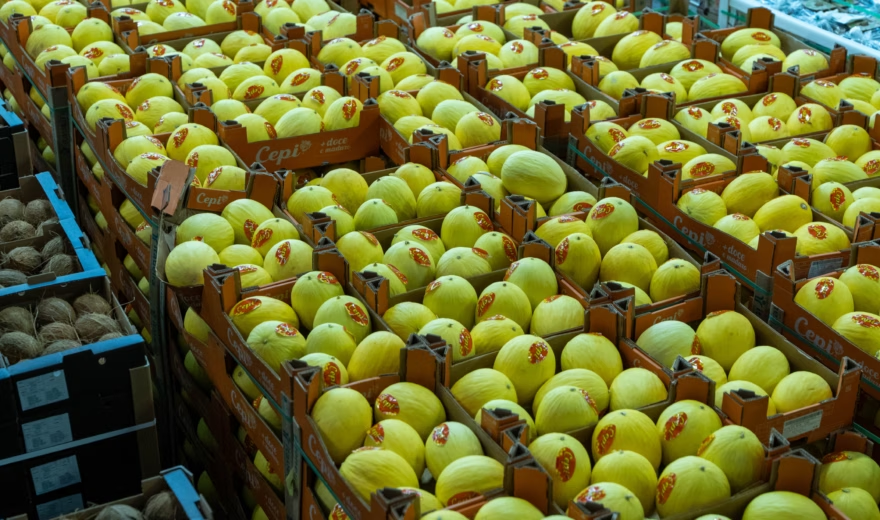
Crates of yellow apples stored in a distribution center for sorting and quality control.
08 Oct 2026

Normec Foodcare Online Accelerates the Renewal of Its Quality Platform

Normec Foodcare Online is taking the next step in the renewal of its digital platform for quality management, compliance, and food safety. The first updated modules are now available, and the migration of customers to the new environment has begun. At the same time, we are continuing to build a platform that can respond more quickly to customer needs and technological developments. Would you like to know what the updated platform and the migration mean for your organization?

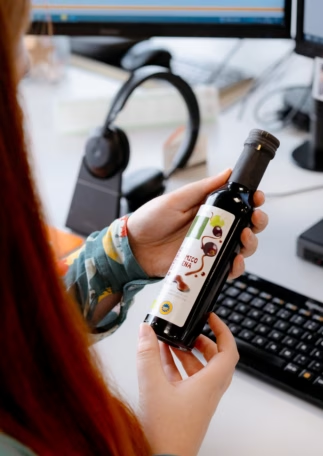
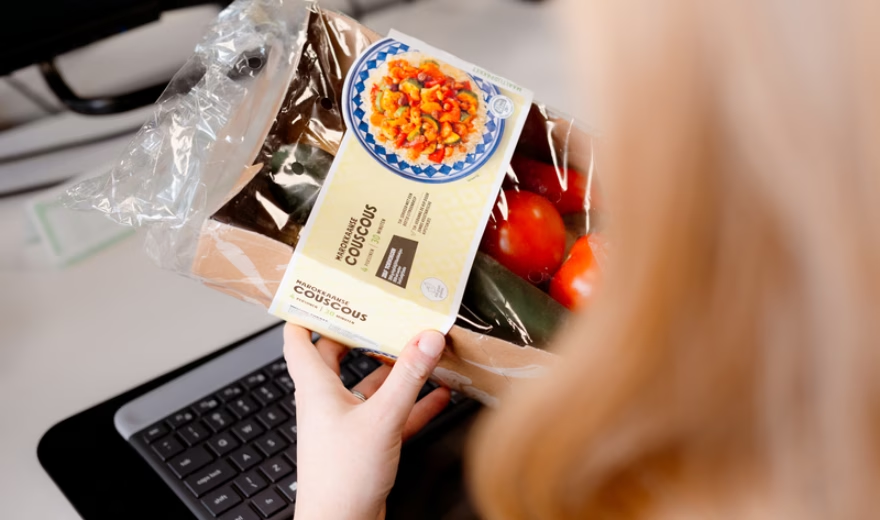
An employee evaluates a food product based on product information displayed on a computer screen.
28 Sep 2026

AI Label Compliance Tool Wins Expert Jury Award at the 2026 Packaging & Label Awards

Normec Quality Assurance Belgium won the Expert Jury Award in the Packaging Machinery category at the Packaging & Label Awards 2026. The award was presented to the AI Label Compliance Tool, an innovative solution that helps companies check labels and ingredient declarations faster, more efficiently, and more accurately.

A water sample is collected from a faucet into a glass jar for water testing.
22 Sep 2026

PFAS in drinking water: What do regional differences mean for agribusinesses and food companies?

PFAS, a collective term for thousands of chemicals known as “forever chemicals,” are found worldwide in soil, surface water, groundwater, and food production chains. Greenpeace’s new PFAS map shows that these substances can also enter the human body and the food production chain via drinking water.

Employees are discussing matters at a service desk in a modern office environment.
21 Sep 2026

How do you know if consumers accept your sugar reduction or protein fortification?

Consumers are looking for healthier, protein-rich, and more sustainable products, but they still base their choices primarily on taste and sensory experience. That makes reformulation complex. Sugar, for example, affects more than just sweetness; it can also alter texture, mouthfeel, and body. Added protein can be nutritionally beneficial, but it can sometimes result in a drier texture or an unusual aftertaste. A similar risk applies to fat reduction, clean label initiatives, and other formulation adjustments.

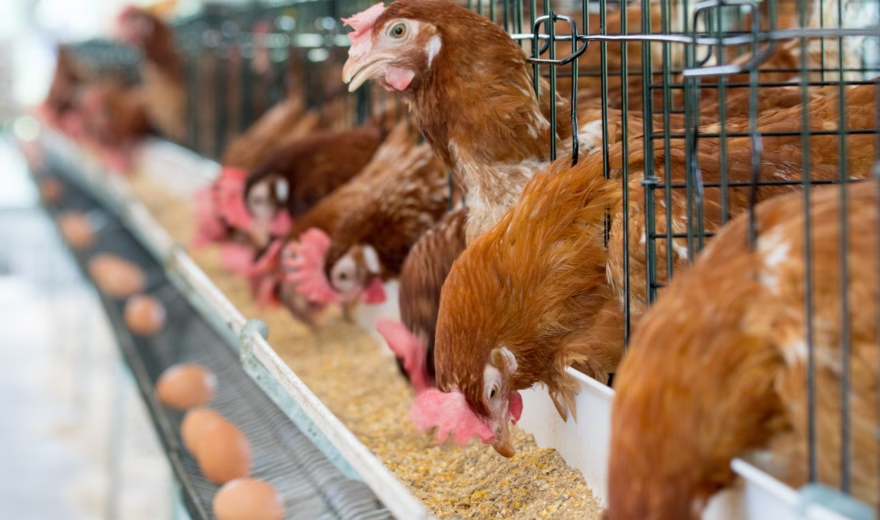
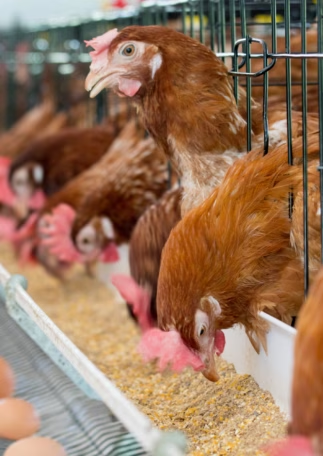
Laying hens are kept in a poultry house where eggs are produced and collected.
25 Aug 2026

Salmonella in eggs: recent outbreak highlights the importance of targeted testing

A Salmonella outbreak linked to eggs from a Belgian poultry farm has now made at least 300 people ill. The incident once again shows the importance of systematic monitoring and timely laboratory testing throughout the egg supply chain.

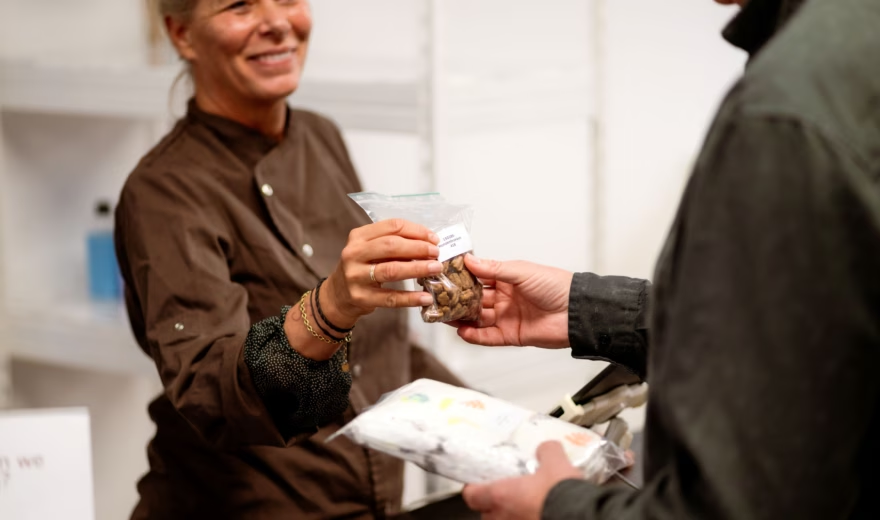
Een persoon overhandigt verpakte monsters aan een andere persoon voor verwerking of beoordeling.
14 Aug 2026

Normec Sensory Opens New Sensory Testing Center in Liège

LIÈGE – Normec Sensory is further expanding its presence in Belgium with the opening of a new sensory testing center in Liège. With this expansion, Normec Sensory now has its own testing infrastructure in both Flanders and Wallonia. This enables organizations to rely on in-depth consumer insights from across Belgium, supported by local expertise and a broad network of respondents.

Sign up for our newsletter

Sign up

Naam

Related Services

A smiling woman walks through the aisles of a supermarket with a shopping cart and looks at a glass jar of sauce while choosing healthy products among the shelves.

Marketing Compliance

Label review

Advice in food law

Drafting label text

Regulations and translations

International label review