Why Does Summer Pose Additional Risks?
For many companies in the food industry, summer is a challenging time. Vacation periods lead to staff turnover, supply chains come under pressure, and rising temperatures increase the risk of deviations in production, storage, and distribution. At the same time, consumer behavior changes: products are consumed more often outside the home, remain out of refrigeration for longer periods, and are stored differently than originally planned.
That is precisely why food safety deserves special attention during the summer months. What are the most common risks, and how can quality assurance services address them?
Staff Turnover: Less Routine, More Risks
For many companies in the agri-food sector, the summer period brings a different set of dynamics. Absences due to vacations must be covered, which means relying on temporary staff and having permanent employees regularly take over their colleagues’ tasks. Although this is often unavoidable from an operational standpoint, it poses an underestimated risk to food safety.
New employees are generally less familiar with company-specific procedures, critical control points, and the practical nuances of daily quality checks. But even experienced colleagues who temporarily fill another role may overlook important details because they are not accustomed to these tasks. It is precisely this routine that often makes the difference between a process that looks good on paper and one that remains truly under control in practice.
Many companies only become aware of the extent of tacit knowledge in the workplace during audits, when investigating complaints, or when dealing with deviations. If this knowledge is not fully documented, errors can more easily occur during vacation periods. It is therefore important for quality assurance teams to critically assess in advance which processes rely heavily on experience and where additional guidance or oversight is needed.
Higher Temperatures, Less Leeway
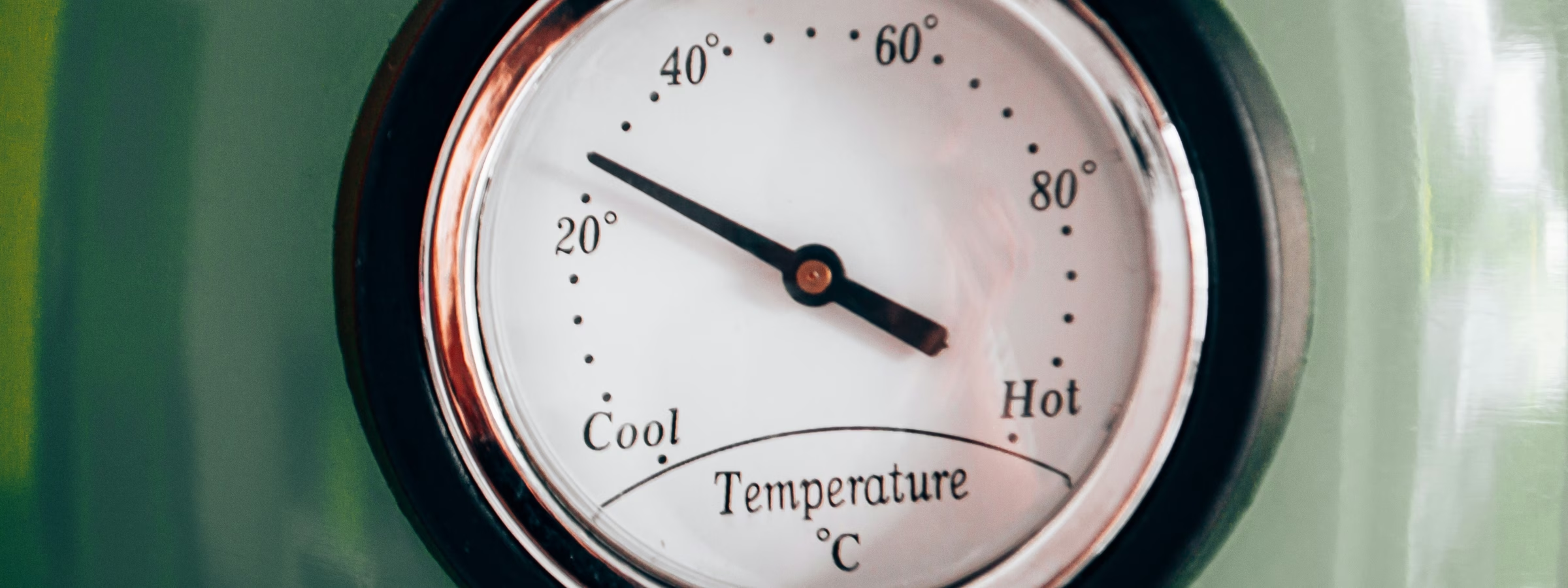
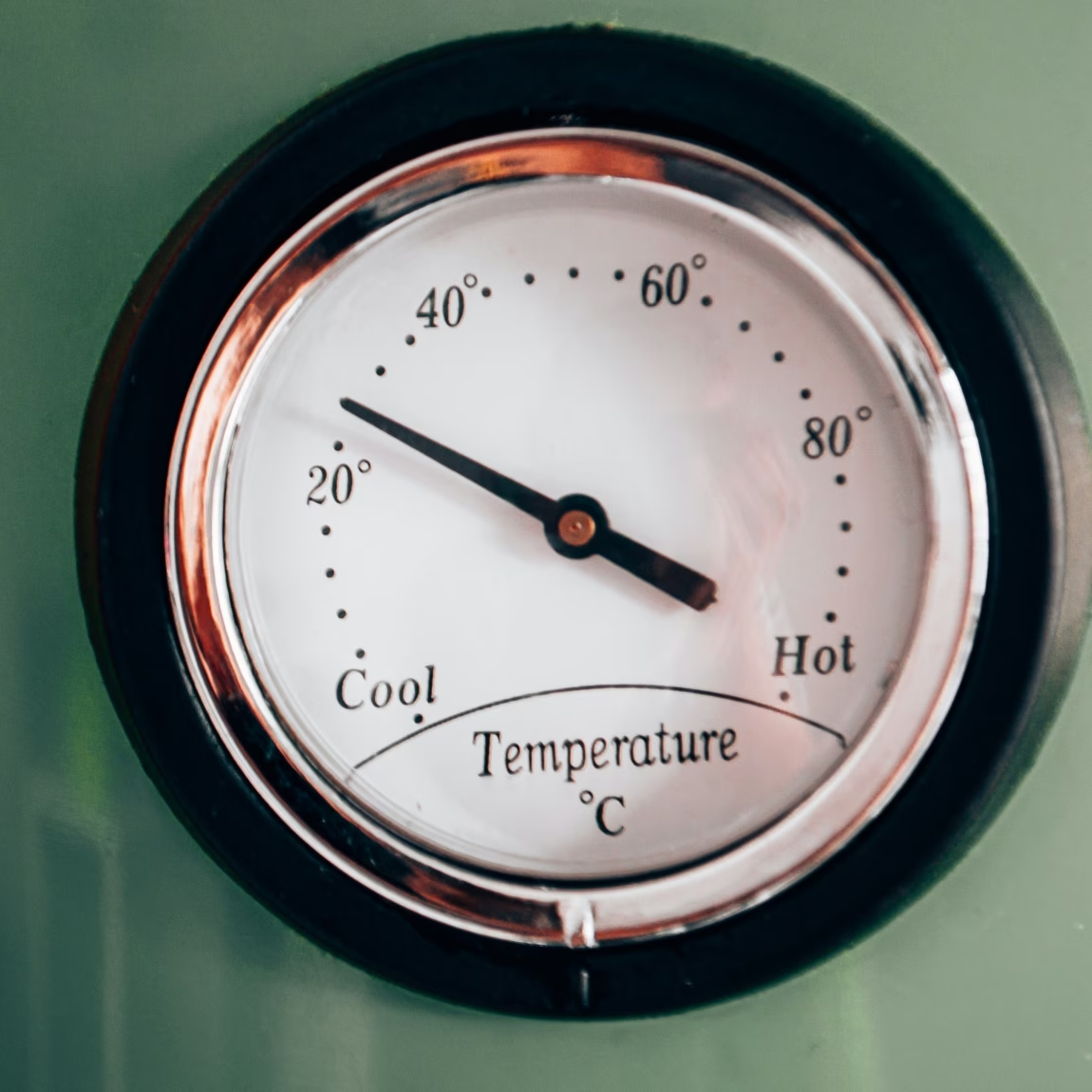
While temperature control is often taken for granted for most of the year, the systems come under extra strain during the hot summer months. Cooling systems must run at full capacity, temperature differences between indoors and outdoors increase, and logistics processes do not always operate under ideal conditions.
This can lead to situations that virtually never occur during the rest of the year. During internal transport, products remain outside the cold storage rooms for longer periods, temperatures in the receiving areas rise, and the cold chain may be temporarily interrupted during loading and unloading. Condensation is also an often-underestimated risk. Due to the large temperature differences between the cold storage rooms and the warm outside air, moisture can form on equipment, packaging, or even products, which can affect both product quality and microbiological safety.
Often, it is not the large differences that pose a problem, but rather the slight temperature increases that go unnoticed over a long period of time. By actively analyzing temperature data and comparing trends with those from previous periods, quality assurance departments can identify potential shortcomings before they lead to quality or food safety issues.
Seasonal Products: Familiar Products, Overlooked Aspects
Many companies produce temporary or seasonal products in the summer. Although these products have often been part of the product line for years, this does not automatically mean that their production runs smoothly. On the contrary: precisely because a product is produced only once a year, risks can arise that are easily overlooked.
In practice, it turns out that some of the essential knowledge isn’t always fully documented in procedures, recipes, or work instructions. The specific settings of the production lines, the experience gained during previous production runs, the points to watch out for during startup, or the known pitfalls regarding allergens and cleaning are often stored only in the memories of experienced employees. If the last production run took place several months ago or if the relevant employees are absent, there is a risk that this knowledge will not be available when it is needed.
In addition, suppliers, raw materials, packaging, or production conditions may have changed in the meantime. A process that ran smoothly last year therefore offers no guarantee of an identical result this season. A brief risk assessment before the start of seasonal product production can help uncover hidden risks and re-establish valuable practical knowledge.
Supply Chains Under Pressure
Even outside the production site, summer brings additional challenges. Vacation periods, limited availability of drivers, sales peaks, and the volume of international operations can put pressure on the logistics chain. This increases the risk of delays, non-compliant transport conditions, and disruptions to the schedule.
For refrigerated and fresh products in particular, such disruptions can have direct consequences for product quality and food safety. Longer transit times, deviations in temperature readings, or reduced availability of raw materials can have unexpected consequences for processes that typically run smoothly. At the same time, seamless traceability is becoming increasingly important when various parties in the supply chain are operating under heightened pressure.
Especially during the summer months, it is crucial to monitor transport performance, temperature readings, and agreements with suppliers very closely. Problems rarely occur in just one link of the supply chain but are often the result of multiple small deviations that reinforce one another.
The key points are:
- Strengthen training and basic education: ensure that temporary staff and substitutes receive targeted training on critical food safety processes.
- Reassess critical control measures: verify that criticalcontrol points (CCPs), temperature monitoring, and inspections are sufficiently reliable to cope with higher ambient temperatures.
- Assess seasonal products: Conduct risk analyses in a timely manner for new products, raw materials, and recipe changes.
- Check the supply chain: ensure that suppliers and carriers guarantee that temperature control and the reliability of deliveries remain assured, even during holiday periods.
- Carefully check the shelf-life dates: verify that existing shelf-life studies have adequately accounted for summer usage and storage conditions.
Is your shelf life summer-proof?
Many shelf-life studies are conducted under controlled conditions, with temperature and storage closely monitored. In practice, however, these conditions are not always representative of how consumer products are stored and used during periods of extreme heat.
As a result, a product that meets all microbiological criteria without issue in the laboratory may, in practice, lose quality more quickly or prove more susceptible to microbial growth. This can be a significant consideration, particularly for refrigerated products.
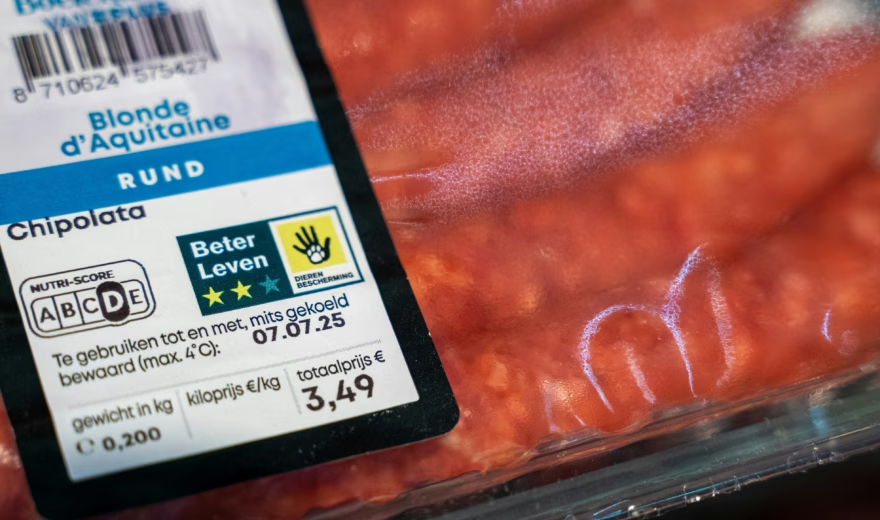
By regularly evaluating shelf-life studies and conducting additional analyses, such as challenge tests or predictive microbiological calculations, a more realistic picture of a product’s actual safety margin emerges. This not only provides additional assurance for consumers but also helps companies better substantiate shelf-life claims and proactively manage risks.
How can the quality assurance department prepare for the summer?
Proper preparation begins well in advance of the vacation period.
The key points are:
- Intensify training and orientation: ensure that temporary staff and substitute workers receive targeted training on critical food safety processes.
- Reassess critical control measures: verify that criticalcontrol points (CCPs), temperature monitoring, and inspections are robust enough to handle higher ambient temperatures.
- Assess seasonal products: Conduct risk analyses in a timely manner for new products, raw materials, and recipe changes.
- Monitor the supply chain: ensure that suppliers and carriers guarantee that temperature control and the reliability of deliveries are maintained, even during the holiday periods.
- Carefully check the shelf-life dates: assess whether existing shelf-lifestudies adequately account for summer usage and storage conditions.
TIP: Our laboratory experts are happy to advise you on choosing the approach that best suits your product and your risk profile. This not only gives you greater certainty about the food safety of your products but also provides you with a solid foundation when dealing with your customers, auditors, and regulatory authorities. By identifying risks in a timely manner and evaluating control measures, quality assurance specialists can prevent minor deviations from escalating into food safety incidents. This not only ensures product quality but also helps maintain the trust of customers and consumers.
Need support in the food sector?
Our experts are happy to think with you and help you quickly on your way.