


Accessibility links Skip to main content

Your analysis is only as reliable as the sample

Laboratories can measure with extreme precision, but no analytical method can correct for an unrepresentative sample. Yet the results often receive more attention than the way the sample was collected. This is a significant risk: a well-written report can give a false sense of security if the sampling does not adequately reflect the batch, the process, or the hazard being investigated.

Continue reading
An employee inspects fresh tomatoes in a crate during a quality control check. The image illustrates food safety, product quality, and inspections of fresh produce.

Representativeness starts with the research question

A good sampling plan doesn’t start with the number of samples, but with the decision you want to make based on the results. Do you want to release a batch, monitor a process, evaluate a supplier, or identify a potential source of contamination? Each question requires a different approach. A sample suitable for trend monitoring is not automatically sufficient to make a confident decision about an entire batch.

Therefore, first map out the batch composition and the potential distribution of the hazard. Is the contamination homogeneous, or could it occur locally? Are there differences between the beginning and end of a run, between pallets, package sizes, or production zones? Microbiological hazards and allergens, in particular, can be unevenly distributed. In such cases, a single small sample could easily be taken from a location other than the relevant one.

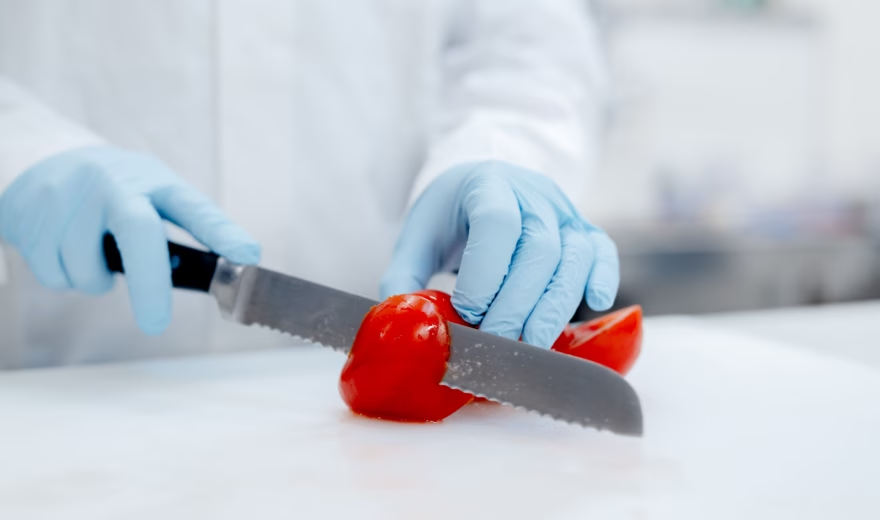
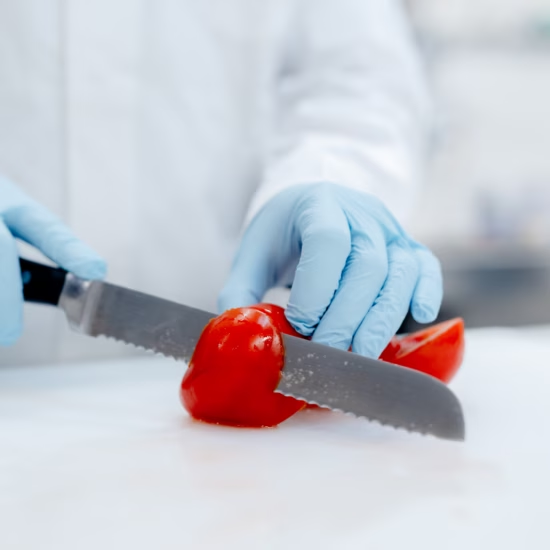
A lab technician wearing protective gloves cuts a red bell pepper for analysis in a laboratory setting. The image illustrates food safety, quality control, and the testing of fresh produce.

More samples aren't always better

A larger number of samples only increases certainty when locations, times, and quantities are selected in a targeted manner. Random additional sampling without taking process variation into account can repeat the same blind spot. The added value lies in a plan that accounts for the heterogeneity of the batch and deliberately includes the moments of highest risk.

Document how primary samples are selected, whether they are analyzed individually or as a composite sample, and what implications this has for detection and interpretation. A composite sample can be efficient for an average composition but may dilute a local deviation. Individual samples provide more information about variation but require more analyses and a pre-agreed decision rule.

Control the steps prior to analysis

The reliability of a sample can be compromised as early as during collection, packaging, transport, or storage. Non-sterile equipment, insufficient homogenization, a broken cold chain, or excessively long turnaround times can affect the results. Identification errors and incomplete documentation also make it difficult to justify the results.

Therefore, treat sampling as a critical process. Work with clear instructions, appropriate materials, and trained staff. Record who took the sample, where and when it was taken, which batch it came from, and under what conditions it was shipped. Include relevant deviations so that the laboratory and QA can evaluate the results in the proper context.

Use uncertainty as input for your decision

An analysis result is not an absolute judgment about every product in a batch. It is information derived from a limited portion of that batch, obtained using a method that itself is subject to variation. Therefore, combine the results with process knowledge, supplier history, previous results, complaints, and other verification data. The greater the potential impact of a false-negative conclusion, the stronger the justification for the sampling plan must be.

Furthermore, a robust plan is evaluated regularly. When processes, volumes, suppliers, or risks change, the sampling plan must adapt accordingly. By critically assessing not only the analysis but also its representativeness, QA ensures that a laboratory result serves as a solid foundation for decision-making.

Need support in the food industry?

Our experts are happy to work with you and help you get started quickly.

Request a quote

Fill out the form and we will contact you shortly.

Name
In which country would you like the service to be carried out?
Privacy Policy 

Contact us

Fill out the form and we will contact you shortly.

Name
In which country would you like to be assisted?
Privacy Policy 

Related news articles

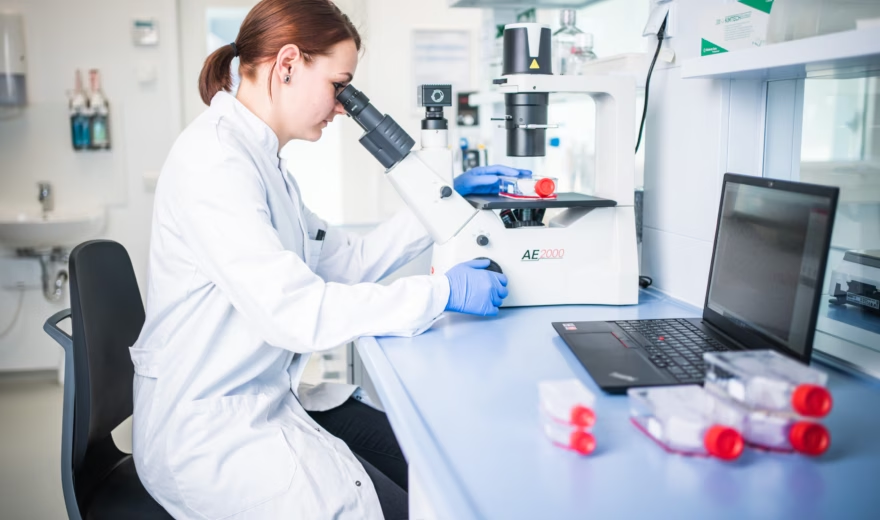
A laboratory technician examines samples under a microscope in a modern laboratory setting. Test tubes and laboratory glassware for analysis and quality control are on the workbench.
10 Nov 2026

Unusual laboratory results? Here’s how to make informed decisions about reference samples, retesting, and batch hold

A laboratory result that deviates from the specification requires swift action. At the same time, a hasty decision can lead to unnecessary holds, delays in release, or an incorrect assessment of the food safety risk. It is therefore essential for QA managers to establish in advance when a reference sample should be tested, when retesting is warranted, and when a batch should be held as a precaution. A well-designed process integrates laboratory data, product knowledge, and legal responsibility.


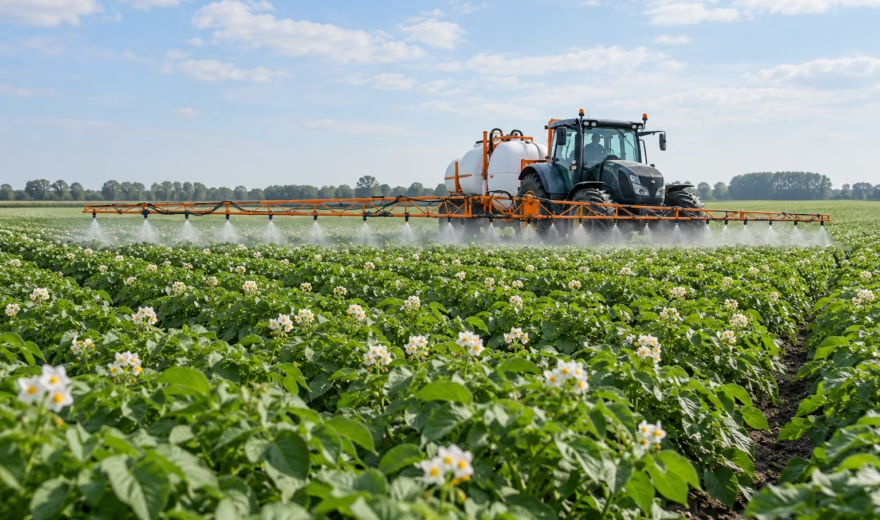
Several agricultural machines are spraying crops on a vast agricultural field.
10 Jun 2026

Pesticide Analysis in Food: Interview with a Laboratory Expert

In the European food industry, pesticide analysis remains a central component of food safety and compliance with statutory maximum residue limits (MRLs). At the same time, the focus is increasingly shifting from pure detection toward interpretation, methodology, and risk-based monitoring. We spoke with a laboratory expert about how modern pesticide analyses are conducted and evaluated in practice today.

03 Feb 2026

Analyses under the microscope: How are bacteria in food analyzed in the laboratory?

Analyzing bacteria in food is crucial to ensuring food safety. Microbiological analyses help producers, regulators and researchers understand whether food is safe for consumption, and what types of bacteria are present. In this article, we explain what techniques are used, the advantages and disadvantages, and how to interpret the results.

29 Oct 2026

Salmonella in Tomatoes: Is Your Monitoring Adequate?

DELFGAUW – A prolonged European outbreak of Salmonella enterica serovar Strathcona ST2559 underscores the importance of a risk-based monitoring program for tomatoes. This is particularly reason for importers, packers, and processors of fruits and vegetables to take a critical look at origin, sampling, and potential routes of contamination.

Sign up for our newsletter

Sign up

Naam

Related services

Allergen Analysis

Environmental analyses on pathogens

Pesticide Residue Analysis

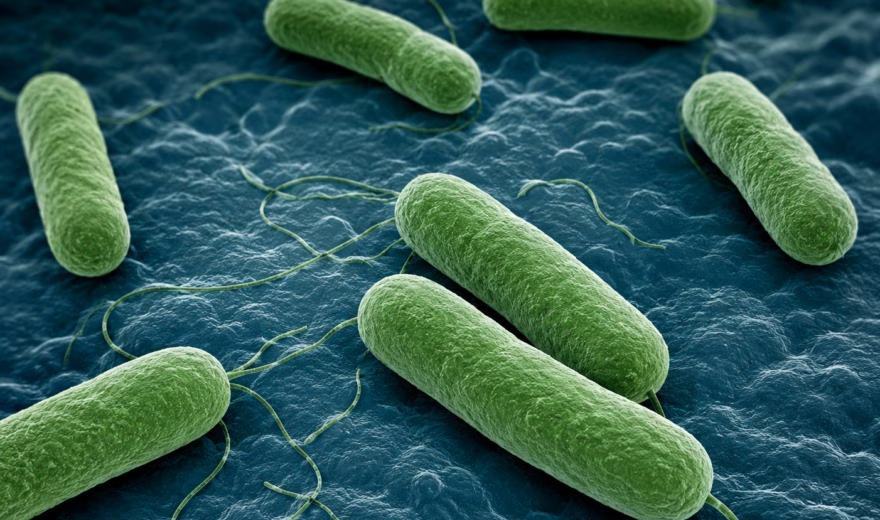
Illustration of Listeria monocytogenes, a bacterium relevant to food safety research.

Listeria research and studies