Accessibility links Skip to main content

Unusual laboratory results? Here’s how to make informed decisions about reference samples, retesting, and batch hold

A laboratory result that deviates from the specification requires swift action. At the same time, a hasty decision can lead to unnecessary holds, delays in release, or an incorrect assessment of the food safety risk. It is therefore essential for QA managers to establish in advance when a reference sample should be tested, when retesting is warranted, and when a batch should be held as a precaution. A well-designed process integrates laboratory data, product knowledge, and legal responsibility.

Continue reading
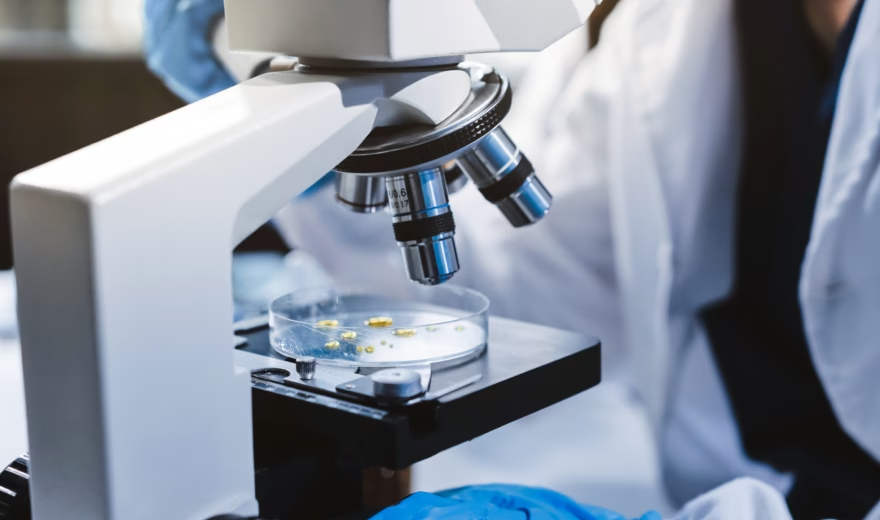
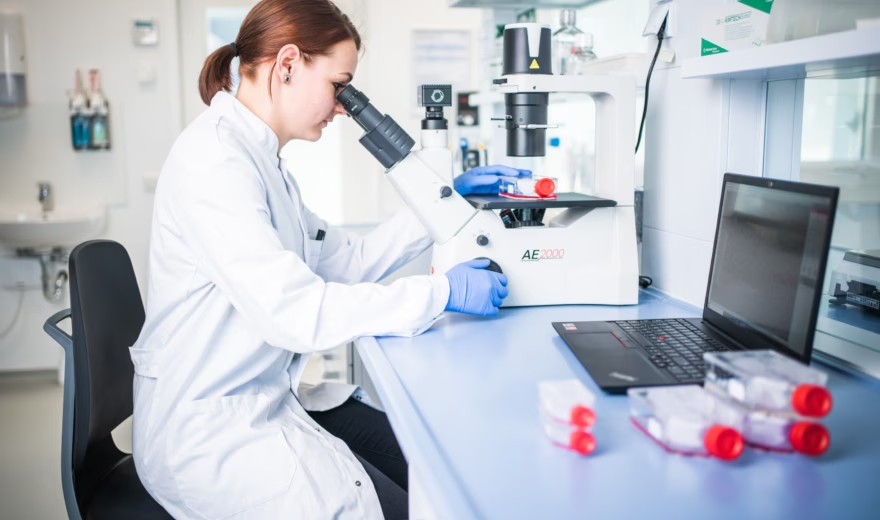
A laboratory technician examines samples under a microscope in a modern laboratory setting. Test tubes and laboratory glassware for analysis and quality control are on the workbench.

First, determine what the result actually means

An abnormal result does not automatically mean the product is unsafe. The first step is a substantive assessment of the result in its context. Is it a regulatory limit, a microbiological criterion, a customer specification, or an internal action limit? Measurement uncertainty, the analytical method used, sampling, and the homogeneity of the product also play a role. By taking these factors into account right away, you prevent a single number from being evaluated in isolation from its context.

A laboratory technician in a laboratory setting pours a sample into Petri dishes for further analysis and quality control. Several Petri dishes containing test samples are on the workbench.

Hold the shipment if the risk has not yet been controlled

If it cannot be ruled out that a product does not meet the applicable requirements, a temporary batch hold is often the most appropriate measure. This prevents the batch from being processed, released, or shipped while the investigation is still ongoing. The hold must be identifiable both administratively and physically and must align with the traceability of the batch, production date, raw materials, and any sub-batches. Additionally, document who is authorized to lift the hold. This ensures that decision-making remains verifiable, even when multiple departments are involved.

A reanalysis is not a way to “test away” an undesirable result

A retest can provide valuable information, but only if it is clear in advance what question it is intended to answer. In the context of in-house laboratory analyses, for example, a retest can help when there is a suspicion of an analytical error, a problem with sample identification, or insufficiently representative sampling. However, the result must not be used selectively to replace the initial result or to “test away” an unfavorable result. Furthermore, the Belgian Scientific Committee emphasizes that a second microbiological analysis is not automatically scientifically conclusive: its significance depends, among other things, on the sampling plan, the distribution of microorganisms in the batch, and the purpose of the analysis. Therefore, evaluate results in conjunction with the sampling context, the method used, and predefined decision rules.

The reference sample helps to investigate the cause in a targeted manner

A properly managed reference sample can be crucial when additional verification is needed. This applies only if the sample is demonstrably representative, was collected correctly, is unambiguously identified, and has been stored under appropriate conditions. In Germany, reference samples are mandatory in specific situations, including certain in-house tests for zoonotic pathogens; in other situations, they primarily serve as an important safeguard within the company’s quality plan. The retention period, quantity, and storage conditions must therefore be tailored to the product type, analytical method, and risk profile.

Combine laboratory data with information from the process

The right decision is rarely based on laboratory results alone. Also review trends from previous analyses, process parameters, cleaning and disinfection data, environmental monitoring, supplier information, and any complaints. An isolated chemical deviation requires a different approach than a microbiological result that fits a recurring pattern. By evaluating data from the laboratory and production together, it becomes clearer more quickly whether you are dealing with an isolated measurement deviation, a sampling issue, or a structural cause.

EU rules form the basis, but the country of destination is also a factor

Regulation (EU) 2017/625 establishes a common European framework for official controls. Article 35 grants the operator the right, under certain conditions, to a second expert assessment. This always includes a review of the documentation regarding sampling, analysis, testing, or diagnosis. Furthermore, to the extent that it is relevant, appropriate, and technically feasible, the competent authority must ensure that the operator can obtain sufficient material for a second analysis. However, this second analysis is not always possible or practical in every situation, for example, when the material spoils quickly, has a very low prevalence, or is available only in very small quantities. The European Commission further clarifies that Member States may themselves establish detailed rules for sampling and second expert evaluation and may provide for a procedure in cases where the first and second evaluations differ.

This European framework therefore does not mean that the practical procedure is identical in every Member State. National legislation determines, among other things, how a counter-sample is taken and stored, within what timeframe action is required, who is authorized to perform the counter-analysis, and what evidentiary value is attributed to it.

In Germany, Section 43 of the Food and Feed Code (Lebensmittel- und Futtermittelgesetzbuch) stipulates that, in principle, a portion of the sample—or, if that is not practical, a second sample—must be retained when an official sample is taken. Any counter-analysis must be conducted there by a private expert authorized under the Gegenproben-Verordnung.

In Belgium, the opinion of the Scientific Committee is relevant to the scientific interpretation of a second microbiological analysis, but that opinion does not replace the applicable legal procedure.

In France, the procedure for official sampling and counter-analysis is set forth in the Code de la consommation. The rules for sampling are specifically outlined in Articles R512-9 through R512-24-2. When a suspected violation is recorded in an official report based on tests or analyses, the report from the state laboratory is delivered to the alleged violator. According to Article L512-40, the alleged violator then has three full days from receipt to indicate that they wish to have a counter-expertise conducted. For QA managers, this is an important practical distinction: timely internal escalation, preservation of the available sample portions, and immediate consultation with an expert are necessary to avoid losing procedural rights. Product- or parameter-specific European and French regulations regarding sampling and analysis also remain applicable.

In the Netherlands, Regulation (EU) 2017/625 is implemented nationally through the Commodities Act Decree and the Commodities Act Regulation on the Implementation of Official Controls and Other Official Activities. With regard to contaminants, the Netherlands Food and Consumer Product Safety Authority emphasizes that, for a reliable assessment, companies must follow the same applicable European regulations for sampling and analysis as the competent authority. Only then can, for example, measurement uncertainty be taken into account under the specified conditions. A new in-house analysis of a randomly selected sample is therefore not automatically equivalent to a formal second expert assessment of an official sample. Furthermore, an operator remains responsible for timely reporting when a food product may be unsafe; waiting for a re-examination must not delay necessary control measures or a reporting obligation.

In cross-border trade, the QA assessment must therefore go beyond the EU regulation and the law of the country where the producer is established. Also verify the national implementing rules and the competent authority in the country where the goods are placed on the market. The country of destination may apply additional national regulations, procedures, or administrative requirements, provided they are permitted under EU law. In addition, product-specific European sampling and analysis methods may apply, for example, for contaminants such as mycotoxins, metals, dioxins, or PFAS. Therefore, determine for each product and target market which EU regulation, national regulation, competent authority, analytical method, and procedure for a second expert assessment apply. This will help you avoid a situation where a technically correct re-examination proves to be legally insufficient in the country of destination.


Establish decision-making rules before a deviation occurs

Under time pressure, discussions about release, re-testing, and communication can quickly arise. A pre-approved procedure prevents similar results from being handled differently. Describe which results immediately trigger a hold, who performs the risk assessment, when the laboratory is consulted, and what information is required for release or further action. Also ensure that responsibilities are clearly defined among QA, production, procurement, logistics, and management. This makes the process faster and easier to defend during audits or when interacting with the competent authority.

From an Abnormal Test Result to a Demonstrably Well-Reasoned Decision

An abnormal laboratory result does not call for a single standard response, but rather a consistent approach. By holding the batch in check when necessary, clearly defining the purpose of a re-test, and professionally managing reference samples, you maintain control over risk, turnaround time, and compliance. Would you like to refine your sampling plan, decision-making process, or interpretation of laboratory results? Normec Foodcare supports your organization with analyses and expert interpretation, enabling you to reach a well-founded and practically feasible decision more quickly.

Need support in the food industry?

Our experts are happy to work with you and help you get started quickly.

Request a quote

Fill out the form and we will contact you shortly.

Name
In which country would you like the service to be carried out?
Privacy Policy 

Contact us

Fill out the form and we will contact you shortly.

Name
In which country would you like to be assisted?
Privacy Policy 

Related news articles

Several agricultural machines are spraying crops on a vast agricultural field.
10 Jun 2026

Pesticide Analysis in Food: Interview with a Laboratory Expert

In the European food industry, pesticide analysis remains a central component of food safety and compliance with statutory maximum residue limits (MRLs). At the same time, the focus is increasingly shifting from pure detection toward interpretation, methodology, and risk-based monitoring. We spoke with a laboratory expert about how modern pesticide analyses are conducted and evaluated in practice today.

03 Feb 2026

Analyses under the microscope: How are bacteria in food analyzed in the laboratory?

Analyzing bacteria in food is crucial to ensuring food safety. Microbiological analyses help producers, regulators and researchers understand whether food is safe for consumption, and what types of bacteria are present. In this article, we explain what techniques are used, the advantages and disadvantages, and how to interpret the results.

25 Feb 2025

New customer portal

Working efficiently and getting quick insight into analysis results is important within the food industry. Normec Foodcare introduces a renewed customer portal that helps you to easily view laboratory results, analyze trends and take action faster. With the customer portal you save time, prevent errors and ensure that you are always in control of the safety and quality of your products.

29 Oct 2026

Salmonella in Tomatoes: Is Your Monitoring Adequate?

DELFGAUW – A prolonged European outbreak of Salmonella enterica serovar Strathcona ST2559 underscores the importance of a risk-based monitoring program for tomatoes. This is particularly reason for importers, packers, and processors of fruits and vegetables to take a critical look at origin, sampling, and potential routes of contamination.

Sign up for our newsletter

Sign in

Naam

Related Services

Microbiological research

Environmental analyses on pathogens

Shelf life testing

Illustration of Listeria monocytogenes, a bacterium relevant to food safety research.

Listeria research and studies