


Accessibility links Skip to main content

Pesticide Residues: How to Develop a Monitoring Plan Tailored to the French Market

For food companies that market products in France, a standard set of pesticide analyses is not sufficient. The number of possible active ingredients is large, legal limit values change, and the risk profile varies significantly depending on the product, origin, cultivation method, and season. An effective control plan translates that complexity into targeted analyses, clear decision-making rules, and demonstrable control. This not only protects consumers but also prevents delays, recalls, and disputes with customers or regulatory authorities.

Continue reading
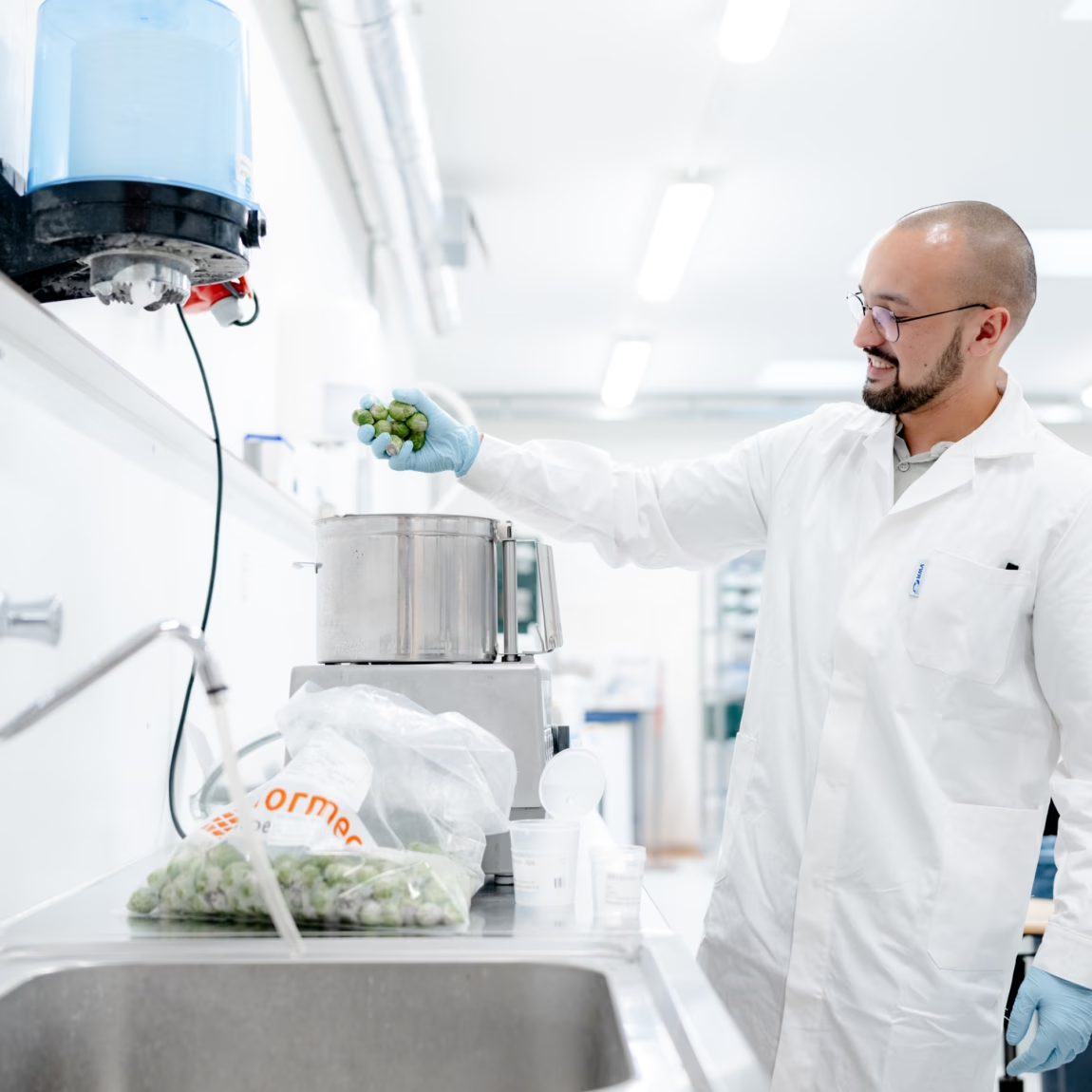
A laboratory technician inspects fresh vegetables in a laboratory setting for food analysis and quality control. On the workbench are various fresh produce items and laboratory equipment used for research and testing.

The French market requires more than a generic approach

European regulations form the basis. Regulation (EC) No. 396/2005 establishes maximum residue limits—known as limites maximales de résidus (LMRs)—for combinations of active ingredients and products. When no specific MRL has been established, the general default value of 0.01 mg/kg applies in many cases. At the same time, French authorities carry out risk-based surveillance and control programs. In these programs, product groups, origins, substances, and operators with an increased risk or a history of non-compliance receive extra attention. For QA managers, this means that regulatory compliance is the starting point, but not the only selection criterion for an inspection plan.

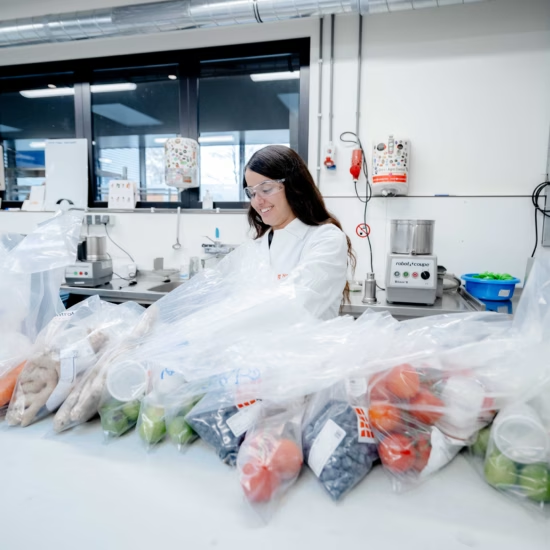
A large quantity of packaged fruits and vegetables in a laboratory setting for sampling, quality control, and food safety testing. In the background, a staff member is performing laboratory work.

Start with your product’s actual risk profile

An appropriate control plan begins with a clear definition of the products you bring to the French market. Fresh vegetables, fruits, herbs, tea, grains, spices, composite products, and infant formula each present a different risk profile. Geographic origin, previous analysis results, supply chain alerts, agricultural practices, and supplier reliability also play a role. By evaluating this information for each product-supplier combination, you can develop a risk analysis that explains why you sample certain matrices more frequently and why you include specific substances.

Choose an analytical method that suits the matrix and source

Broad multi-residue methods often provide an efficient foundation, but no single screening method automatically covers all relevant pesticides. Some substances require a separate extraction or a specific analytical method. The appropriate scope is therefore determined by combining the statutory MRLs with knowledge of the matrix, authorized or likely-to-be-used pesticides in the country of origin, historical results, and current trends. For processed products, it is also necessary to assess how concentration, dilution, drying, peeling, or mixing can influence residue levels. A laboratory testing package must therefore not only be comprehensive but, above all, demonstrably appropriate.

Adjust testing frequency and sampling based on risk

The testing frequency does not have to be the same for every product. New suppliers, high-risk sources, seasonal changes, previous violations, and products that are consumed in large quantities justify more intensive monitoring. A stable supplier with a solid track record may, provided there is a sound rationale, be subject to less frequent testing. Equally important is the quality of the sampling. A laboratory result is only useful if the sample is representative of the batch and if sampling, traceability, storage, and shipping are carried out in a controlled manner.

Make it clear in advance what a result means in practice

An analysis report is not an end in itself, but rather the basis for a decision. Therefore, establish in advance who will evaluate the results, which current MRL applies, and how you will handle measurement uncertainty, residue definitions, and results close to the limit value. Also determine when a batch will be released, held, or subjected to further testing, and how suppliers will be notified. For composite or processed products, interpretation requires extra attention, as the relationship between the ingredient, the final product, and any processing factor must be carefully substantiated.

A robust control plan is a living document

MRLs, authorizations, suppliers, growing conditions, and market signals are constantly changing. Therefore, schedule a formal reassessment at least periodically and make interim adjustments to the control plan as soon as new information warrants it. When doing so, look not only at exceedances but also at recurring detections below the MRL, shifts in residue profiles, and trends by supplier or origin. In this way, the plan evolves from an annual analysis table into a well-founded tool for risk management and continuous improvement.

From Regulations to a Workable Analysis Program

An effective control plan brings together regulations, product knowledge, supplier data, and laboratory expertise. Normec Foodcare supports companies in identifying relevant matrices and substances, selecting appropriate analytical methods, and interpreting results for the French market. Want to know if your current plan covers the right risks? Have it reviewed and translate the findings into a targeted, defensible, and practical analysis program.

Need support in the food industry?

Our experts are happy to work with you and help you get started quickly.

Request a quote

Fill out the form and we will contact you shortly.

Name
In which country would you like the service to be carried out?
Privacy Policy 

Contact us

Fill out the form and we will contact you shortly.

Name
In which country would you like to be assisted?
Privacy Policy 

Related news articles

A laboratory technician examines samples under a microscope in a modern laboratory setting. Test tubes and laboratory glassware for analysis and quality control are on the workbench.
10 Nov 2026

Unusual laboratory results? Here’s how to make informed decisions about reference samples, retesting, and batch hold

A laboratory result that deviates from the specification requires swift action. At the same time, a hasty decision can lead to unnecessary holds, delays in release, or an incorrect assessment of the food safety risk. It is therefore essential for QA managers to establish in advance when a reference sample should be tested, when retesting is warranted, and when a batch should be held as a precaution. A well-designed process integrates laboratory data, product knowledge, and legal responsibility.


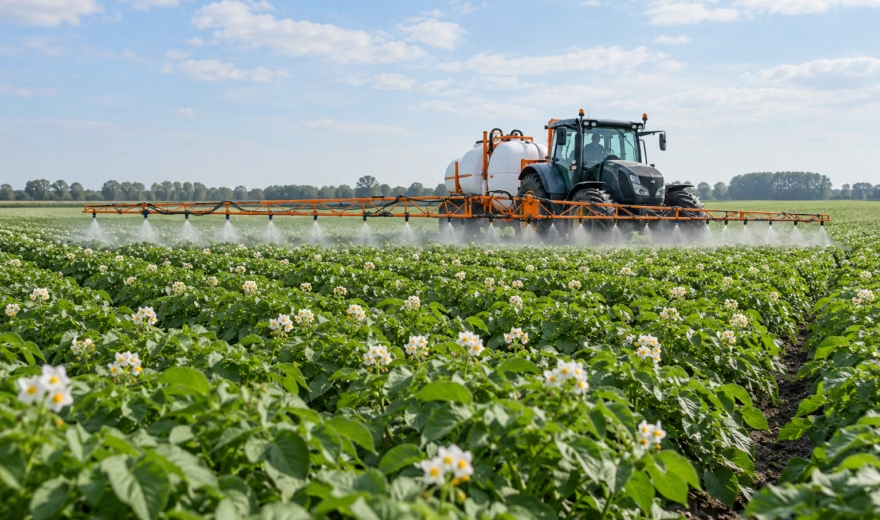
Several agricultural machines are spraying crops on a vast agricultural field.
10 Jun 2026

Pesticide Analysis in Food: Interview with a Laboratory Expert

In the European food industry, pesticide analysis remains a central component of food safety and compliance with statutory maximum residue limits (MRLs). At the same time, the focus is increasingly shifting from pure detection toward interpretation, methodology, and risk-based monitoring. We spoke with a laboratory expert about how modern pesticide analyses are conducted and evaluated in practice today.

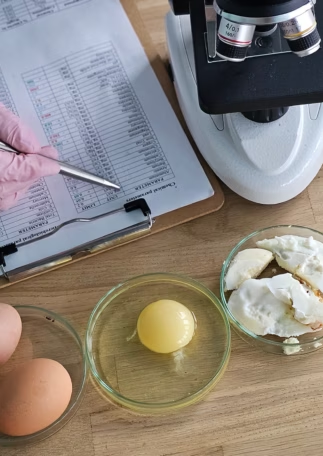
A food analysis laboratory workstation featuring a microscope, food samples, documentation, and a staff member examining samples with a pipette. The image illustrates quality control and laboratory testing of food products.
10 Nov 2026

Forward-Looking Laboratory Data: The Signals QA Can’t Afford to Miss

An individual analysis result indicates whether a sample meets a criterion at a single point in time. A series of results reveals something far more valuable: whether your process remains stable. For QA managers, this presents an opportunity to shift from reactive monitoring to proactive management. Those who recognize trends early can take action before a threshold is exceeded, a customer files a complaint, or an audit uncovers a systemic weakness.

25 Feb 2025

New customer portal

Working efficiently and getting quick insight into analysis results is important within the food industry. Normec Foodcare introduces a renewed customer portal that helps you to easily view laboratory results, analyze trends and take action faster. With the customer portal you save time, prevent errors and ensure that you are always in control of the safety and quality of your products.

Sign up for our newsletter

Sign in

Naam

Related Services

Pesticide Residue Analysis

Een vrouwelijke onderzoeker met veiligheidsbril, blauwe handschoenen en witte labjas werkt geconcentreerd in het lab en pipetteert vloeistof in een reageerbuis.

Contaminants and residues analysis

PFAS Analysis

Heavy Metal Analysis