
23 Jun 2026
Sustainable Packaging: The Underestimated Risks to Shelf Life and Food Safety
Sustainable packaging: the underestimated risks to shelf life and food safety
With Directive (EU) 2024/825, the European Union has tightened the rules on unfair commercial practices to better protect consumers against greenwashing. General environmental claims, climate claims based on offsetting, and non-transparent sustainability labels will be subject to more rigorous oversight. Belgium has already transposed the directive through the Act of July 22, 2026. The Netherlands has implemented the directive through the Implementation Act on the Directive on Better Sustainability Information for Consumers. The impact is primarily felt in packaging, websites, marketing communications, and sustainability claims directed at customers and consumers. The European directive was published on March 6, 2024, and was to take effect on September 27, 2026.

The directive amends existing European rules on unfair commercial practices and consumer rights. The goal is to enable consumers to make more informed sustainable choices and to combat misleading information regarding environmental and sustainability issues. The European legislature explicitly identifies greenwashing, implausible sustainability labels, and misleading climate claims as areas of concern.
The essence of the change is that a sustainability claim must not only sound appealing, but also be demonstrably accurate.
General environmental claims such as “sustainable,” “green,” or “environmentally friendly” become risky when it is not made clear exactly what the claim refers to. Claims of being “climate-neutral” or “CO₂-neutral” that are based solely on offset projects are also explicitly addressed.
Organizations must be able to demonstrate exactly what is meant and what the claim is based on. Therefore, packaging bearing the text “sustainably produced” without further explanation or substantiation cannot be used without further ado.
Many companies develop their own logos, icons, or sustainability labels to highlight their efforts. Sustainability labels must be based on a certification program or established by a government agency. This should increase transparency in sustainability communications.
Statements about future ambitions are also coming more clearly into focus. Claims such as “on track to achieve climate neutrality by 2030” or “fully circular within five years” require clear, objective, publicly available, and verifiable commitments and targets, incorporated into a detailed and realistic implementation plan. Progress must be verified by an independent third-party expert. This shifts the focus from ambition alone to the credibility of the underlying path.
Organizations will increasingly need to be able to demonstrate how a claim was arrived at. A claim such as “100% recyclable packaging” seems simple, but it raises questions. Is the entire package recyclable, or just part of it? Such claims must be accurate, clear, and substantiated.
Many claims that were used for years without question now require verifiable evidence. This applies not only to product packaging but also to websites, sustainability reports, sales documentation, and presentations. If a claim cannot be substantiated with objective data, certification, or recognized methodologies, the legal risk increases.
Belgium has transposed the directive through the Act of July 22, 2026, transposing Directive (EU) 2024/825. Among other things, the Act amends the Code of Economic Law and introduces definitions for environmental claims, generic environmental claims, sustainability labels, and certification schemes. The Act entered into force on September 27, 2026.
The Netherlands has implemented the directive through amendments to Book 6 of the Civil Code. The implementing law clarifies that sustainability claims must be specific, verifiable, and factually accurate. Sustainability labels, repairability claims, and information about product lifespan are also explicitly covered by the amended rules. Read more about this on the Dutch Ondernemersplein website and at the Netherlands Authority for Consumers and Markets.

Directive (EU) 2024/825 does not introduce any new certification requirements within FSSC 22000, BRCGS Food Safety, or IFS Food. However, the directive does emphasize the importance of providing demonstrable evidence to support sustainability claims and ensuring compliance with applicable laws and regulations.
The stricter rules for sustainability claims align well with the European Packaging and Packaging Waste Regulation (PPWR, Regulation (EU) 2025/40). While Directive (EU) 2024/825 focuses on communication with consumers, the PPWR sets substantive requirements for packaging in areas such as recyclability, recycled content, packaging minimization, and reuse. This creates a clear interplay between the two legal frameworks.
This means, for example, that a claim such as “100% recyclable packaging,” “packaging made with recycled raw materials,” or “circular packaging” must not only be appealing from a marketing perspective but must also align with the technical characteristics and legal definitions used within the PPWR.
As the PPWR is further implemented, the substantiation of packaging-related sustainability claims will need to be based more and more thoroughly on objective and verifiable data.
An effective approach begins with an inventory of all sustainability claims used by the organization. Next, verify what supporting evidence is available, which certification systems are used, and whether the wording aligns with the available evidence. Be sure to pay particular attention to claims on packaging, websites, and other commercial communications directed at consumers.
Our experts are happy to work with you and help you get started quickly.
Sustainable packaging: the underestimated risks to shelf life and food safety

As a production company, you regularly perform lab and microbiological analyses: sampling of the environment, of raw materials, semi-finished and finished products. How do you perform this correctly and what are important things to consider?

PFAS have been high on the European agenda for several years now. While attention used to be focused primarily on drinking water, soil contamination, and industrial emissions, the focus is increasingly shifting to packaging materials that come into contact with food.
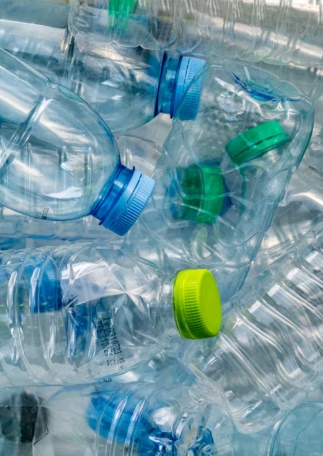
The Packaging and Packaging Waste Regulation (PPWR) marks a significant change in European packaging legislation. The new rules affect not only packaging manufacturers but also the entire supply chain, including food companies and QA teams. What exactly does the PPWR entail? What specific changes will there be for food contact materials? And how can your organization prepare for this? We asked an expert in food contact materials and packaging compliance.