23 Jun 2026
Sustainable Packaging: The Underestimated Risks to Shelf Life and Food Safety
Sustainable packaging: the underestimated risks to shelf life and food safety
UTRECHT – The implementation of the European Deforestation Regulation (EUDR) is drawing nearer. For many food companies, this means that the origin of relevant raw materials must not only be known but also deforestation-free, that they have been legally produced, and that they comply with the applicable due diligence obligations. Furthermore, previous pilot inspections by the Netherlands Food and Consumer Product Safety Authority (NVWA) show where things can go wrong in practice. Simply collecting information is not enough. Companies must actually assess risks and, where necessary, take appropriate measures.


The key question, therefore, is not just whether your organization has information available about suppliers and raw materials. Can you also document how you assessed that information, what risks you identified, and how the physical goods are linked to their origin?
As things stand, the EUDR requirements will apply to large and medium-sized enterprises starting December 30, 2026. For most small and micro-enterprises, the effective date is June 30, 2027. There are exceptions, including for certain wood products that are already covered by the European Timber Regulation. Therefore, determine which deadline applies to your organization and products.
The EUDR focuses on seven raw materials: cattle, cocoa, coffee, oil palm, soy, rubber, and wood, as well as specific derived products. For the food industry, cocoa, coffee, palm oil, soy, and beef are among the relevant materials. Whether a product actually falls under the regulation depends on the product description and the corresponding customs code in Annex I. A product containing one of these ingredients does not, therefore, automatically fall within the scope of the regulation.
In August 2025, the NVWA published findings from voluntary pilot inspections at companies that were already well advanced in their preparations. The key lesson: a sound EUDR process goes beyond simply collecting documents. Risks must be assessed, and the results must be demonstrably translated into appropriate control measures.
Link relevant risks to well-founded measures. A file containing supplier information is just the beginning.
Digital systems can provide support, but they do not assume responsibility for due diligence
A certificate may be part of the supporting documentation, but it does not replace the required due diligence review.
It must be verifiable that the physical goods originate from the specified source. Furthermore, mixing with other goods must be prevented.
For food companies, the EUDR affects multiple departments. Procurement needs information from suppliers; QA must be able to assess whether the available supporting documentation is sufficient; and the supply chain must be able to verify the link between raw materials, origin, and physical goods.
Particularly for composite and processed products, a key preliminary question is: Does this specific flow of goods actually fall under Annex I of the EUDR? Only then can you determine what information and controls are required and which party in the chain has which obligations.

The applicable obligations vary by organization and goods flow. An importer placing relevant products on the EU market for the first time has different responsibilities than a manufacturer who exclusively processes raw materials for which due diligence has already been performed earlier in the supply chain.
Thanks to these simplifications, downstream market participants and traders do not need to submit a due diligence statement themselves. However, they do have information obligations. Therefore, identify your role and the associated obligations for each goods flow.
A practical first step is to work with procurement, QA, and the supply chain to thoroughly review a single relevant goods flow—such as cocoa, coffee, soy, or palm oil. Then, define responsibilities, actions, and deadlines. This will highlight which aspects have already been addressed and where further work is needed.
EUDR does not need to be organized entirely separate from the existing quality management system. Processes related to supplier management, traceability, internal audits, and management reviews provide opportunities to systematically incorporate sustainability requirements.
This presents an opportunity for quality managers. By integrating EUDR audits into existing processes, it becomes clearer more quickly where information is missing, assessments are insufficiently substantiated, or responsibilities are unclear.
Normec Foodcare supports food companies with issues related to sustainability legislation, supply chain transparency, and supplier management. Specialists help translate relevant requirements into existing quality processes. Those who first want to strengthen their internal knowledge can use the EUDR e-learning course as a foundation for scope, due diligence, and practical implementation.
The impending EUDR requires more than just a collection of supplier documents. Food companies must know which product flows fall under the regulations and demonstrate how relevant information, risks, and traceability are managed.
Those who do not yet have a complete overview of this can use the coming period to assess one relevant goods flow from start to finish. Ensure that information is not only available but also forms part of a demonstrably effective due diligence process.
Our experts are happy to work with you and help you get started quickly.
Sustainable packaging: the underestimated risks to shelf life and food safety

As a production company, you regularly perform lab and microbiological analyses: sampling of the environment, of raw materials, semi-finished and finished products. How do you perform this correctly and what are important things to consider?

PFAS have been high on the European agenda for several years now. While attention used to be focused primarily on drinking water, soil contamination, and industrial emissions, the focus is increasingly shifting to packaging materials that come into contact with food.
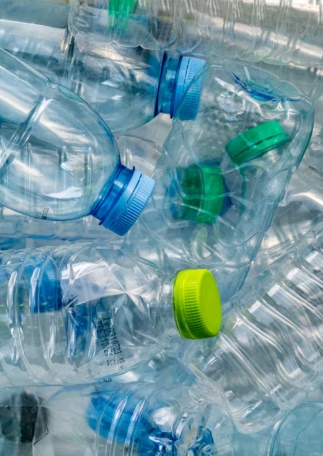
The Packaging and Packaging Waste Regulation (PPWR) marks a significant change in European packaging legislation. The new rules affect not only packaging manufacturers but also the entire supply chain, including food companies and QA teams. What exactly does the PPWR entail? What specific changes will there be for food contact materials? And how can your organization prepare for this? We asked an expert in food contact materials and packaging compliance.