


Accessibility links Skip to main content

PFAS in drinking water: What do regional differences mean for agribusinesses and food companies?

New research findings from Greenpeace show that PFAS concentrations in Dutch drinking water vary significantly by region. Higher levels are measured particularly in parts of North and South Holland compared to other provinces. Although water utilities emphasize that drinking water is safe and meets current legal standards, the debate over PFAS is once again bringing the quality of water sources and the impact on the agri-food chain into focus.

Contact us

Fill out the form and we will contact you shortly.

Name
In which country would you like to be assisted?
Privacy Policy 
Continue reading
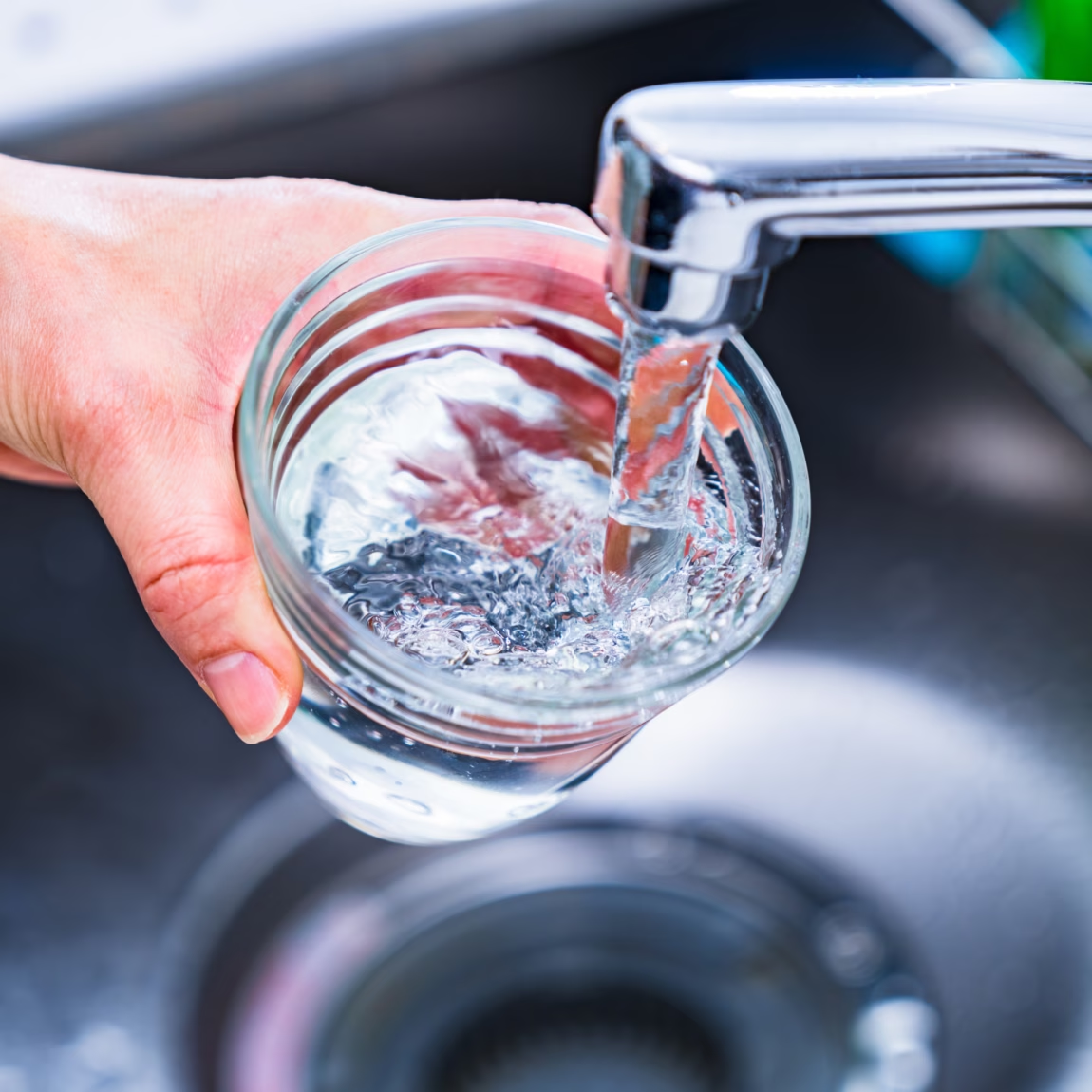
A water sample is collected from a faucet into a glass jar for water testing.

PFAS, a collective term for thousands of chemicals known as “forever chemicals,” are found worldwide in soil, surface water, groundwater, and food production chains. Greenpeace’s new PFAS map shows that these substances can also enter the human body and the food production chain via drinking water.

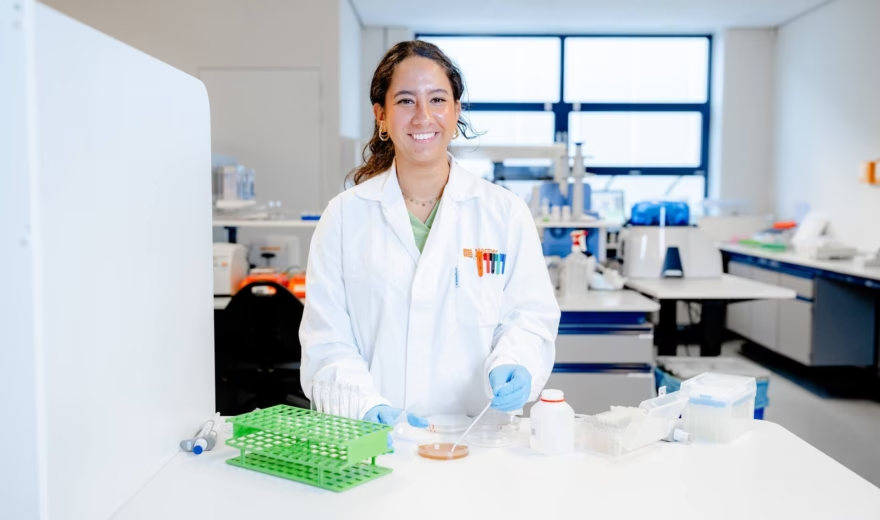
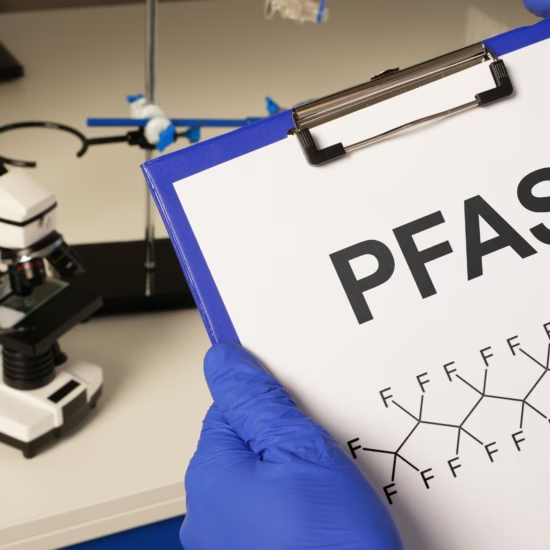
A lab technician holds a clipboard with PFAS next to laboratory equipment.

Regional Differences in PFAS Concentrations

An analysis of public data from Dutch drinking water utilities shows that in about one-third of the areas studied, PFAS concentrations exceed the guideline value recommended by the RIVM. Elevated concentrations were found particularly in North and South Holland.

According to the researchers, these differences are likely related to the type of water source used for drinking water production. Surface water typically contains higher concentrations of PFAS than groundwater. Because drinking water companies use different sources, regional differences in the final drinking water quality arise.

At the same time, both the RIVM and drinking water companies emphasize that tap water remains safe to drink and complies with applicable legal standards.

Why are PFAS relevant to the agri-food sector?

Water is an essential raw material for the agri-food sector. Drinking water, process water, and irrigation water are used daily in a wide range of production processes. When PFAS are present in water sources, this can have consequences for various links in the supply chain.

Consider, for example:

  • Field crop and greenhouse horticulture operations that rely on surface water for irrigation;
  • Livestock farms where water quality affects operations;
  • Food producers who use process water during production and cleaning;
  • Supply chain stakeholders who must meet increasingly stringent requirements regarding food safety, sustainability, and compliance.

Due to the growing social and political attention on PFAS, there is also an increasing need for reliable data on the presence of these substances in water, soil, and end products.

Increasing Regulatory Focus

The PFAS debate is not limited to the Netherlands. Efforts are also underway at the European level to further restrict PFAS applications. In addition, there is growing emphasis on monitoring persistent chemicals within environmental and food safety legislation.

For organizations, this means that understanding potential exposure pathways is becoming increasingly important—not only from a compliance perspective but also to identify risks within the supply chain at an early stage.

A thorough risk analysis focuses, among other things, on:

  • The origin of water sources;
  • Historical land use;
  • Potential industrial emission sources;
  • Soil quality;
  • The impact on agricultural and food products.

Monitoring as the Basis for Risk Management

As PFAS are being detected in more and more locations, the importance of systematic monitoring is growing. Regular analyses of water, soil, and other environmental matrices provide organizations with insight into potential risks and support them in taking appropriate measures.

For agribusinesses and food companies, a well-founded monitoring strategy is important for:

  • Identify trends in a timely manner;
  • Assess risks in the production chain;
  • Provide transparent information to customers and clients;
  • Be prepared for future legislation and market requirements.
Hands cupped under running water from a natural spring.

Consumers, too, are increasingly seeking clarity

Attention to PFAS is not limited to businesses and governments. Consumers, too, are increasingly asking whether PFAS are present in their immediate living environment.

Various testing options are available to individuals to determine the presence of PFAS. Through TestenopPFAS, consumers can have samples tested for, among other things:

  • Drinking water;
  • Groundwater;
  • Surface water;
  • Soil.

Using a PFAS test kit, consumers can easily collect a sample themselves and send it to a specialized laboratory for analysis. This gives consumers greater insight into the quality of their water or soil and the possible presence of PFAS.

PFAS Testing for Your Organization

For organizations in the agriculture, food, and water sectors, understanding PFAS is becoming increasingly important. Structural monitoring, water testing, and risk analyses help identify potential risks in a timely manner and make informed decisions.

Normec Groen Agro Control supports organizations with:

  • Water testing;
  • PFAS analyses;
  • Risk analyses;
  • Monitoring programs;
  • Expert interpretation of analysis results.

Want to test for PFAS yourself?

Would you like to know if PFAS is present in your drinking water, groundwater, surface water, or soil? With the PFAS test kit from TestenopPFAS, you can easily take a sample yourself and have it analyzed.

Related news articles

Various food packaging materials, suitable for quality and sustainability testing.
12 Aug 2026

The PPWR now applies: what does this mean for your packaging?

The European Packaging and Packaging Waste Regulation (PPWR) has applied since 12 August 2026. This marks the start of an important new phase for every organisation that manufactures, imports, uses or places packaging on the European market. The Regulation introduces stricter requirements covering substances of concern, recyclability, material use, reuse and the evidence needed to demonstrate compliance. For food businesses, this is no longer a distant development. The first obligations already apply, with further requirements being introduced in phases over the coming years. It is therefore essential to understand your packaging portfolio and determine in good time where changes are needed.


Employees are discussing matters at a service desk in a modern office environment.
21 Sep 2026

How do you know if consumers accept your sugar reduction or protein fortification?

Consumers are looking for healthier, protein-rich, and more sustainable products, but they still base their choices primarily on taste and sensory experience. That makes reformulation complex. Sugar, for example, affects more than just sweetness; it can also alter texture, mouthfeel, and body. Added protein can be nutritionally beneficial, but it can sometimes result in a drier texture or an unusual aftertaste. A similar risk applies to fat reduction, clean label initiatives, and other formulation adjustments.

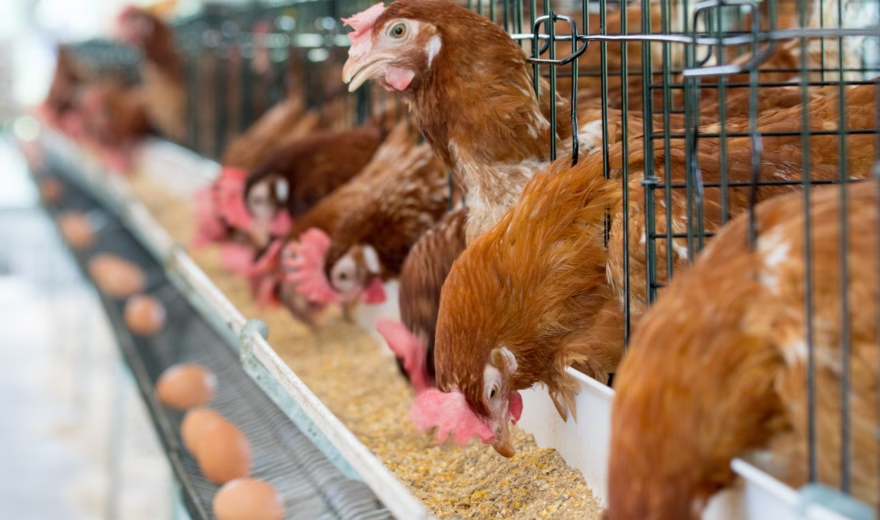
Laying hens are kept in a poultry house where eggs are produced and collected.
25 Aug 2026

Salmonella in eggs: recent outbreak highlights the importance of targeted testing

A Salmonella outbreak linked to eggs from a Belgian poultry farm has now made at least 300 people ill. The incident once again shows the importance of systematic monitoring and timely laboratory testing throughout the egg supply chain.

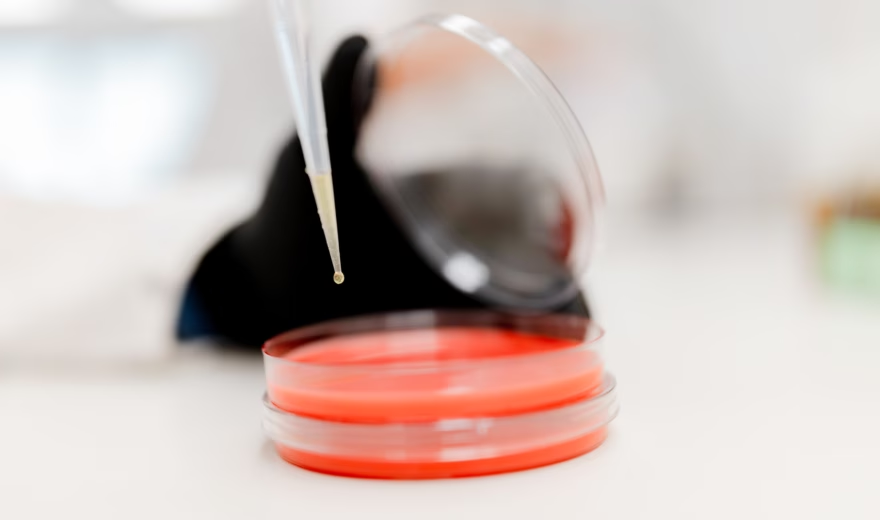
A liquid sample is added to a petri dish with a pipette for laboratory analysis.
27 Jul 2026

Normec Informs Customers About Regulations Regarding Animal By-Products When Submitting Samples

WIERINGERWERF – Normec Foodcare is reminding customers of the applicable European regulations for animal by-products (ABP) and derived products. This is in response to increased scrutiny by the Netherlands Food and Consumer Product Safety Authority (NVWA) regarding the correct application of this legislation within the chain of sample submission, analysis, and processing. The regulations are set forth in Regulation (EC) No. 1069/2009 and the accompanying implementing provisions in Regulation (EU) No. 142/2011. The purpose of these regulations is to protect public health, animal health, and the safety of the food and feed chains.

Sign up for our newsletter

Sign up

Naam

Related services

Water testing for safe water quality

Various food packaging materials, suitable for quality and sustainability testing.

Analysis of PFAS in Food Packaging

Analist in Normec Laboratorium

Analysis and monitoring