Accessibility links Skip to main content

Vigilance Required — Botulism Outbreaks in Italy Serve as a Wake-Up Call for Producers

In August 2025, Italy was shaken by two serious outbreaks of botulism. In Diamante, in the Calabria region, sandwiches containing vegetables preserved in oil were sold that turned out to be contaminated with Clostridium botulinum. Two people died, including Luigi Di Sarno and Tamara D’Acunto, and more than a dozen others were hospitalized, some in critical condition. Shortly before that, Sardinia was the scene of a similar incident in which an epidemiological link was established between the consumption of guacamole at a festival and multiple hospitalizations, including at least one death. Italian authorities took decisive action, including product recalls, closures of vendors, and large-scale inspections. Antitoxins were even airlifted in to treat patients at an early stage.

Contact us

Fill out the form and we will contact you shortly.

Name
In which country would you like to be assisted?
Privacy Policy 
Continue reading

Not Just a Problem with Homemade Preserves

These incidents make it clear that commercial food products are not immune to contamination either. While botulism has traditionally been associated primarily with homemade preserves, these cases show that errors can occur even in professional production environments, with fatal consequences. Vegetables in oil pose a particular risk in this regard. Research by the Italian Istituto Superiore di Sanità shows that nearly half of all reported botulism cases in the country are caused by this type of product. When these vegetables are packaged in a low-oxygen environment, with low acidity, and without sufficient heating, the bacteria can multiply unnoticed.

Vulnerabilities in the Supply Chain

During its inspections, the Italian food inspection agency, NAS, found irregularities at nearly half of the food trucks and festival vendors it visited. This illustrates that not only production but also the distribution and sales phases are vulnerable links in the chain. The cultural context also plays a role here. Italy has a strong tradition of home-based food preservation, especially in the south. While this need not be a problem in itself, it does entail additional risks because knowledge of and adherence to hygienic preservation techniques are not always guaranteed. In the Netherlands and Belgium as well, checks and inspections indicate that similar vulnerabilities exist, particularly among small producers, food trucks, and market vendors who do not always strictly monitor sterilization, pH, and salt content. Professional producers would do well to learn from this tradition and these practical examples, but also to explicitly distinguish themselves through demonstrable food safety.

Stricter processes and controls

For producers, this means that strict sterilization procedures are essential. Vegetables in oil must be processed under controlled conditions, preferably in industrial autoclaves that heat the contents to at least 121 degrees Celsius. Accurate measurement of acidity and salt content is indispensable in this process. A pH that is too high or a salt concentration that is too low can mean the difference between a safe product and a potentially lethal hazard. Visual inspection is also crucial: swollen lids or packages showing signs of gas buildup must be immediately removed from the market.

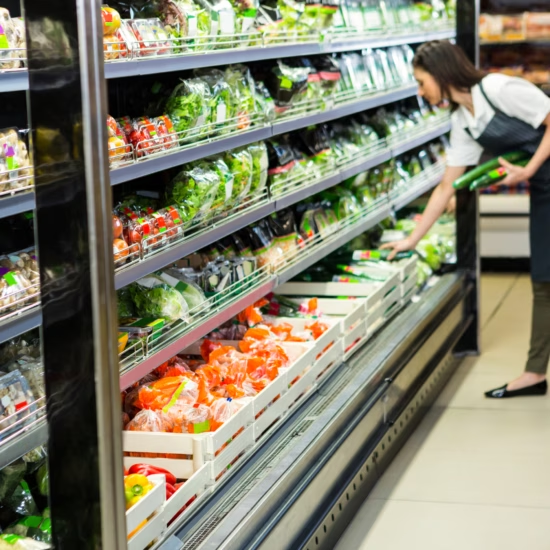
Shopping in the produce section of a supermarket.

Supply Chain Responsibility and Rapid Response

Supply chain transparency is a key factor in prevention. Manufacturers must have a thorough understanding of their suppliers and conduct random testing on incoming batches, especially for high-risk products. As soon as there are indications of possible contamination, a recall procedure must be initiated without hesitation in collaboration with the competent authorities. Equally important is having protocols in place for a rapid response in the event of an incident. Recognizing early symptoms in consumers—such as blurred vision, difficulty swallowing, or breathing difficulties—and immediately seeking medical assistance can save lives.

Communication as a Weapon Against Contamination

Finally, communication plays a key role. Producers who are transparent about their preventive measures and inform consumers about both the risks and the signs of contamination strengthen trust in their brand and contribute to broader awareness of food safety.

Conclusion: Combining Tradition with Safety

The recent botulism cases in Italy remind us that food safety is not merely a matter of complying with regulations. It is an ongoing process of vigilance, prevention, and responsibility. In a market where consumers increasingly value authenticity and craftsmanship, the challenge for producers lies in combining traditional flavors with modern safety standards. Only in this way can the risk posed by an invisible yet life-threatening enemy like Clostridium botulinum be reduced to an absolute minimum

Need support in the food industry?

Our experts are happy to brainstorm with you and get you started quickly.

Request a quote

Fill out the form and we will contact you shortly.

Name
In which country would you like the service to be carried out?
Privacy Policy 

Related news articles

22 Oct 2026

New MRLs for difenoconazole effective May 2027

UTRECHT – The European Commission has established new maximum residue limits (MRLs) for difenoconazole in and on a wide range of food products. The changes will take effect on May 5, 2027. It is particularly important for companies that grow, import, process, or trade potatoes, vegetables, fruits, nuts, and other plant-based products to implement the new limits in the supply chain in a timely manner.
22 Oct 2026

PPWR: What Do Packaging Changes Mean for Products and Consumers?

The Packaging and Packaging Waste Regulation (PPWR) has been in effect since August 12, 2026. For companies in the food industry, the new PPWR requirements for packaging are not just a compliance issue. Changes to packaging can also raise questions about product quality, shelf life, food safety, consumer experience, and the analytical basis for packaging materials.

19 Oct 2026

Why Consumer Research Makes the Difference Between a Good Idea and a Successful Product

Many product innovations start with a good idea. However, a strong concept does not automatically lead to commercial success. Ultimately, consumers determine which products are purchased, repurchased, and recommended to others.

14 Oct 2026

How Consumer Expectations Influence Product Perception

Consumers don’t judge a product only when they taste it. Often, their first impression is already formed before the package is even opened. Claims, brand name, appearance, and past experiences play a major role in shaping what consumers expect from a product.

Crates of yellow apples stored in a distribution center for sorting and quality control.
08 Oct 2026

Normec Foodcare Online Accelerates the Renewal of Its Quality Platform

Normec Foodcare Online is taking the next step in the renewal of its digital platform for quality management, compliance, and food safety. The first updated modules are now available, and the migration of customers to the new environment has begun. At the same time, we are continuing to build a platform that can respond more quickly to customer needs and technological developments. Would you like to know what the updated platform and the migration mean for your organization?

An employee evaluates a food product based on product information displayed on a computer screen.
28 Sep 2026

AI Label Compliance Tool Wins Expert Jury Award at the 2026 Packaging & Label Awards

Normec Quality Assurance Belgium won the Expert Jury Award in the Packaging Machinery category at the Packaging & Label Awards 2026. The award was presented to the AI Label Compliance Tool, an innovative solution that helps companies check labels and ingredient declarations faster, more efficiently, and more accurately.

A water sample is collected from a faucet into a glass jar for water testing.
22 Sep 2026

PFAS in drinking water: What do regional differences mean for agribusinesses and food companies?

PFAS, a collective term for thousands of chemicals known as “forever chemicals,” are found worldwide in soil, surface water, groundwater, and food production chains. Greenpeace’s new PFAS map shows that these substances can also enter the human body and the food production chain via drinking water.

Sign up for our newsletter

Sign up

Naam

Related services

Microbiological research

Food safety risk scan

Shelf life testing

Een vrouwelijke onderzoeker met veiligheidsbril, blauwe handschoenen en witte labjas werkt geconcentreerd in het lab en pipetteert vloeistof in een reageerbuis.

Contaminants and residues analysis