


Accessibility links Skip to main content

Q&A with the Expert: 2027 Starts Today—Here’s How QA Is Staying on Top of the New Rules

2027 may seem far away, but waiting is not an option. European regulations on deforestation, packaging, allergens, machinery, mineral oils, and sustainability claims are simultaneously affecting products, processes, and supply chain data. What should be on the priority list right now? Where are the biggest risks? And how can you prevent compliance efforts from devolving into a series of isolated, rushed projects? Grietje Van Weert, Business Unit Manager of the Training & Knowledge Center at Normec Foodcare, takes stock of the situation.

Continue reading
Participants share experiences during a gathering in an informal setting.

Why isn’t waiting until 2027 an option?

“Because the preparation period starts now. Various regulatory issues are converging simultaneously and affect much more than just the label or the end product. They have implications for raw materials, origin data, packaging, machinery, software, supplier information, and marketing claims. QA must therefore bridge the gap between procurement, production, engineering, R&D, marketing, sustainability, and legal. Anyone who manages each dossier separately will overlook important cross-references and runs the risk of discovering too late that essential data or supporting documents are missing.”

EUDR: Where Does the Real Risk Lie for QA?

“Not in the declaration itself, but in the quality of the information behind it. The EUDR requires companies to demonstrate, for products such as beef, cocoa, coffee, oil palm, rubber, soy, and timber, that these products were produced legally and do not originate from land that was deforested after December 31, 2020. For timber, forest degradation must also not have occurred.” 

“The question QA must ask today is: Can we actually trace the origin all the way back to the specific production plot? This requires geolocation, a documented risk analysis, and appropriate risk mitigation measures. Even if you don’t submit the due diligence statement yourself, you must be able to provide reliable and traceable information. A missing link in a supplier’s chain could soon affect your product’s market access.”

PPWR: Why Is a Packaging Specification No Longer Sufficient?

“Because the PPWR transforms packaging from a procurement item into a full-fledged compliance dossier. The regulation has been in effect since August 12, 2026, and applies to all packaging and packaging waste. For food-contact packaging, the PFAS restrictions are directly relevant. Leading up to 2030, stricter requirements will be introduced regarding design for recycling, recyclability, minimal packaging, and recycled plastic. By 2035, packaging must be demonstrably recycled at scale, and starting in 2038, the thresholds will be further tightened.”

“QA therefore needs insight into materials, weights, recycled content, and evidence regarding PFAS and other relevant substances for each type of packaging. Empty space, reuse, refill concepts, single-use items, and BPA also require attention. Therefore, start thinking now about future packaging design so that you can steer development choices, investments, and costs yourself before regulations or (retail) customers dictate the terms. Keep in mind the full impact of a packaging change: new packaging often requires new validations, such as for shelf life, product protection, food safety, and suitability for the production process.”

Want to stay on top of PPWR and packaging risks?

Find out what considerations sustainable packaging raises regarding shelf life and food safety.

Want to learn more about the PPWR?

PAL: When is “may contain” still justifiable?

“Only when the warning is the result of a substantiated risk assessment, not when it is added as a standard precaution. The Codex Guideline on Precautionary Allergen Labeling states that effective preventive allergen control measures must first be implemented. Then, a risk analysis must demonstrate that unintended presence cannot be sufficiently prevented and that it poses a relevant risk. PAL therefore never replaces good manufacturing practices, separation in time and space, cleaning, or accurate ingredient declaration.”

“The evidence will be decisive. Define cross-contact scenarios, control measures, and supporting data for each product and process. Document why PAL is or is not necessary and reassess the decision with every relevant change in formulation, supplier, process, or production line.”

Tip: Make PAL a deliberate decision.

With the Normec QRA Allergen Tool, you can perform complex allergen risk analyses more quickly, consistently, and reproducibly. You combine process, raw material, and recipe data, follow the rationale step by step, and clearly document why a precautionary warning is or isn’t necessary. Request a demo and discover how to organize your allergen management more efficiently and with a stronger scientific basis.

Normec QRA Allergen Tool

Request a demo

Vul het formulier in en wij nemen spoedig contact met je op.

Naam
In welk land wilt u geholpen worden?
Privacyvoorwaarden 

Machinery Regulation: Could a Change Suddenly Make Your Company a Manufacturer?

“Yes. As of January 20, 2027, machine safety explicitly includes software, AI, autonomous functions, cybersecurity, and updates. A substantial physical or digital modification may result in the installer being legally considered a manufacturer. This means that obligations regarding risk assessment, technical documentation, declaration of conformity, CE marking, and instructions will fall directly on your organization.”

“That is why, before any retrofit, line integration, or software update, it must be clear who will assess the change and who bears which responsibilities. QA, engineering, technical services, and procurement must all follow a single process. If you wait until after installation to conduct that assessment, a technical improvement could unexpectedly create a new compliance and product safety risk.”

MOSH and MOAH: Are Your Specifications and Analyses Ready for 2027?

“That is exactly the kind of testing companies need to be conducting now. Starting January 1, 2027, European maximum levels for MOAH will take effect, while monitoring remains a key focus for MOSH. The values vary by product category. For various oilseeds, vegetable oils, and milk fat, the limit is set at 2.0 mg/kg. For peanut, sesame, coconut, germ, and bran oils, among others, a phased reduction is planned from 6.0 mg/kg in 2027 to 4.0 mg/kg in 2028 and 2.0 mg/kg in 2030.”

“The first step is to correctly assign each product to the applicable category. Only then can you update specifications, analytical methods, and supplier agreements in a targeted manner. Furthermore, do not limit the source analysis to raw materials: lubricants, processing aids, transportation, storage, and packaging can also contribute. Especially in the feed sector, contamination can occur early in the supply chain and only become apparent much later.”

Tip: Get a handle on MOSH and MOAH.

Would you like to know where contamination can occur, which risks are relevant to your products, and how you can refine your testing protocols and supplier agreements in a targeted manner? Download the white paper on MOSH and MOAH in food products and translate the new points of focus into a practical management plan.

Sustainability Claims: Which Words Could Pose a Risk?

“Especially broad terms like ‘green,’ ‘environmentally friendly,’ or ‘sustainable’ when it’s not exactly clear what they’re based on. Since September 27, 2026, stricter rules have been in effect regarding sustainability information provided to consumers. Labels without an independent certification scheme or public basis, claims about an entire product that are supported by only one aspect, and climate claims that rely exclusively on CO₂ offsetting are also not permitted.”

“Therefore, treat a claim like a product specification: define exactly what you’re claiming, document the evidence, assign an owner, and obtain approval before publication. Check not only labels and packaging, but also websites, advertisements, point-of-sale materials, and social media. A strong claim is specific, up-to-date, and verifiable. Measurable objectives, a transparent methodology, and, where necessary, independent verification make the difference between persuasive communication and a compliance risk.”

Sustainability goes beyond compliance. What role can VSME play?

“Sustainability is not a standalone project, nor is it merely a reporting requirement. Customers, retailers, supply chain partners, and financial institutions are increasingly asking for reliable information on topics such as energy consumption, CO₂ emissions, raw materials, packaging, employees, and governance. Even organizations not subject to the CSRD will therefore need to be able to answer these questions. The challenge is to avoid having to create new questionnaires, separate Excel files, and distinct data sources every time.”

“The VSME standard offers small and medium-sized enterprises a practical, voluntary framework for centrally collecting sustainability information and using it for multiple stakeholders. This reduces duplication of effort, makes results more comparable, and helps integrate sustainability step by step into existing quality and management systems. QA has a logical role to play here: a great deal of relevant data on suppliers, raw materials, packaging, processes, risks, and improvement measures is already available within quality management. By linking that information specifically to sustainability goals, we not only create a report but also generate actionable insights for concrete improvements.”

From sustainability goals to a practical approach?

Discover how to integrate sustainability into your organization in a practical and measurable way through sustainability in the food industry. Do you want to respond more efficiently to ESG questions from customers, retailers, and financial institutions? Then read more about VSME sustainability reporting.

What should a QA manager start with tomorrow?

“Start with a single integrated impact analysis. Identify the relevant product groups, raw materials, packaging, machinery, and claims. For each topic, determine who is responsible for the data, the assessment, and the approval. Then check where information is missing and whether supplier management, change control, labeling, technical dossiers, and internal communication are truly aligned.”

“My main message is simple: 2027 starts today. The organizations that will stay in control in the future aren’t necessarily the ones with the most people, but the ones with reliable data, traceable decisions, up-to-date specifications, and clear responsibilities. Once that foundation is in place, new regulations will not become a series of rush projects, but a manageable program that strengthens compliance, customer trust, and business continuity.”

Related news articles

A laboratory technician examines samples under a microscope in a modern laboratory setting. Test tubes and laboratory glassware for analysis and quality control are on the workbench.
10 Nov 2026

Unusual laboratory results? Here’s how to make informed decisions about reference samples, retesting, and batch hold

A laboratory result that deviates from the specification requires swift action. At the same time, a hasty decision can lead to unnecessary holds, delays in release, or an incorrect assessment of the food safety risk. It is therefore essential for QA managers to establish in advance when a reference sample should be tested, when retesting is warranted, and when a batch should be held as a precaution. A well-designed process integrates laboratory data, product knowledge, and legal responsibility.
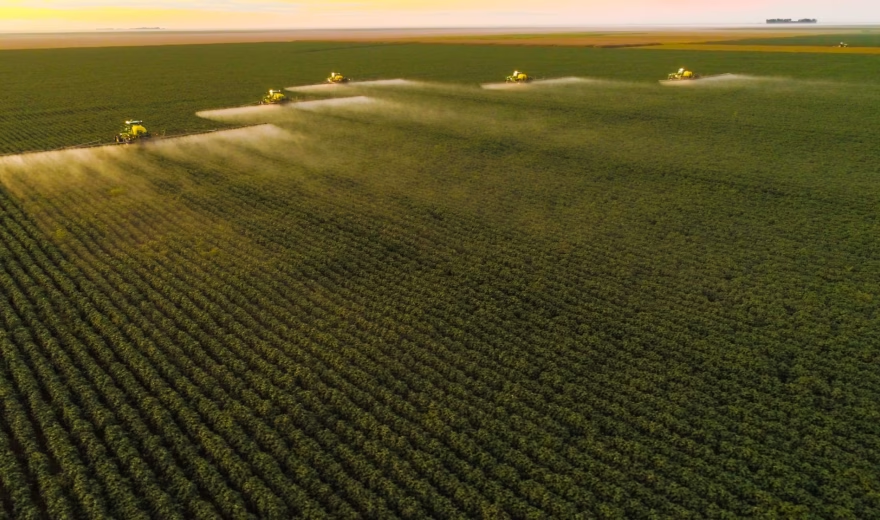
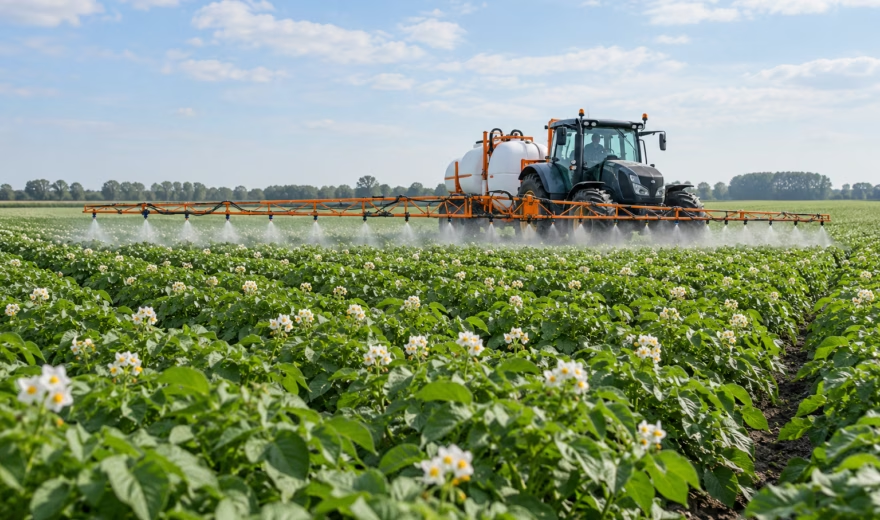
Several agricultural machines are spraying crops on a vast agricultural field.
10 Jun 2026

Pesticide Analysis in Food: Interview with a Laboratory Expert

In the European food industry, pesticide analysis remains a central component of food safety and compliance with statutory maximum residue limits (MRLs). At the same time, the focus is increasingly shifting from pure detection toward interpretation, methodology, and risk-based monitoring. We spoke with a laboratory expert about how modern pesticide analyses are conducted and evaluated in practice today.

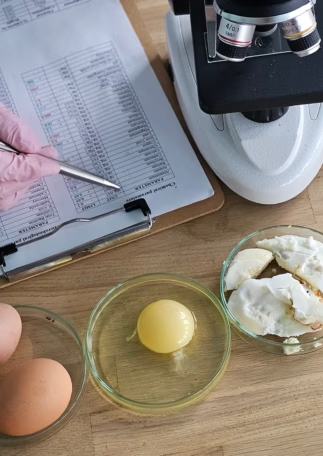
A food analysis laboratory workstation featuring a microscope, food samples, documentation, and a staff member examining samples with a pipette. The image illustrates quality control and laboratory testing of food products.
10 Nov 2026

Forward-Looking Laboratory Data: The Signals QA Can’t Afford to Miss

An individual analysis result indicates whether a sample meets a criterion at a single point in time. A series of results reveals something far more valuable: whether your process remains stable. For QA managers, this presents an opportunity to shift from reactive monitoring to proactive management. Those who recognize trends early can take action before a threshold is exceeded, a customer files a complaint, or an audit uncovers a systemic weakness.

Two employees are working together at a computer screen during a meeting about processes, quality, and project support in a professional office setting.
25 Feb 2025

New customer portal

Working efficiently and getting quick insight into analysis results is important within the food industry. Normec Foodcare introduces a renewed customer portal that helps you to easily view laboratory results, analyze trends and take action faster. With the customer portal you save time, prevent errors and ensure that you are always in control of the safety and quality of your products.

Sign up for our newsletter

Sign In

Naam

Related Services

Pesticide Residue Analysis

Een vrouwelijke onderzoeker met veiligheidsbril, blauwe handschoenen en witte labjas werkt geconcentreerd in het lab en pipetteert vloeistof in een reageerbuis.

Contaminants and residues analysis

PFAS Analysis

Heavy Metal Analysis