Accessibility links Skip to main content

Q&A with the Expert: How QA Will Stay on Top of the New Rules in 2027

2027 may seem far away, but waiting is not an option. European regulations on deforestation, packaging, allergens, machinery, mineral oils, and sustainability claims are simultaneously affecting products, processes, and supply chain data. What should be on the priority list right now? Where are the biggest risks? And how can you prevent compliance efforts from devolving into a series of ad-hoc, rushed projects? Grietje Van Weert, Business Unit Manager of the Training & Knowledge Center at Normec Foodcare, takes stock of the situation.

Continue reading
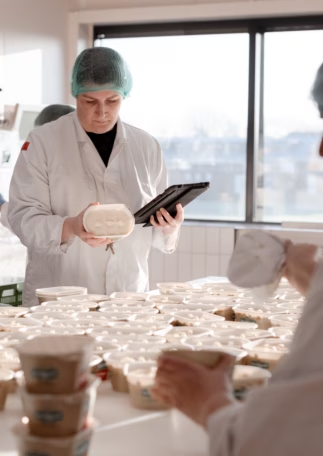
A laboratory technician wearing protective gloves takes notes on a clipboard next to a sample in a laboratory setting. The image illustrates quality control, documentation, and laboratory research.

Why isn’t waiting until 2027 an option?

“Because the preparation period starts now. Various regulatory issues are converging simultaneously and affect much more than just the label or the end product. They have implications for raw materials, origin data, packaging, machinery, software, supplier information, and marketing claims. QA must therefore bridge the gap between procurement, production, engineering, R&D, marketing, sustainability, and legal. Anyone who manages each dossier separately will overlook important cross-references and runs the risk of discovering too late that essential data or supporting documents are missing.”

EUDR: Where Does the Real Risk Lie for QA?

“Not in the declaration itself, but in the quality of the information behind it. The EUDR requires companies to demonstrate, for products such as beef, cocoa, coffee, oil palm, rubber, soy, and timber, that these products were produced legally and do not originate from land that was deforested after December 31, 2020. For timber, forest degradation must also not have occurred.

“The question QA must ask today is: can we actually trace the origin all the way down to the specific production plot? This requires geolocation, a documented risk analysis, and appropriate risk mitigation measures. Even if you do not submit the due diligence statement yourself, you must be able to provide reliable and traceable information. A missing link in a supplier’s chain could soon affect your product’s market access.”

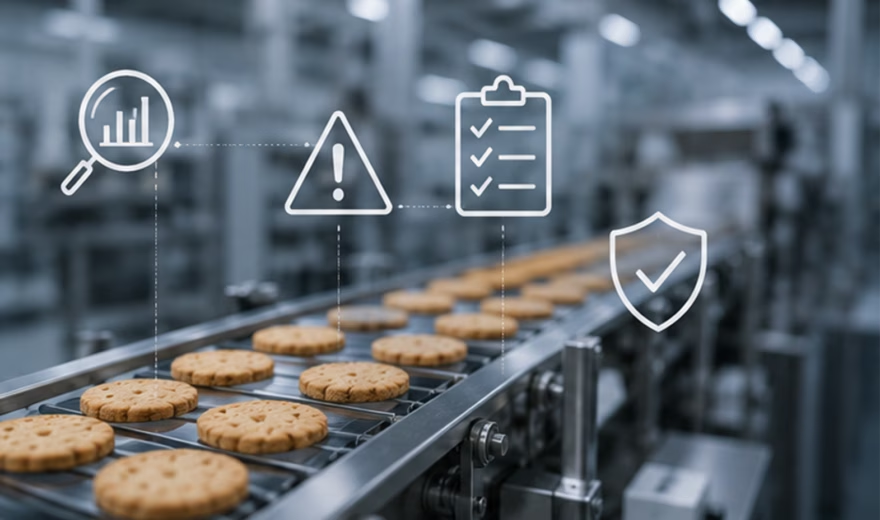
Two employees wearing protective clothing are inspecting a production line using a tablet in a controlled production environment. The image illustrates quality control, food safety, and process monitoring.

PPWR: Why Is a Packaging Specification No Longer Sufficient?

“Because the PPWR transforms packaging from a procurement item into a full-fledged compliance dossier. The regulation has been in effect since August 12, 2026, and applies to all packaging and packaging waste. For food-contact packaging, the PFAS restrictions are directly relevant. Leading up to 2030, stricter requirements will be introduced regarding design for recycling, recyclability, minimal packaging, and recycled plastic. By 2035, packaging must be demonstrably recycled at scale, and starting in 2038, the thresholds will be further tightened.”

“QA therefore needs insight into materials, weights, recycled content, and evidence regarding PFAS and other relevant substances for each type of packaging. Empty space, reuse, refill concepts, single-use items, and BPA also require attention. Therefore, start thinking now about future packaging design so that you can steer development choices, investments, and costs yourself before regulations or (retail) customers dictate the terms. Keep in mind the full impact of a packaging change: new packaging often requires new validations, such as for shelf life, product protection, food safety, and suitability for the production process.”


Want to Stay on Top of PPWR and Packaging Risks?

Discover the key considerations sustainable packaging brings to shelf life and food safety. Read the in-depth article and get started well-prepared.

Want to learn more about the PPWR?

Download the position paper or watch the webinar and translate the new rules into concrete decisions for your organization

PAL: When is “may contain” still justifiable?

“Only when the warning is the result of a well-founded risk assessment, not when it is added as a standard precaution. The Codex Guideline on Precautionary Allergen Labeling states that effective preventive allergen control measures must first be implemented. Next, a risk analysis must demonstrate that unintended presence cannot be sufficiently prevented and that it poses a relevant risk. PAL therefore never replaces good manufacturing practices, separation in time and space, cleaning, or accurate ingredient labeling.”

“The evidence will be decisive. Define cross-contact scenarios, control measures, and supporting data for each product and process. Document why PAL is or is not necessary and reassess the decision with every relevant change in formulation, supplier, process, or production line.”

Tip: Make PAL a well-documented decision.

With the Normec QRA Allergen Tool, you can perform complex allergen risk analyses consistently and reproducibly. You combine process, raw material, and recipe data, follow the reasoning step by step, and clearly document why a precautionary warning is or isn’t necessary. Request a demo and discover how to organize your allergen management more efficiently and with a stronger scientific basis.

Machinery Regulation: Could a Change Suddenly Make Your Company a Manufacturer?

“Yes. As of January 20, 2027, machine safety will explicitly include software, AI, autonomous functions, cybersecurity, and updates. A substantial physical or digital modification can result in the implementer being legally considered a manufacturer. This means that obligations regarding risk assessment, technical documentation, declaration of conformity, CE marking, and instructions will fall directly on your organization.”

“That is why, before any retrofit, line integration, or software update, it must be clear who will assess the change and who bears which responsibilities. QA, engineering, technical services, and procurement must all follow a single process. If you wait until after installation to conduct that assessment, a technical improvement could unexpectedly create a new compliance and product safety risk.”

MOSH and MOAH: Are your specifications and analyses ready for 2027?

“That is exactly the type of testing companies must now conduct. Starting January 1, 2027, European maximum limits for MOAH will be in effect, while monitoring for MOSH remains a key priority. The limits vary by product category. For various oilseeds, vegetable oils, and milk fat, the limit is set at 2.0 mg/kg. For peanut, sesame, coconut, germ, and bran oils, among others, a phased reduction is planned from 6.0 mg/kg in 2027 to 4.0 mg/kg in 2028 and 2.0 mg/kg in 2030.”

“The first step is to correctly assign each product to the applicable category. Only then can you update specifications, analytical methods, and supplier agreements in a targeted manner. Furthermore, do not limit the source analysis to raw materials: lubricants, processing aids, transportation, storage, and packaging can also contribute. Especially in the feed sector, contamination can occur early in the supply chain and only become apparent much later.”

Tip: Get a handle on MOSH and MOAH.

Want to know where contamination can occur, which risks are relevant to your products, and how to refine your analyses and supplier agreements in a targeted way? Download the white paper on MOSH and MOAH in food products and translate the new points of focus into a practical management plan.

Sustainability Claims: Which Words Could Pose a Risk?

“Especially broad terms like ‘green,’ ‘environmentally friendly,’ or ‘sustainable’ when it’s not exactly clear what they’re based on. Since September 27, 2026, stricter rules have been in effect for sustainability information provided to consumers. Labels without an independent certification scheme or public basis, claims about an entire product that are supported by only one aspect, and climate claims that rely exclusively on CO₂ offsetting are also not permitted.”

“Therefore, treat a claim like a product specification: define exactly what you’re claiming, document the evidence, designate an owner, and secure approval before publication. Check not only labels and packaging, but also websites, advertisements, point-of-sale materials, and social media. A strong claim is specific, up-to-date, and verifiable. Measurable objectives, a transparent method, and, where necessary, independent verification make the difference between persuasive communication and a compliance risk.”

Sustainability goes beyond compliance. What role can VSME play?

“Sustainability is not a standalone project, nor is it merely a reporting requirement. Customers, retailers, supply chain partners, and financial institutions are increasingly asking for reliable information on topics such as energy consumption, CO₂ emissions, raw materials, packaging, employees, and governance. Even organizations not subject to the CSRD will therefore need to be able to answer these questions. The challenge is to avoid having to create new questionnaires, separate Excel files, and distinct data sources every time.”

“The VSME standard offers small and medium-sized enterprises a practical, voluntary framework for centrally collecting sustainability information and using it for multiple stakeholders. This reduces duplication of effort, makes results more comparable, and helps integrate sustainability step by step into existing quality and management systems. QA has a logical role to play here: a great deal of relevant data on suppliers, raw materials, packaging, processes, risks, and improvement measures is already available within quality management. By linking that information specifically to sustainability goals, we not only create a report but also generate actionable insights for concrete improvements.”

From Sustainability Ambitions to a Workable Approach? 

Discover how to integrate sustainability into your organization in a practical and measurable way through sustainability in the food industry. Want to respond more efficiently to ESG questions from customers, retailers, and financial institutions? Then read more about VSME sustainability reporting.

What should a QA manager start with tomorrow?

“Start with a single integrated impact analysis. Identify the relevant product groups, raw materials, packaging, machinery, and claims. For each topic, determine who is responsible for the data, the assessment, and the approval. Then check where information is missing and whether supplier management, change control, labeling, technical dossiers, and internal communication are truly aligned.”

“My main message is simple: 2027 starts today. The organizations that will stay in control in the future aren’t necessarily the ones with the most people, but the ones with reliable data, traceable decisions, up-to-date specifications, and clear responsibilities. Once that foundation is in place, new regulations will not become a series of rush projects, but a manageable program that strengthens compliance, customer trust, and business continuity.”

Need support in the food industry?

Our experts are happy to work with you and help you get started quickly.

Request a quote

Fill out the form and we will contact you shortly.

Name
In which country would you like the service to be carried out?
Privacy Policy 

Contact us

Fill out the form and we will contact you shortly.

Name
In which country would you like to be assisted?
Privacy Policy 

Related news articles

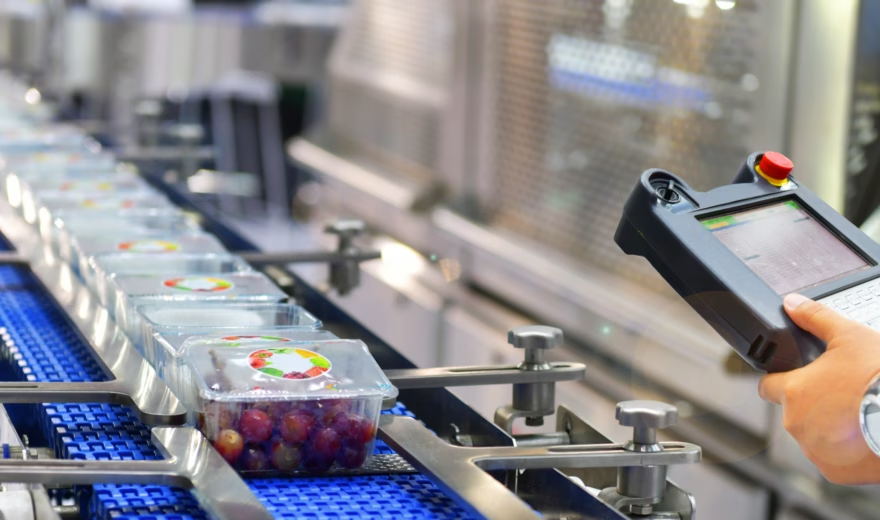
An automated production line with packaged food products on a conveyor belt, in which a handheld device is used to monitor or control the production process.
04 Nov 2026

The Machinery Regulation: History, Key Changes, and Impact on the Food Industry

Effective January 20, 2027, the Machinery Regulation (EU) 2023/1230 will be fully in effect. For the food industry, this requires attention not only to mechanical safety but also to digital safety, software, cybersecurity, technical documentation, and modifications to existing machines and production lines.

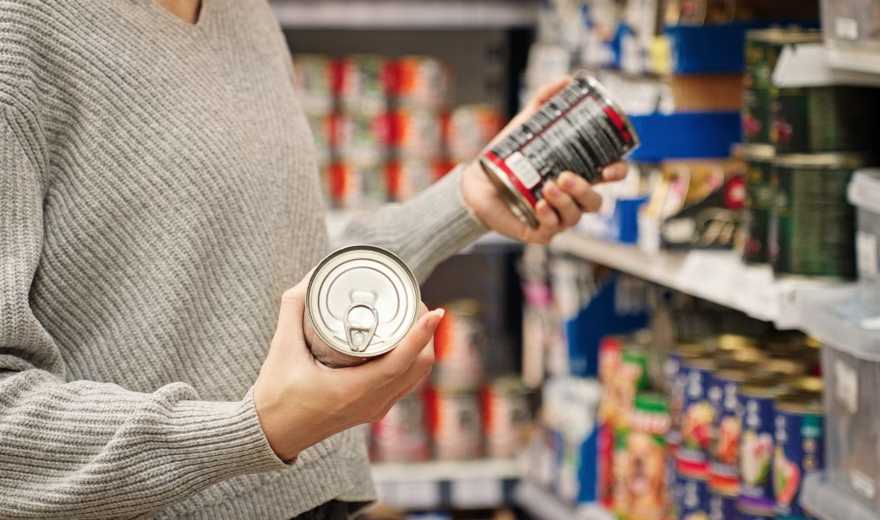
A woman choosing canned dog or cat food at a pet store, reading the label. Customer compares wet dog or cat food in the aisle with various canned goods on the shelves. Concept of responsible pet owner
04 Nov 2026

Sustainability Claims Under the Microscope: What Changes Will Directive (EU) 2024/825 Bring?

With Directive (EU) 2024/825, the European Union has tightened the rules on unfair commercial practices to better protect consumers against greenwashing. General environmental claims, climate claims based on offsetting, and non-transparent sustainability labels will be subject to more rigorous oversight. Belgium has already transposed the directive through the Act of July 22, 2026. The Netherlands has implemented the directive through the Implementation Act on the Directive on Better Sustainability Information for Consumers. The impact is primarily felt in packaging, websites, marketing communications, and sustainability claims directed at customers and consumers. The European directive was published on March 6, 2024, and was to take effect on September 27, 2026.

23 Jun 2026

Sustainable Packaging: The Underestimated Risks to Shelf Life and Food Safety

Sustainable packaging: the underestimated risks to shelf life and food safety

Aerial view of a densely forested green forest with varied tree canopies and shades of green. The image relates to themes such as nature, biodiversity, forest management, and sustainability.
26 Oct 2026

The EUDR is coming: How well is your food business prepared?

UTRECHT – The implementation of the European Deforestation Regulation (EUDR) is drawing nearer. For many food companies, this means that the origin of relevant raw materials must not only be known but also deforestation-free, that they have been legally produced, and that they comply with the applicable due diligence obligations. Furthermore, previous pilot inspections by the Netherlands Food and Consumer Product Safety Authority (NVWA) show where things can go wrong in practice. Simply collecting information is not enough. Companies must actually assess risks and, where necessary, take appropriate measures.

Sign up for our newsletter

Sign in

Naam

Related Services

Production line featuring digital quality control, inspections, and process monitoring in a manufacturing environment.

QRA Allergen Tool

AI Label Compliance Tool

A glass globe nestled among moss and ferns in a lush natural setting, symbolizing sustainability and environmental protection.

VSME sustainability report

MOSH/MOAH analysis